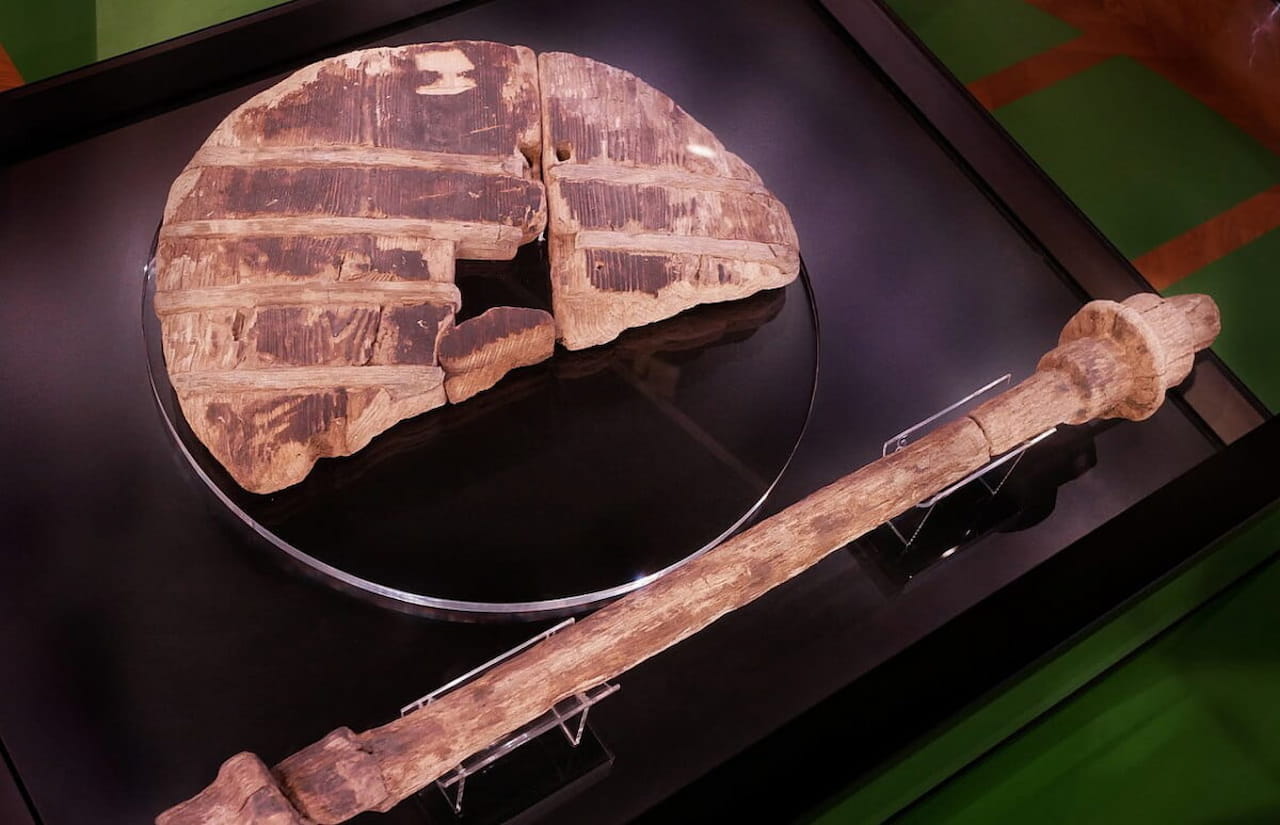
Ancient Wheel Discovery in Carpathian Mountains Points to Copper Miners as Inventors of the World’s First Wheel

A groundbreaking study suggests that copper miners in the Carpathian Mountains may have been the inventors of the first wheel around 6,000 years ago. This theory, based on recent modeling research, emphasizes how the region’s mining activities might have led to significant advancements in transportation technology. The research team, including Richard Bulliet from Columbia University and engineers Kai James and Lee Alacoque, analyzed the unique challenges faced by early miners and how these difficulties may have driven innovations in wheel design.

The study delves into the origins of the wheel, a critical development in human history that revolutionized trade, transportation, and construction. Although traces of wheeled vehicles have been discovered in regions spanning Europe, Asia, and North Africa, precisely determining where and how the wheel was first invented has always puzzled historians. This new research narrows the focus to the Carpathian Mountains, between 4000 and 3500 B.C., when miners needed to move hefty loads through narrow and uneven mine shafts. The team believes that the practical demands of transporting heavy copper ore may have sparked the gradual evolution of wheel technology.

Three significant stages in the wheel’s development are emphasized in the study. Initially, miners likely used cylindrical wooden rollers to move heavy rocks, which worked but had limitations. The next leap forward came with the creation of grooved rollers, which could grip materials better and prevent slippage. From there, the innovation of attaching rollers to a fixed axle—forming the first wheelset—allowed carts to move over uneven ground more efficiently. The final stage involved developing wheels that rotated independently of the axle, improving stability and maneuverability, and laying the foundation for the wheel designs we recognize today.

These incremental innovations transformed the way people moved materials and set the stage for broader societal changes. The study underscores the importance of necessity in driving human ingenuity, illustrating how a community of miners working in harsh and challenging conditions could have developed a tool that would forever change civilization. The researchers’ work brings us closer to understanding how one of humanity’s most vital technologies might have come to be.

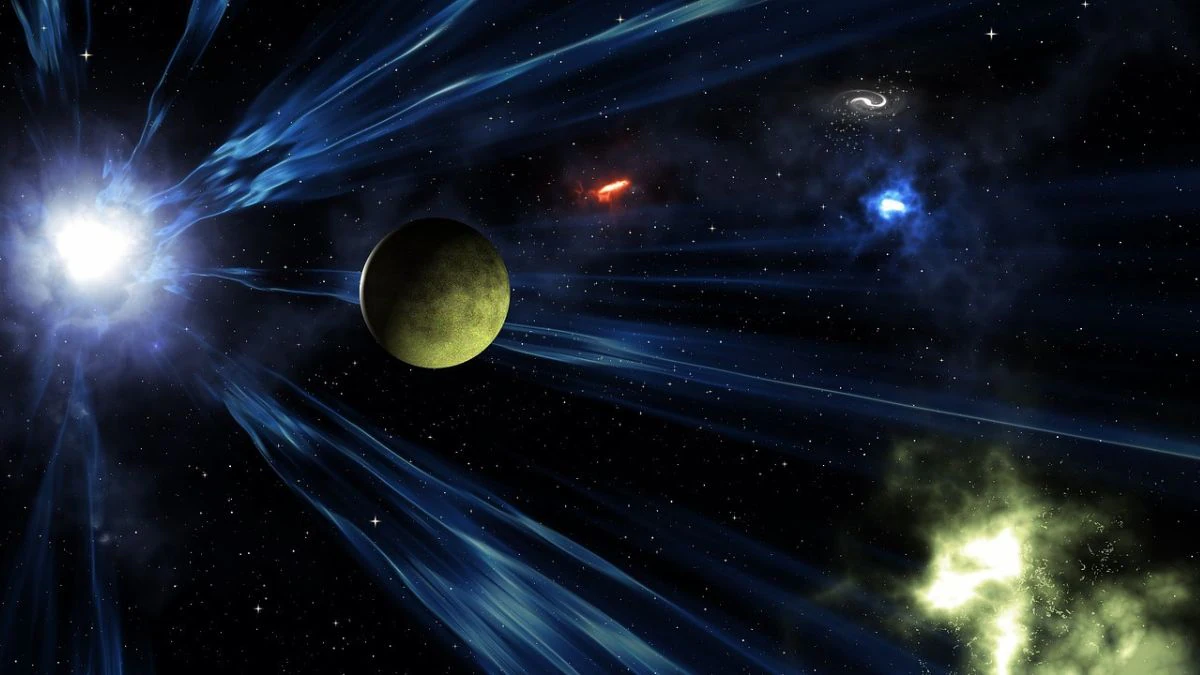
Neptunian Ridge Discovery: Scientists Unveil New Planetary Zone in the Cosmos

British scientists have made a groundbreaking discovery in the vast expanse of space: a densely packed ridge of planets previously unknown to the scientific community. A team from the University of Warwick stumbled upon this remarkable feature while investigating Neptune-like planets located far beyond our solar system. Their observations revealed a distinct pattern—a crowded band of planets lying between two starkly contrasting regions: a “desert,” where few planets can survive, and a “savannah,” where planets exist in abundance. This discovery provides new insights into how planets are distributed in space, akin to the revelation of an uncharted mountain range that reshapes our understanding of Earth’s landscape.

Life in the Cosmic Desert
Imagine a hostile environment where intense stellar radiation continuously bombards planets, eroding their atmospheres and leaving behind only barren rocky cores. This desolate region, now known as the Neptunian Desert, is inhospitable to most planetary bodies. Only the toughest planets, resistant to the relentless onslaught of their nearby stars, manage to endure. These rare survivors are comparable to the few resilient species that manage to eke out a living in Earth’s most unforgiving deserts.

A Planetary Savannah
Beyond this harsh desert lies a more forgiving region dubbed the “Neptunian Savannah,” where planets are far more likely to thrive. Here, conditions are relatively stable, and planets are better able to retain their atmospheres, sustaining a more favorable environment. This area teems with diverse planetary types, protected from the extreme radiation that characterizes the desert zone. The contrast between the two regions highlights the varied fates of exoplanets as they struggle to maintain their atmospheres and stability in the face of intense cosmic forces.

The Safe Haven: The Ridge of Survival
What makes this discovery so compelling is the dense ridge of planets that lies between the desert and the savannah. This newly identified zone acts as a safe haven, where planets somehow manage to retain their gaseous envelopes while avoiding complete atmospheric erosion. Scientists believe these planets arrived in this region through various mechanisms, such as migrating from farther out in their star systems or forming in place under unique conditions. This ridge represents a delicate balance, a transitional area where planets achieve a rare equilibrium, providing an invaluable opportunity to understand planetary evolution in extreme environments.

New Study Suggests Betelgeuse May Have a Hidden Companion Star

Could Betelgeuse Have a Hidden Companion Star? New Research Suggests So

Betelgeuse, the iconic red supergiant star in the constellation Orion, has long captivated astronomers and stargazers alike. Its remarkable brightness and distinctive reddish hue make it one of the most recognized stars in the night sky. However, recent research has raised an intriguing question: Could Betelgeuse have a companion star that influences its brightness fluctuations? This possibility has sparked significant interest, particularly as Betelgeuse has exhibited unusual dimming patterns that have led to speculation about its potential to go supernova in the near future.

A research team led by Jared Goldberg from the Flatiron Institute’s Center for Computational Astrophysics has proposed a compelling hypothesis. They suggest that an unseen companion star, whimsically dubbed “Betelbuddy,” could play a crucial role in shaping Betelgeuse’s light output. By employing sophisticated computer simulations, the researchers aimed to explore various factors that could account for the star’s erratic brightness. After systematically ruling out other potential explanations, they arrived at the conclusion that a companion star might be the key to understanding Betelgeuse’s peculiar behavior.

Betelgeuse is truly a giant in our cosmos, shining approximately 100,000 times brighter than our Sun and possessing a volume more than 400 million times greater. The researchers theorize that this hypothetical companion star could act as a sort of cosmic “snowplough,” clearing away dust and debris that might otherwise obstruct the light emitted by Betelgeuse. This interaction could lead to periods where Betelgeuse appears exceptionally bright from our vantage point on Earth, contributing to the star’s reputation for unpredictability.

The implications of such a discovery extend beyond just Betelgeuse itself. If proven to have a companion, it would enhance our understanding of binary star systems and the dynamics at play in the evolution of massive stars. As astronomers continue to monitor Betelgeuse’s activity and refine their simulations, they remain hopeful that this research will shed light on the mechanisms behind the star’s brightness variations and contribute to our broader knowledge of stellar life cycles. With each new finding, Betelgeuse continues to surprise and intrigue, reminding us of the complexities and wonders of the universe.