
WhatsApp Starts Testing Sticker Pack Sharing Feature on iOS and Android

WhatsApp has started rolling out a new feature for beta testers that allows users to share sticker packs with others on both iOS and Android devices. This feature, which has been in the works for a month, enables users to share sticker packs that they have installed on their device with other WhatsApp users. When a user shares a sticker pack, the recipient can then install the same pack on their own phone. This update is part of WhatsApp’s continuous efforts to enhance the user experience by expanding customization options, including the ability to share stickers more easily.

The new sticker-sharing feature relies on links, simplifying the process for users to send their favorite stickers to others. After updating to WhatsApp beta for Android 2.24.25.2 or newer, or WhatsApp beta for iOS 24.24.10.72, testers can access the updated sticker section. These changes, first spotted by feature tracker WABetaInfo, offer users a more interactive way to engage with the app’s sticker feature, making it easier to share personalized content with friends and family.

For those using the beta versions of the app, a new three-dot button appears while browsing through installed sticker packs. Tapping this button reveals two options: “Send” and “Remove.” By selecting “Send,” users can generate a unique link to the sticker pack and send it to another WhatsApp user. This makes sharing stickers as simple as forwarding a message or media file.

In addition to the sticker-sharing feature, WhatsApp has begun testing a new option for some users to add a message when forwarding content. This will allow users to personalize their forwarded messages and make sharing content more meaningful. Together, these updates highlight WhatsApp’s commitment to improving its platform with new features that enhance communication and provide users with more ways to express themselves creatively.

Astronomers Discover Youngest Exoplanet Orbiting a Protostar 520 Light-Years Away

Researchers have identified one of the youngest exoplanets ever observed, a gas giant named TIDYE-1b, estimated to be only 3 million years old. Orbiting a protostar in the Taurus molecular cloud, roughly 520 light-years from Earth, this discovery offers a rare glimpse into the earliest stages of planetary formation. Published in the journal Nature on November 20, the findings provide key insights into the processes that shape young planetary systems. The planet’s unusual environment, including a tilted protoplanetary disk, has intrigued scientists.

TIDYE-1b is described as a gas giant with a diameter slightly smaller than Jupiter’s and a mass approximately 40% that of the largest planet in our solar system. It completes an orbit around its host protostar in just 8.8 days, an incredibly close proximity for such a young planet. According to lead researcher Madyson Barber, a graduate student at the University of North Carolina at Chapel Hill, this rapid orbital period highlights the dynamic and accelerated processes involved in the formation of gas giants. These findings contrast with the slower development typically associated with terrestrial planets like Earth.

One of the most striking aspects of this system is the orientation of the protoplanetary disk surrounding the host star. The disk is misaligned, tilted at an angle of about 60 degrees relative to the planet and the star. Such a configuration is highly unusual, as planets are generally thought to form within flat, aligned disks of gas and dust. Andrew Mann, planetary scientist and co-author of the study, emphasized that this misalignment challenges established theories of planetary formation and raises new questions about the forces influencing early planetary systems.

This discovery has far-reaching implications for understanding the diversity of planetary formation. TIDYE-1b’s unique characteristics suggest that young planets and their systems may undergo more complex and chaotic development than previously thought. By studying such rare and early-stage systems, scientists hope to refine existing models and uncover new mechanisms that contribute to the formation and evolution of planets across the galaxy.

Elon Musk Announces xAI’s Plan to Launch AI-Driven Game Studio to ‘Revitalize Gaming

Here’s a restructured version with four distinct paragraphs:


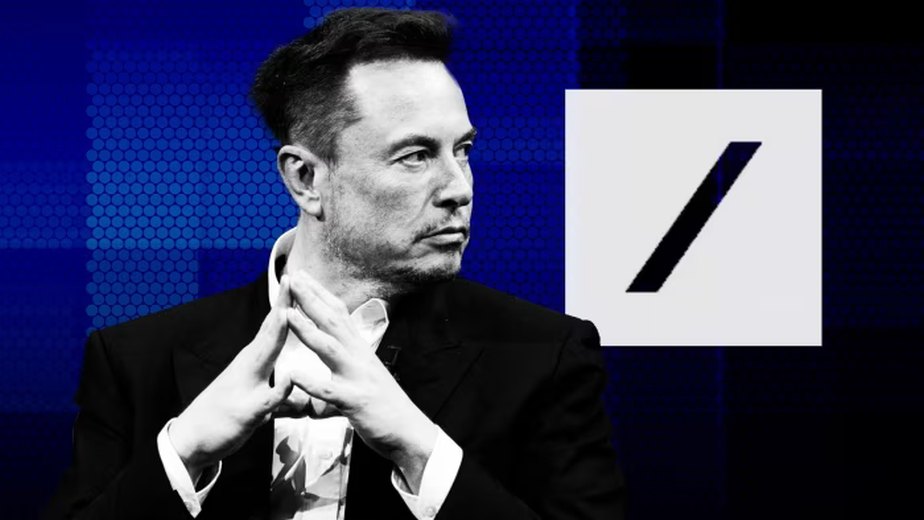
Elon Musk, the founder of xAI, has announced plans to establish an artificial intelligence (AI) game studio under his AI startup. The announcement came via a cryptic post on X (formerly Twitter), where Musk expressed dissatisfaction with the dominance of large corporations in the gaming industry. Known for his love of gaming, Musk has frequently shared his experiences with video games, including a recent live stream of him playing Diablo 4. His passion for gaming, combined with his interest in AI, appears to be the driving force behind this new venture.

The idea of an AI-powered game studio was introduced in a discussion sparked by software engineer Billy Markus, co-creator of Dogecoin. Markus criticized the gaming industry for being “ideologically captured,” suggesting that large corporations and certain gaming journalists have manipulated the space to the detriment of creativity and quality. He praised independent developers for delivering some of the most enjoyable gaming experiences in recent years, highlighting the growing dissatisfaction with corporate-controlled studios.

In response, Musk echoed Markus’s concerns, emphasizing that “too many game studios are owned by massive corporations.” He announced that xAI would soon launch an AI game studio aimed at revitalizing the industry, stating his mission to “make games great again.” Musk’s comments hint at an ambition to challenge the status quo, potentially leveraging AI to create more innovative and player-centric games.

This move signals a convergence of Musk’s technological pursuits with his personal interests, opening up possibilities for groundbreaking advancements in gaming. By integrating AI capabilities, xAI’s game studio could redefine how games are developed, from creating hyper-intelligent NPCs to procedurally generated worlds that adapt to players in real time. Musk’s vision aligns with a growing demand for more authentic, creative, and immersive gaming experiences, positioning xAI to make a significant impact in the gaming industry.