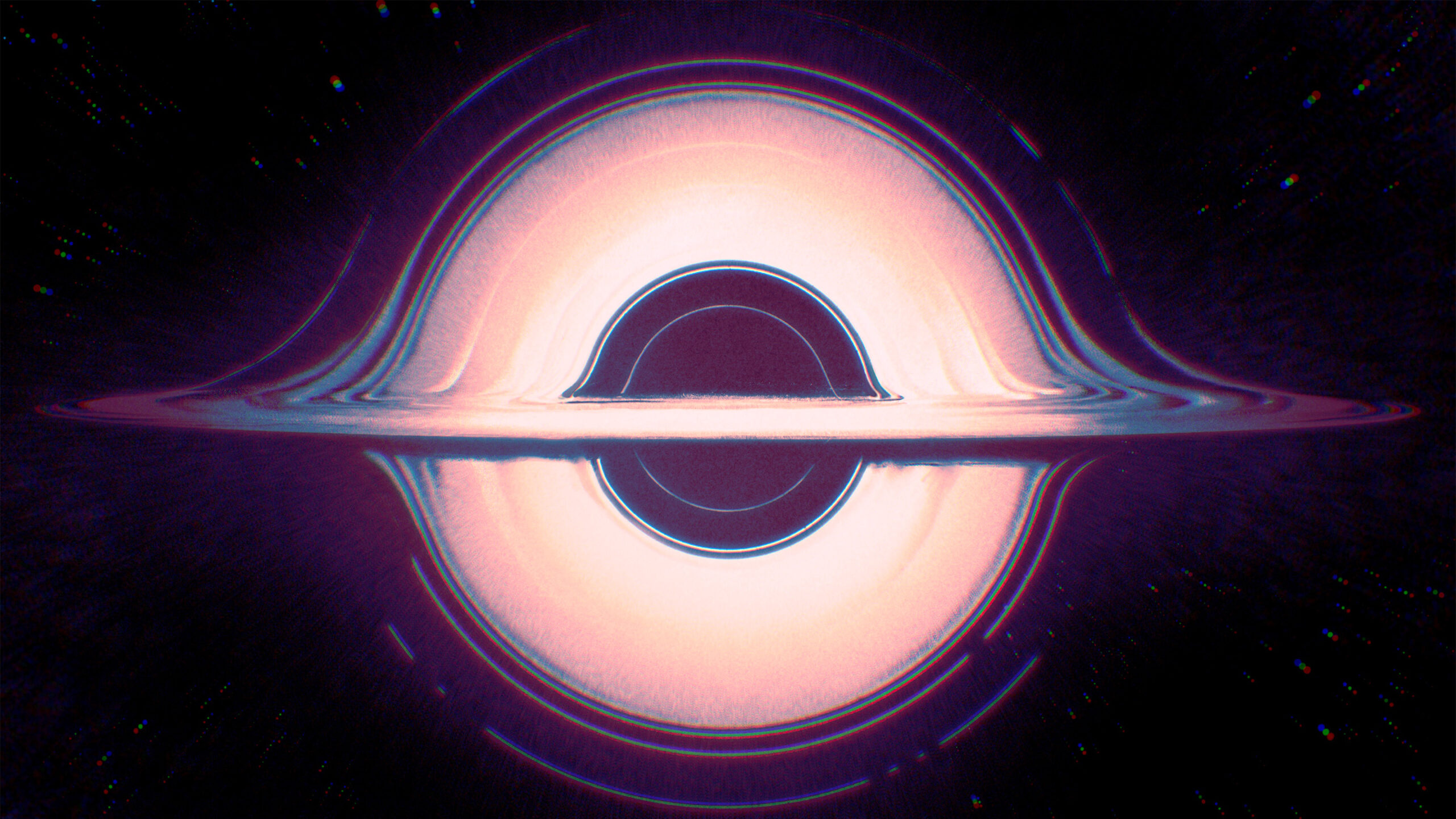
Gravitational Waves Proposed as Key to Unlocking Black Hole Information Paradox

A groundbreaking study proposes that the elusive black hole information paradox might be resolved by examining disturbances in space-time. Researchers suggest that gravitational waves—ripples in the fabric of space-time generated during black hole mergers—could carry subtle signatures of the information supposedly lost to black holes. If confirmed, this idea could bridge a critical gap between quantum mechanics and general relativity, offering profound insights into the universe’s fundamental laws.

The black hole information paradox, first introduced by physicist Stephen Hawking in 1976, questions what happens to the information consumed by black holes. Hawking theorized that black holes emit radiation (known as Hawking radiation) and eventually evaporate, seemingly destroying all information they once held. This apparent loss conflicts with the principles of quantum mechanics, which assert that information cannot be destroyed. Over the years, numerous theories have been proposed to resolve this tension, one of which is the concept of “nonviolent nonlocality.”

The idea of nonviolent nonlocality, gaining traction among theoretical physicists, posits that a black hole’s interior may be subtly connected to its exterior environment through quantum nonlocality—without requiring catastrophic events like explosions. This theory suggests that such connections could allow information to escape black holes in ways that do not violate the principles of either quantum mechanics or general relativity. While the connections are nonlocal, they are “nonviolent” in the sense that they avoid disrupting the black hole’s structure.

Researchers at the California Institute of Technology explored this hypothesis and proposed that these quantum connections might leave detectable imprints on space-time itself. Specifically, during black hole mergers, gravitational waves could encode unique patterns reflecting the preserved information. With the advent of advanced observational tools such as the Laser Interferometer Gravitational-Wave Observatory (LIGO), these patterns might be identifiable. If confirmed, this discovery could mark a monumental step in solving the black hole information paradox and deepening our understanding of the universe’s most enigmatic phenomena.
Meta Unveils ‘Video Seal’: An Open-Source Tool for Watermarking AI Videos

Meta has unveiled a new tool called Video Seal, designed to add an invisible watermark to videos created using artificial intelligence (AI). This innovation expands Meta’s suite of watermarking tools, which already includes Audio Seal and Watermark Anything. The company has indicated plans to open-source the tool, although the code has not yet been released. Notably, Meta claims that Video Seal’s watermarking technology does not compromise video quality and is resistant to common tampering methods aimed at removing such watermarks, marking a significant step forward in safeguarding digital content authenticity.

The release of Video Seal addresses the growing issue of deepfakes, which have proliferated with the advancement of generative AI. Deepfakes are synthetic media that mimic real people, objects, or scenarios, often with deceptive intent. These videos can be used to spread misinformation about public figures, create exploitative or malicious content, and facilitate fraud. The potential for harm underscores the need for tools like Video Seal, which aim to bring greater transparency to AI-generated media.

As AI continues to evolve, the challenge of distinguishing between genuine and AI-generated content is becoming increasingly difficult. Deepfakes are becoming more realistic, blurring the line between real and synthetic content. This trend raises significant concerns, especially in a world where visual and auditory media are critical sources of information. For instance, a McAfee survey revealed that 70% of people lack confidence in distinguishing between a real voice and one generated by AI, a troubling statistic that emphasizes the urgency of reliable watermarking solutions.

Meta’s Video Seal has the potential to mitigate some of these risks by embedding imperceptible yet durable markers into AI-generated videos. These markers could serve as a verification method for determining the authenticity and origin of content. By open-sourcing the tool, Meta aims to empower developers, creators, and platforms to adopt the technology widely, fostering a collaborative approach to combatting the misuse of generative AI and ensuring that technological progress aligns with ethical and societal needs.

NASA Explores Ingenuity’s 72nd Flight Mishap, Shares Insights on Crash

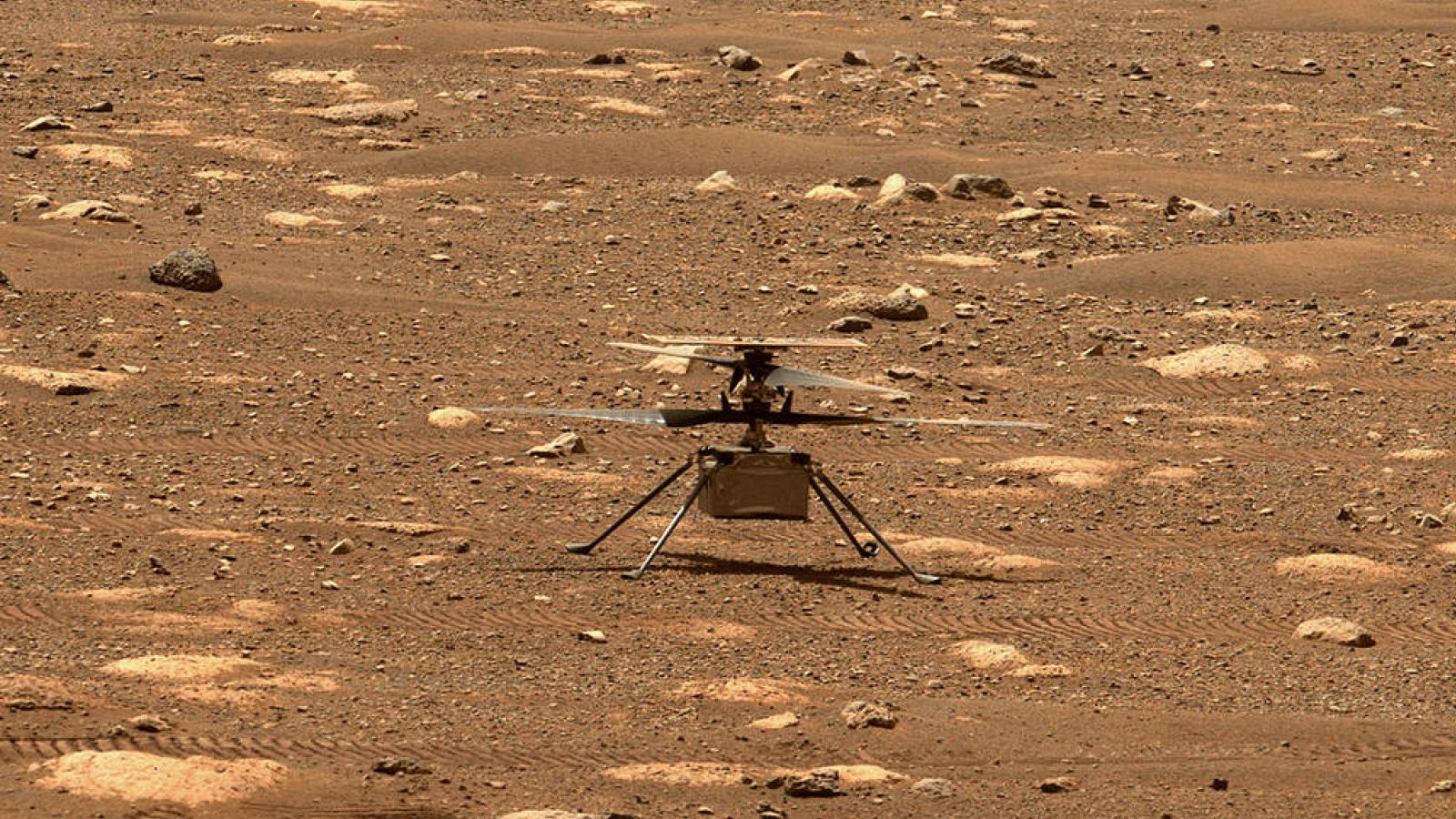
NASA’s Jet Propulsion Laboratory (JPL) in Southern California, in collaboration with AeroVironment, is currently investigating the events surrounding the final flight of the Ingenuity Mars Helicopter. On January 18, 2024, the rotorcraft, which had far exceeded its original mission parameters, experienced a critical failure during its 72nd flight. Originally designed as a technology demonstration to prove that aerial flight on Mars was possible, Ingenuity accomplished an extraordinary feat by completing 72 flights over nearly three years. The ongoing investigation aims to uncover the cause of the mishap and provide insights that could shape the design and operation of future extraterrestrial aircraft.

Ingenuity’s 72nd flight was intended as a routine operation to assess system performance and capture imagery of the Martian surface. The flight plan included a straightforward ascent to an altitude of 40 feet. Preliminary data shows that the helicopter reached its target altitude without incident but lost communication shortly after landing. Subsequent imagery, transmitted after a delay, confirmed that the rotor blades had sustained significant damage, effectively marking the end of Ingenuity’s operational career.

The leading theory regarding the incident points to a failure in the navigation system, caused by the challenging terrain of Jezero Crater. The helicopter’s navigation relies on tracking surface textures to estimate movement and position. However, experts believe that the featureless sand ripple terrain in the area provided insufficient visual cues, leading the system to generate incorrect position estimates. Håvard Grip, Ingenuity’s first pilot, explained that these errors likely resulted in excessive horizontal speed during touchdown, causing severe mechanical stress on the rotorcraft’s components.

Despite the unfortunate end, Ingenuity’s achievements have been groundbreaking, offering valuable lessons for the future of Mars exploration. The technical report from the investigation, expected to be released later this year, will provide detailed findings and recommendations for addressing navigation challenges in similar environments. These insights are anticipated to influence the development of more advanced aerial systems for future missions, including potential scouting vehicles and delivery drones for planetary exploration.