Astronomers Discover Hidden Supermassive Black Holes Concealed Behind Cosmic Gas and Dust

Recent astronomical discoveries have revealed that the universe may be home to far more feeding supermassive black holes than scientists had originally thought. These enormous black holes, which range in mass from millions to billions of times that of our Sun, are believed to be hidden behind dense clouds of gas and dust. This cosmic veil prevents traditional telescopes from detecting their activity, which typically involves the black hole pulling in matter, emitting vast amounts of radiation in the process. Researchers now estimate that nearly 30 to 50 percent of these actively feeding supermassive black holes could be obscured by such material, remaining undetected in many parts of the universe.

The newly uncovered information challenges previous models of black hole distribution and activity. Astronomers have long known that supermassive black holes reside at the centers of most large galaxies, but the idea that so many of these black holes remain hidden adds a layer of complexity to our understanding of the cosmos. The gas and dust that conceal these cosmic giants act as a sort of cloak, making it difficult for traditional observatories, which rely on visible light or other electromagnetic radiation, to capture any signs of their existence or the intense energy they emit as they feed on surrounding material.

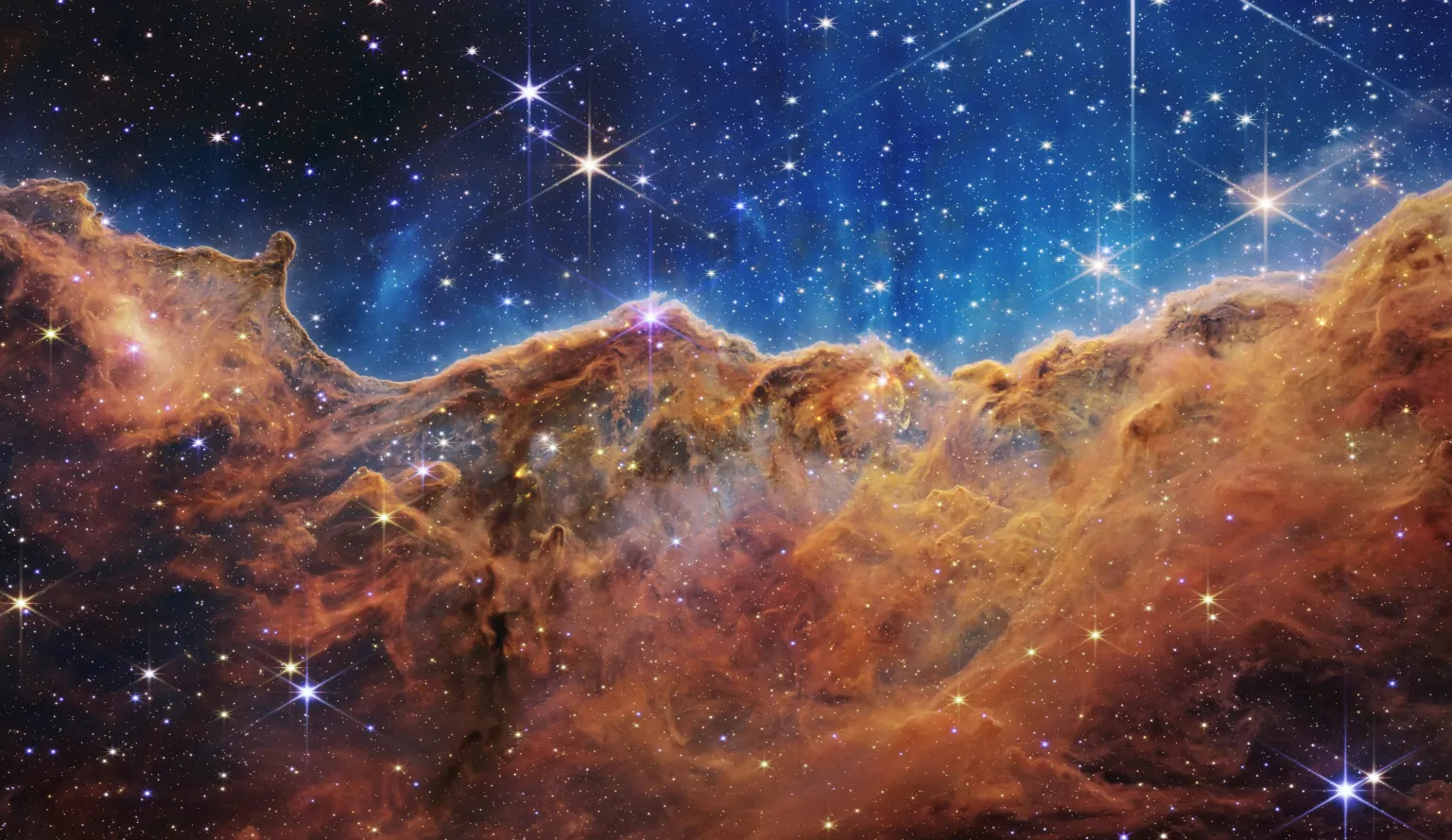
Scientists have made these groundbreaking observations by employing more advanced techniques and newer types of telescopes that can see beyond the optical spectrum. Instruments capable of detecting X-rays, infrared radiation, and other wavelengths have helped to reveal the true extent of these hidden black holes. For example, some of the most recent observations from the James Webb Space Telescope have provided crucial insights into the obscured regions of space, allowing astronomers to peer through the gas and dust and uncover previously invisible black holes that are actively feeding.

This discovery is reshaping how researchers approach the study of supermassive black holes and their role in galaxy formation and evolution. By identifying and understanding the vast number of these unseen black holes, scientists can refine models of galactic evolution and improve our understanding of the forces at play in the most distant corners of the universe. As new technologies continue to evolve, more of these elusive cosmic entities may soon come into view, offering even greater insights into the most mysterious objects in the universe.

SpaceX Marks Success with the Launch of 131 Satellites on Transporter 12 Mission

SpaceX successfully launched 131 satellites into orbit during its Transporter 12 mission on January 14, 2025. The launch took place from Vandenberg Space Force Base in California, with the Falcon 9 rocket lifting off at 2:09 p.m. EST. This mission continues to build on SpaceX’s rideshare program, which provides an efficient way to send multiple payloads into space for various customers with a single rocket. The Transporter 12 mission not only highlights SpaceX’s technical capabilities but also its commitment to making space access more affordable and accessible for a wide range of clients, including both commercial and government entities.

One of the notable aspects of this mission was the successful landing of the Falcon 9’s first-stage booster, which touched down at Vandenberg’s Landing Zone 4 approximately 7.5 minutes after launch. This achievement further underscores SpaceX’s progress in reusable rocket technology, which significantly reduces the cost of space launches. Transporter 12 is the 12th mission in SpaceX’s Transporter series, designed to carry multiple payloads, with this flight including satellites from a variety of companies. Notably, 37 of the satellites were from Planet Labs, a company based in San Francisco, specializing in Earth observation.

Among the Planet Labs payloads were 36 SuperDove cubesats and a single Pelican-2 satellite. The SuperDove satellites are equipped for high-resolution imaging of Earth’s surface, while the Pelican-2 satellite boasts advanced AI-powered solutions designed to analyze data in near real-time. This mission not only helped deploy satellites aimed at providing critical Earth observation data but also demonstrated how space technology is evolving with the integration of artificial intelligence to enhance data collection and processing capabilities.

With the successful completion of Transporter 12, SpaceX has now launched over 1,100 satellites across 13 rideshare missions, cementing its position as a leader in small satellite deployment. The satellites deployed during the mission were sent into low Earth orbit over a 90-minute period, beginning 54 minutes after launch. These consistent and efficient rideshare missions, which have served over 130 clients, continue to drive the expansion of the commercial space industry, providing key infrastructure for a wide range of industries, from telecommunications to Earth observation.

Webb Telescope Captures Formation and Growth of Carbon-Rich Dust Shells in Star System

The Wolf-Rayet 140 star system, located within our Milky Way, has become the focal point of a significant new study, providing valuable insights into the formation and outward expansion of carbon-rich dust shells. Utilizing the advanced capabilities of the James Webb Space Telescope, astronomers have observed a fascinating sequence of 17 concentric dust shells expanding in regular intervals. These shells are moving outward at an astonishing speed of about 1 percent of the speed of light, shedding light on the process by which crucial elements like carbon are dispersed across the universe. This discovery helps scientists better understand the dynamics of stellar systems and their role in the broader cosmic ecosystem.

The Wolf-Rayet 140 system consists of two massive stars that follow an elongated orbit around each other. As these stars draw closer together, their powerful stellar winds collide, compressing the surrounding material and triggering the formation of carbon-rich dust. This process, as observed by the Webb Telescope, results in the creation of concentric shells that continue to expand over time. According to NASA’s latest report, these regular intervals of shell formation suggest a rhythmic process occurring over astronomical periods. Emma Lieb, a doctoral student at the University of Denver and lead author of the study, emphasized that Webb’s detailed observations confirmed the consistency in the velocity of these expanding shells.

The study also highlights the rapid pace of these cosmic events. Over a span of 14 months, Webb’s observations showed that the dust shells visibly expanded, with material traveling at speeds exceeding 1,600 miles per second. This acceleration of dust movement within the system provides a unique perspective on how stellar winds and interactions can influence the surrounding environment. Jennifer Hoffman, a professor at the University of Denver and co-author of the study, noted that this rapid expansion is atypical when compared to other astronomical phenomena, as changes in such systems are usually observed over much longer timescales.

These findings are crucial not only for understanding the specific behaviors of the Wolf-Rayet 140 system but also for the broader implications they hold for the study of stellar evolution and cosmic material distribution. The observation of carbon-rich dust shells expanding at high velocities contributes to a better understanding of how the building blocks for life are spread across space. As scientists continue to study the dynamics of these shells, they hope to uncover further details about the lifecycle of massive stars and the role of stellar winds in shaping the interstellar medium.