Asus NUC 14 Essential Mini PC Launched with Intel Core N-Series Processors: Key Features Revealed

Asus has unveiled the NUC 14 Essential, a compact and entry-level mini PC designed to deliver improved performance and energy efficiency. Powered by Intel Core N-series processors, the NUC 14 Essential is optimized for reliable everyday computing. Asus claims the device has undergone rigorous testing, including bake and humidity tests, ensuring it exceeds industry standards for durability. With support for up to three 4K displays via HDMI and DisplayPort outputs, the mini PC is well-suited for multitasking and media-heavy use cases. While pricing and availability details remain under wraps, Asus has confirmed that specifications and release dates will vary by region, with sales expected to begin in select markets later this year.

The NUC 14 Essential offers robust connectivity features, including Wi-Fi 6E and Bluetooth 5.3, enabling faster and more stable wireless connections. Its compact design doesn’t compromise on versatility, with the ability to support multiple operating systems. While the pre-installed variant ships with Windows 11 64-bit, the Kit version offers compatibility with Ubuntu 24.04 LTS 64-bit and RedHat Enterprise Linux 64-bit, catering to users who prefer Linux-based environments. This flexibility makes the device an attractive option for both casual users and professionals.

Under the hood, the NUC 14 Essential is available with a range of processor options tailored to different performance needs. These include Intel’s N150 and N250 CPUs with 6W TDP, the Core 3 N355 CPU with a 15W TDP, and the N97 CPU with a 12W TDP. Integrated chipsets support Intel Graphics across all variants, with the N97 CPU specifically featuring Intel UHD Graphics for enhanced visual performance. Additionally, the mini PC can be configured with up to 16GB of DDR5-4800 RAM, ensuring smooth multitasking and efficient handling of demanding applications.

With its compact size, modern connectivity features, and multiple configuration options, the Asus NUC 14 Essential is poised to cater to a wide range of users, from students to professionals seeking a reliable mini PC. Its ability to support high-resolution displays and its robust design make it a versatile addition to the mini PC market. As Asus continues to expand its lineup, the NUC 14 Essential sets a new benchmark for entry-level computing solutions.
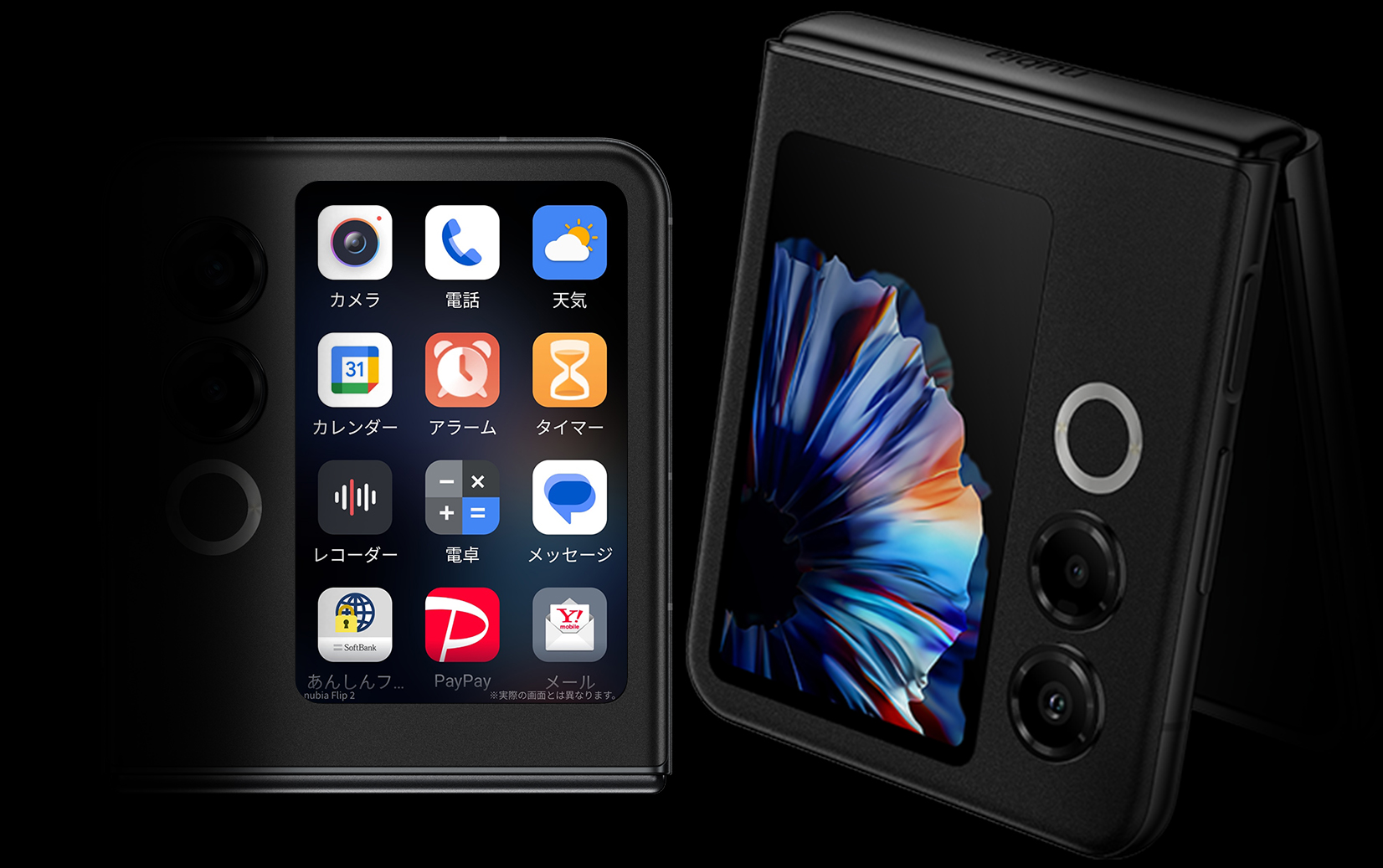
Nubia Flip 2 Debuts with MediaTek Dimensity 7300X and Unique 3-Inch Cover Screen: Details and Pricing

The Nubia Flip 2, ZTE’s latest addition to its foldable lineup, has made its debut in Japan. This clamshell-style smartphone succeeds last year’s Nubia Flip 5G and comes with several upgrades, including a 6.9-inch main foldable display. Powered by the MediaTek Dimensity 7300X chipset, the device is paired with 6GB of RAM and 128GB of onboard storage. Priced at JPY 64,080 (approximately ₹35,000), the Nubia Flip 2 is available in Black, Blue, and White color options. While the launch is limited to Japan for now, the company has yet to announce global availability details.

In terms of design and display, the Nubia Flip 2 features a foldable full-HD+ 6.9-inch main screen with a resolution of 1,188 x 2,790 pixels. It also sports a 3-inch cover display with a resolution of 422 x 682 pixels, allowing users to quickly access apps and view notifications without unfolding the device. The compact form factor and additional display make it an attractive choice for users seeking a blend of style and functionality.

Under the hood, the Nubia Flip 2 marks a shift from its predecessor by incorporating the MediaTek Dimensity 7300X chipset, replacing the Snapdragon 7 Gen 1 processor used in the earlier model. The device is equipped with 6GB of RAM and 128GB of internal storage, providing sufficient performance for everyday tasks. However, unlike the original Nubia Flip 5G, which offered multiple RAM and storage configurations, the Nubia Flip 2 currently sticks to a single variant.

Camera and battery enhancements further elevate the Nubia Flip 2. It comes with a dual rear camera setup, led by a 50-megapixel primary sensor. Although details about the secondary sensor are not highlighted, the primary sensor is expected to deliver sharp and detailed images. The smartphone is powered by a 4,300mAh battery, ensuring extended usage, and runs on Android 14 out of the box. With its competitive pricing and updated features, the Nubia Flip 2 positions itself as a strong contender in the foldable phone market.

Breaking the Rules: Scientists Predict Exotic Paraparticles Outside Known Classifications

Physicists have introduced a groundbreaking concept in particle physics: a new category of particles known as “paraparticles.” These theoretical entities defy the conventional classifications of matter into fermions and bosons, offering an entirely fresh perspective on the fundamental building blocks of the universe. Unlike fermions, which obey the Pauli exclusion principle, and bosons, which tend to exist in shared states, paraparticles follow unique exclusion rules. Their predicted behaviors could lead to revolutionary advancements in quantum mechanics and open up new avenues in quantum computing.

The mathematical framework for paraparticles, as described in a study published in Nature, was developed by Zhiyuan Wang of the Max Planck Institute for Quantum Optics and Kaden Hazzard of Rice University. Their research demonstrates that paraparticles can theoretically exist in any number of dimensions, significantly expanding the potential scope for their application. This innovative framework paves the way for the possibility of experimental realization, with researchers emphasizing the importance of advanced quantum computing technologies in recreating such particles.

Wang revealed that the concept of paraparticles emerged unexpectedly during his Ph.D. research in 2021. Despite the theoretical foundation being well-established, reproducing these particles in a controlled environment remains a significant challenge. Experts in the field are optimistic that the rapid advancements in quantum computing technology will soon provide the tools necessary to test these predictions. If realized, paraparticles could have profound implications, including reducing error rates in quantum computational systems and enhancing their overall efficiency.

The discovery also raises intriguing possibilities about the natural world. Paraparticles may exist in forms that have yet to be observed, potentially hinting at hidden layers of the universe’s structure. This work serves as a reminder of how theoretical physics can push the boundaries of what we understand about reality, challenging established paradigms and sparking innovation across multiple disciplines.