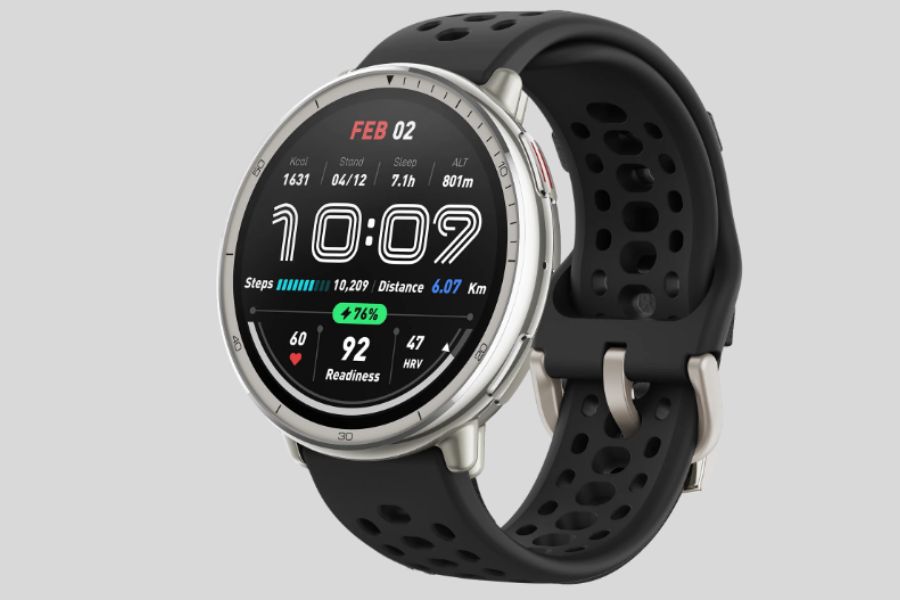
Amazfit Active 2 Debuts with 1.32-Inch AMOLED Display and Up to 10 Days of Battery Life: Price and Features Revealed

Amazfit has introduced its latest smartwatch, the Amazfit Active 2, at the Consumer Electronics Show (CES) 2025 in Los Angeles. Designed with fitness enthusiasts and tech-savvy users in mind, the Amazfit Active 2 features a 1.32-inch circular AMOLED display housed in a durable 44mm stainless steel case. This smartwatch offers more than 160 preset workout modes, making it an ideal companion for athletes and those looking to track various physical activities. Additionally, it is equipped with the BioTracker 6.0 PPG biosensor, which is designed to provide accurate heart rate monitoring and sleep cycle tracking, helping users maintain a holistic view of their health.

One of the standout features of the Amazfit Active 2 is its compatibility with the Zepp App, which offers a wealth of health and fitness data. The app delivers valuable insights into users’ daily activity levels, sleep patterns, and overall wellness, making it easier to track progress and set new fitness goals. For those who want a smartwatch that keeps up with their active lifestyle, the Amazfit Active 2 promises up to 10 days of battery life on a single charge, which is a significant advantage for users who don’t want to worry about charging their device frequently.

In terms of pricing, the Amazfit Active 2 starts at $99 (approximately Rs. 8,600) for the version featuring a silicone strap, making it a budget-friendly option for those looking for a high-performance wearable. For those seeking a more premium look and feel, the variant with a genuine leather strap is priced at $129.99 (approximately Rs. 11,100). The smartwatch is currently available for pre-order in the United States through Amazfit’s official website, with shipping set to begin in mid-January 2025.

Beyond the U.S., Amazfit has confirmed that the Active 2 will be available for purchase in select global markets starting in February 2025. This global rollout aims to bring the smartwatch’s advanced fitness tracking features to users worldwide, offering a stylish and practical solution for those interested in improving their overall health and fitness. With its combination of a sleek design, advanced health monitoring technology, and long-lasting battery life, the Amazfit Active 2 is poised to be a popular choice for fitness enthusiasts and smartwatch users alike.


Samsung’s Q4 Earnings Likely Affected by Nvidia AI Chip Supply Delay

Samsung Electronics, the global leader in memory chip manufacturing, is expected to report a slowdown in profit growth for the fourth quarter, with challenges in meeting the soaring demand for Nvidia’s AI chips. As the world’s largest producer of memory chips, Samsung plays a crucial role in supplying the semiconductor industry. However, supply chain constraints and increasing competition for the AI chip market have hindered the company’s ability to capitalize on Nvidia’s explosive growth, leading to more conservative earnings forecasts. Analysts are now predicting that Samsung’s operating profit growth in Q4 will continue to decelerate, impacting the company’s overall financial performance.

Samsung is anticipated to estimate its operating profit for the quarter ending December at 8.2 trillion won (approximately $5.6 billion or Rs. 47,984 crore), showing a year-on-year increase from the previous year’s profit of 2.8 trillion won (roughly Rs. 16,547 crore). However, this figure still represents a significant decline from the 9.18 trillion won (roughly Rs. 54,238 crore) recorded in the third quarter of the same year. This drop reflects the company’s ongoing struggles in the memory chip sector, which has been under pressure due to global chip shortages, as well as shifting market dynamics driven by new technological trends.

The delay in Nvidia’s AI chip supply chain has had a cascading effect on Samsung, as the demand for advanced chips in the AI and data center sectors has surged. With Nvidia facing production challenges, Samsung’s memory chip sales have not been able to meet the heightened demand expected from key players like Nvidia, further impacting its revenue from this vital segment. As a result, many analysts have adjusted their forecasts for Samsung, with some now predicting that the company’s operating profit could fall below the 8 trillion won mark (approximately Rs. 47,267 crore).

Despite these challenges, Samsung continues to dominate other key markets such as smartphones and televisions. However, its reliance on semiconductor manufacturing, particularly memory chips, remains a critical pillar of its business. As the company faces short-term headwinds, it will be crucial to monitor how Samsung adapts to these challenges, particularly as the demand for AI chips and other cutting-edge technologies continues to grow. While the fourth-quarter earnings are expected to show a slowdown, Samsung’s long-term prospects will largely depend on its ability to overcome these supply constraints and regain its footing in the competitive semiconductor market.

NXP Semiconductors Eyes Up to 10 Percent of Revenue from India by 2030, According to Executive

NXP Semiconductors, a leading global semiconductor company, has set its sights on India as a major growth market, projecting that the country could contribute between 8 to 10 percent of its total revenue over the next three to five years. According to Hitesh Garg, the head of NXP India, the rapidly expanding automotive and industrial sectors in India are expected to drive this surge in sales. In a statement made during an industry event in Bengaluru, Garg highlighted that India’s importance as a market for NXP will continue to rise in the coming years, with the company planning to leverage the country’s growing demand for semiconductors, particularly in automotive and industrial applications.

Despite India being a smaller market for semiconductor companies compared to regions like North America and Europe, NXP sees significant potential in the country. The company has not yet broken down its revenue figures from India, but Garg emphasized that the next few years will be crucial for the company’s strategy in the region. As India becomes a hub for automotive innovation, particularly in the electric vehicle (EV) sector, NXP is positioning itself to capture a larger share of this evolving market, which requires advanced semiconductor solutions for everything from vehicle control systems to electric powertrains.

The shift in focus towards India is also timely, as the semiconductor industry faces challenges in other major markets, particularly China. NXP, along with other automotive chipmakers, has seen its sales to China come under pressure due to China’s aggressive investments in the production of older chips, as well as the impact of European tariffs on Chinese electric vehicles. With these headwinds in key markets, NXP’s pivot towards India aligns with the company’s broader strategy to diversify its revenue streams and capitalize on new opportunities in the fast-growing Indian market.

India’s growing technological ecosystem, fueled by the government’s push for a self-reliant semiconductor industry and the rise of electric vehicles and smart infrastructure, offers significant growth prospects for companies like NXP. With the automotive and industrial sectors expected to be the key drivers of demand, NXP is well-positioned to take advantage of India’s expanding role in the global semiconductor supply chain. As the country continues to evolve as a technology and manufacturing hub, NXP’s investment in India will likely pay off, helping the company establish a strong presence in one of the world’s most promising markets.