Unprecedented Arctic Warming Pushes North Pole Temperatures Above Freezing

A dramatic spike in temperatures at the North Pole has caused concern among climate scientists, as temperatures surpassed freezing for the first time in what is being called an extreme winter warming event. Reports indicate that the region experienced temperatures 20 degrees Celsius above the seasonal average, marking one of the most severe instances of winter warming ever recorded. This event raises significant questions about its impact on Arctic ice loss, as well as the broader implications for global climate trends.

Temperatures at the North Pole were reported to have exceeded 0 degrees Celsius over the weekend, with data from the European Union’s Copernicus Climate Change Service confirming the anomalous warming. An Arctic snow buoy recorded a temperature of 0.5 degrees Celsius, suggesting a substantial deviation from typical winter conditions. Mika Rantanen, a researcher at the Finnish Meteorological Institute, emphasized that while accurately measuring temperature changes in such remote locations is challenging, climate models predict a rise in temperature of more than 20 degrees Celsius from the seasonal average.

The warming event is believed to have been triggered by a low-pressure system over Iceland that funneled warm air toward the Arctic region. This weather pattern was intensified by unusually high sea temperatures in the northeastern Atlantic, which contributed to the warmth. Julien Nicolas, a senior scientist at the Copernicus Climate Change Service, highlighted that while such occurrences are rare, further research is needed to understand how frequent these extreme temperature swings might become as climate change progresses. The recent event serves as a reminder of how interconnected weather systems can affect the Arctic climate, with potentially profound consequences.

Extreme warming events like the one experienced at the North Pole are not entirely new, as a similar phenomenon was observed in December 2016 when temperatures briefly reached 32 degrees Fahrenheit during a winter heatwave. However, the Arctic has been warming at an accelerated rate, nearly four times faster than the global average, a phenomenon known as Arctic amplification. This rapid warming is exacerbated by the loss of reflective sea ice, which increases the absorption of solar energy, further accelerating temperature rises. Indigenous communities and Arctic wildlife, such as polar bears and whales, are particularly vulnerable to these changes, as they disrupt habitats and threaten long-term survival in the region.
Vision Changes in Space Pose New Risks for Astronauts on Mars Missions

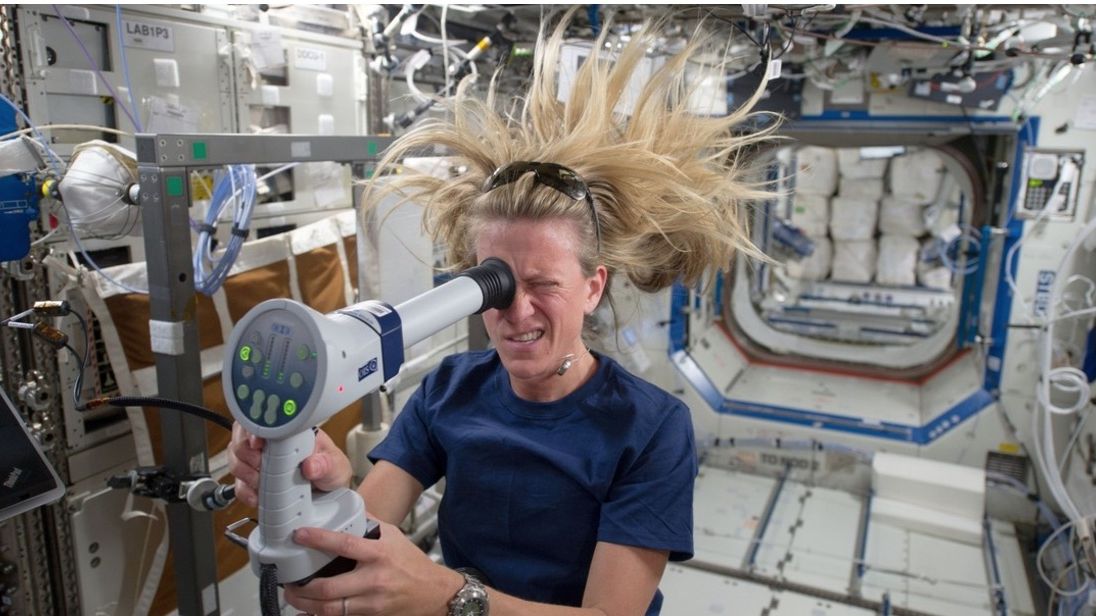
Astronauts who have spent extended periods aboard the International Space Station (ISS) have reported significant changes to their vision, prompting concerns about the effects of long-duration space travel on eyesight. Research indicates that 70 percent of astronauts who spent six to twelve months in microgravity have experienced shifts in their vision. This phenomenon is linked to spaceflight-associated neuro-ocular syndrome (SANS), a condition that involves swelling of the optic nerve, flattening at the back of the eye, and various degrees of vision impairment. It is believed that fluid redistribution in microgravity increases pressure on ocular structures, contributing to these changes. While many astronauts recover their vision after returning to Earth, the long-term effects of SANS are still unclear, making it a critical concern for missions beyond low Earth orbit, such as those planned for Mars.

A study led by Santiago Costantino at the Université de Montréal has provided new insights into how prolonged exposure to microgravity affects astronauts’ eyes. The research involved 13 astronauts, with participants from the United States, Europe, Japan, and Canada, who spent between five to six months aboard the ISS. Before and after their space missions, measurements were taken to assess ocular rigidity, intraocular pressure, and ocular pulse amplitude. The study found that ocular rigidity decreased by 33 percent, intraocular pressure dropped by 11 percent, and ocular pulse amplitude was reduced by 25 percent. Additionally, some astronauts experienced an increase in choroidal thickness, which could contribute to vision problems. These findings underline the serious implications of space travel on astronaut health.

SANS has been a known issue since the early 2000s, with Russian cosmonauts aboard the Mir space station reporting similar vision-related symptoms. NASA formally recognized the condition in 2011. While fluid shifts in microgravity are believed to be the primary cause of SANS, researchers are still working to fully understand the mechanisms at play. The condition poses a significant challenge for future deep-space missions, where astronauts will face extended periods away from Earth, potentially exacerbating the effects on their vision. As the duration of space missions increases, it becomes increasingly important to address this issue to ensure the health and safety of astronauts.

To mitigate the risks associated with SANS, researchers are exploring various countermeasures. These include negative pressure devices that may help regulate fluid distribution in the body, pharmaceutical treatments that target ocular pressure, and specialized nutrition plans to support eye health during space travel. However, until more is known about the long-term impacts of spaceflight on vision, further studies will be essential to developing effective solutions for future missions, especially those aiming for Mars, where astronauts may experience extended exposure to microgravity and its effects on their bodies.

Atmos Space Cargo’s Phoenix Capsule to Undergo First Orbital Test on SpaceX Mission

Atmos Space Cargo, a Germany-based company, is preparing to test its innovative cargo-return technology with the upcoming SpaceX Bandwagon 3 rideshare mission. Set to launch no earlier than April, the mission will carry Atmos’ Phoenix capsule into space for its first orbital test. Designed to safely return high-value materials from orbit, particularly biomedical samples, the Phoenix capsule aims to address the growing need for efficient and secure cargo retrieval in space. The mission will focus on collecting valuable data regarding the capsule’s subsystems, its onboard payloads, and its ability to handle reentry into Earth’s atmosphere.

The Phoenix capsule will carry a variety of scientific payloads, with notable items including a radiation detector developed by the German Aerospace Center (DLR) and a bioreactor from the UK-based Frontier Space. The key objectives of the mission are to test the Phoenix capsule’s in-orbit performance, evaluate customer experiments, and assess the functionality of its inflatable atmospheric decelerator (IAD). This innovative technology, which combines the functions of both a heat shield and a parachute, will help ensure a controlled reentry, enabling the capsule to return to Earth safely after completing its mission.

Returning cargo from space presents numerous challenges, despite the significant advancements in space exploration and launch technologies. Experts point out that while the costs of launching experiments into space have been decreasing, bringing these payloads back to Earth continues to be an expensive and technically demanding task. Long turnaround times, high costs, and the risk of payload damage during reentry further complicate the process. Atmos Space Cargo, with its Phoenix capsule, aims to overcome these hurdles by providing a more affordable and reliable solution for returning sensitive materials, such as biomedical samples and materials produced in microgravity environments.

By developing a cost-effective cargo-return system, Atmos Space Cargo is positioning Phoenix as an important tool for industries that rely on space-based research and experimentation. The successful deployment of this technology could lead to broader applications in fields like medicine, manufacturing, and materials science, where returning critical samples and products from space is crucial. The upcoming mission will be an important milestone in proving the capsule’s capabilities and its potential for future space missions.