Poco F7 Global Variant Surfaces on EEC Certification Site, Launch Imminent

Poco F7 Global Variant Listed on EEC Certification Site, Launch Expected Soon

The Poco F7 has been the subject of increasing speculation over the past few weeks, with rumors swirling about its various configurations, including the potential Poco F7 Pro and Poco F7 Ultra models. While reports have suggested that the higher-end Pro and Ultra variants may not launch in India, a special edition of the standard model is expected to debut alongside it in the region. The latest development, however, points to the imminent launch of the Poco F7 in global markets, as the device has been spotted on the European Economic Community (EEC) certification site.

Poco F7 Global Variant Spotted on EEC Certification

According to a report by The Tech Outlook, the Poco F7, bearing the model number 25053PC47G, was found listed on the EEC database. The listing includes a notification number KZ0000009843 and shows that the certification will remain valid until December 31, 2034. The presence of a “G” at the end of the model number suggests that this is the global variant of the device, which is expected to be available across multiple international markets, particularly in Europe.

Launch of Poco F7 in European Markets

Although the EEC listing doesn’t provide detailed specifications or features for the Poco F7, the certification indicates that the device is set to make its debut in Europe. This move highlights Poco’s commitment to expanding its presence in global markets, offering users access to a new mid-range smartphone. As the phone has now been certified, an official launch could be just around the corner, with more details expected to surface soon.

What to Expect from the Poco F7

While the EEC listing doesn’t reveal much about the Poco F7’s specifications, it is expected to follow in the footsteps of previous Poco F-series phones by offering high performance at an affordable price point. The standard model could feature a powerful chipset, an impressive display, and a capable camera setup, with a design aimed at attracting the budget-conscious yet performance-driven consumers. Fans of the brand are eagerly awaiting further leaks and announcements regarding the device’s full specifications and pricing ahead of the launch.
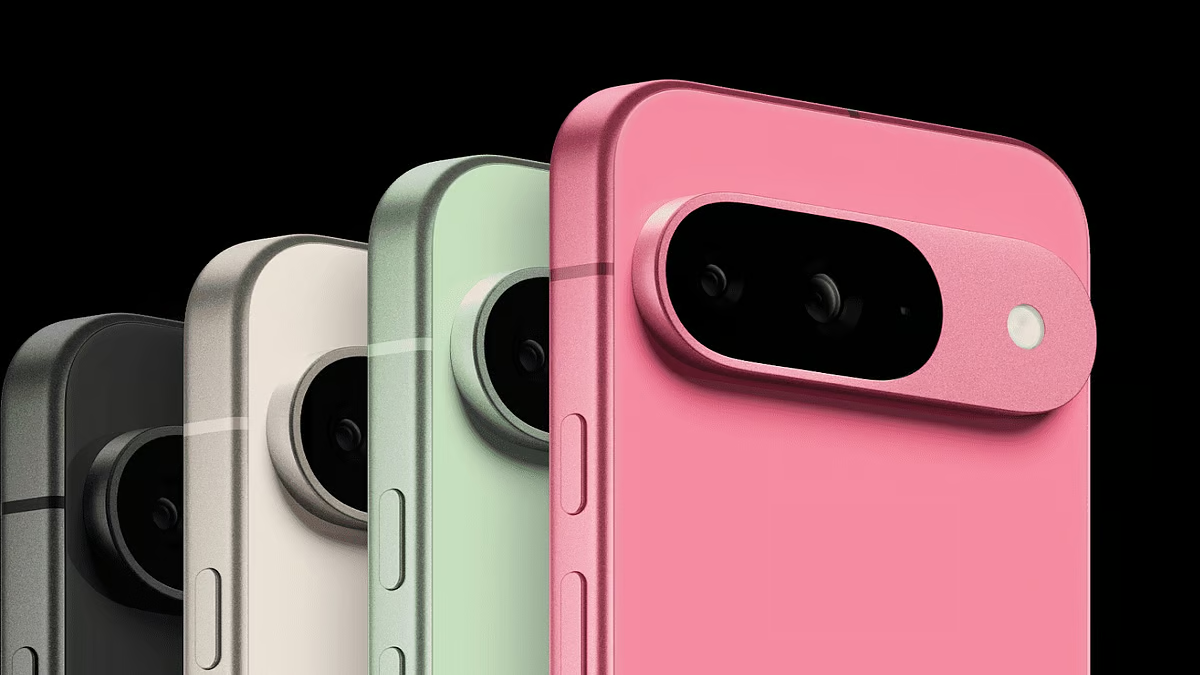
Google Pixel 9a Appears on EMVCo Certification Site, Revealing Model Number and Android Version

Google Pixel 9a Spotted on Certification Site, Hinting at Imminent Launch

The Google Pixel 9a has appeared on another certification website, suggesting that its official launch may be just around the corner. Google is reportedly preparing to introduce a new midrange smartphone powered by its Tensor G4 chipset. The device is also expected to ship with Android 15 out of the box, arriving before the release of Android 16, which is scheduled for late Q2 2025. Additionally, leaks indicate that the Pixel 9a will feature a 5,100mAh battery, offering a significant boost in battery life compared to its predecessor.

Pixel 9a Model Number and Android Version Revealed

According to a listing on the EMVCo certification website (via 91Mobiles), the Pixel 9a carries the model number GTF7P. While the listing does not explicitly mention the device’s name, it strongly suggests that Google is in the final stages of preparing the smartphone for release. The document, published on January 31, further strengthens speculation that the Pixel 9a could be launched sooner than previous A-series models.

Potential Early Launch Ahead of Google I/O

The listing also confirms that the Pixel 9a will run on Android 15 from day one. Previous reports suggest that Google might unveil the device as early as March 2025, making it the first Pixel A-series phone to launch before the annual Google I/O event in May. If true, this could indicate a shift in Google’s product release strategy, positioning the Pixel 9a as a strong competitor in the midrange smartphone segment.

Expected Specifications and Features

Leaked specifications from December 2024 suggest that the Pixel 9a will sport a 6.3-inch Actua display with a peak brightness of 2,700 nits, protected by Gorilla Glass 3. Under the hood, it is expected to be powered by the Tensor G4 chipset, paired with 8GB of RAM and 256GB of internal storage. The device is also rumored to come with an IP68 rating for water and dust resistance, enhancing its durability. If these leaks hold true, the Pixel 9a could set a new benchmark for midrange smartphones, offering flagship-like features at a more affordable price.

Apple Reportedly Halts Development of AR Glasses for Mac

Apple Reportedly Cancels Development of AR Glasses for Mac

Apple has reportedly halted the development of a new pair of augmented reality (AR) smart glasses that were intended to work alongside its Mac computers, according to a Bloomberg report. The company made its debut in the mixed reality space last year with the launch of the Apple Vision Pro in the US. The AR glasses were expected to be Apple’s next major wearable product, but it now appears that the Vision Pro will remain the company’s sole AR/VR hardware offering for the foreseeable future.

AR Glasses Project Codenamed N107 Scrapped

Bloomberg’s Mark Gurman, citing sources familiar with Apple’s plans, revealed that the company was working on AR glasses featuring advanced displays that would resemble conventional eyewear. The project, internally referred to as N107, was specifically designed to integrate with Mac computers, providing users with a more seamless AR experience. However, the development of the device was recently discontinued, signaling a shift in Apple’s focus within the AR/VR segment.

Apple Vision Pro Remains the Primary AR/VR Device

Apple’s Vision Pro, launched in 2023, represents the company’s first entry into spatial computing, blending both AR and virtual reality (VR) functionalities. Unlike the lightweight AR glasses that Apple had been developing, the Vision Pro is a bulky, high-end device priced at $3,499 (roughly ₹3 lakh) in the US. While the scrapped AR glasses were expected to offer a more user-friendly and accessible experience, Apple now seems committed to refining and expanding the capabilities of its existing Vision Pro headset.

Future of Apple’s AR Strategy

The cancellation of the AR glasses project suggests that Apple is prioritizing its current mixed reality roadmap rather than introducing a new category of wearables. While the Vision Pro is still in its early stages, Apple’s decision could be driven by technological challenges, cost concerns, or shifting market strategies. It remains to be seen whether Apple will revisit the concept of lightweight AR glasses in the future, but for now, the company appears focused on enhancing its spatial computing ecosystem through the Vision Pro.