New Research Reveals Active Lunar Tectonics, Challenging Moon’s Long-Standing Dormancy

A new study has challenged the long-held belief that the moon has been geologically dormant for billions of years. Recent findings show that tectonic activity might still be occurring beneath the lunar surface, potentially altering our understanding of the moon’s geological history. Researchers have identified small ridges on the far side of the moon that appear to have formed within the last 200 million years, indicating that the moon may not be as inactive as previously thought.

The research, published in The Planetary Science Journal on January 21, 2025, was conducted by a team from the Smithsonian Institution and the University of Maryland. The study revealed 266 previously unknown ridges located in volcanic regions on the far side of the moon, which are believed to be around 3.2 to 3.6 billion years old. However, the ridges themselves appear much younger, suggesting that tectonic processes are still shaping the lunar surface today.

The team used a technique known as crater counting to estimate the ages of the ridges. According to Jaclyn Clark, an Assistant Research Scientist at the University of Maryland’s Department of Geology, the presence of fewer craters on the ridges suggests they formed after other surface features had already been impacted. By examining the way the ridges cut through existing craters, the researchers were able to conclude that the lunar surface has experienced tectonic movement relatively recently—within the past 160 million years.

These findings could have profound implications for future lunar exploration. If the moon is still undergoing tectonic activity, it could affect the planning of lunar missions and the construction of infrastructure such as habitats or research stations. Understanding the current geological processes of the moon will be crucial as humanity looks to establish a more permanent presence on the lunar surface in the coming decades.

Apple Shares Surge Following Optimistic Sales Forecast, Indicating iPhone Recovery

Apple executives offered an optimistic forecast for the company’s future sales growth on Thursday, suggesting that the tech giant is poised to recover from recent declines in iPhone sales. This projection signals a positive outlook as Apple plans to expand its use of artificial intelligence (AI) features in its devices, a move that could revitalize the iPhone and other product lines. Apple’s ability to integrate AI more effectively into its offerings is expected to attract more users and potentially reinvigorate sales.

This positive outlook comes on the heels of a slightly disappointing holiday quarter, where iPhone revenues experienced a modest decline and fell short of Wall Street’s expectations. The lack of fully integrated AI features in some markets was cited as a key reason behind the lagging sales. However, Apple CEO Tim Cook reassured investors that these AI capabilities will become available to European customers in the spring, helping to bolster the company’s performance in key markets.

Apple’s cautious approach to AI has set it apart from competitors like Microsoft, which has invested heavily in massive data centers to support AI technologies. Instead, Apple is focusing on integrating AI features into its hardware, allowing it to enhance the functionality of its devices without the enormous infrastructure investments of its rivals. This strategy seems to be paying off, especially following an unexpected surge in shares earlier this week after China’s DeepSeek unveiled free AI technology, which led to a drop in the stock prices of some of Apple’s competitors.

Despite the AI rollout challenges, Apple’s overall performance has been buoyed by strong sales in its iPad and Mac product lines. The introduction of new chips has encouraged customers to upgrade their devices, further contributing to Apple’s financial growth. As the company continues to refine its AI offerings and expand its reach, the forecasted recovery in iPhone sales is expected to be a key driver for Apple’s success in the coming quarters.

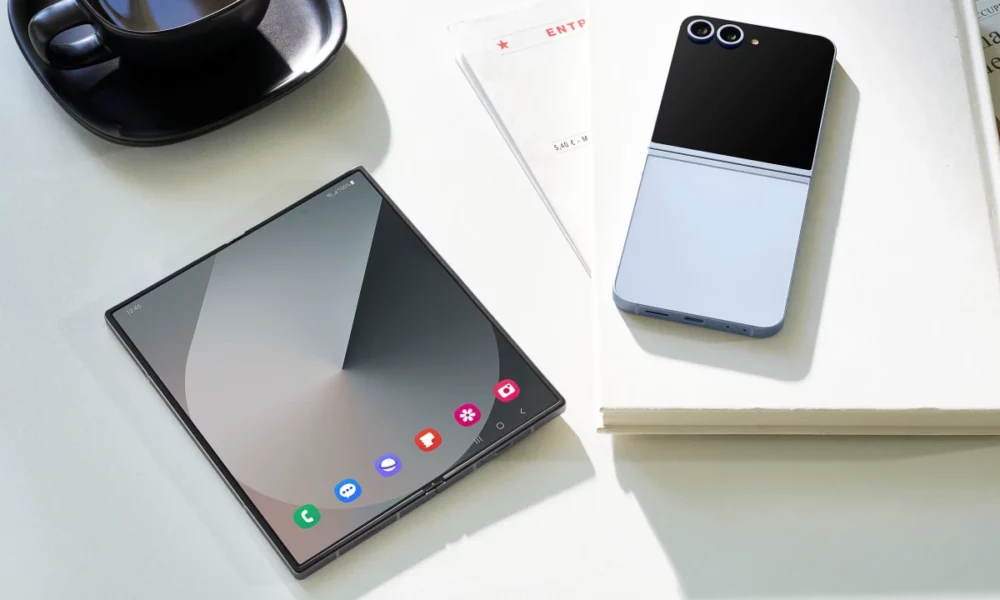
Samsung Galaxy Z Fold 7 to Feature Snapdragon 8 Elite SoC; Leaked RAM and Storage Options for Galaxy Z Flip 7

Samsung’s upcoming foldable devices, the Galaxy Z Fold 7 and Galaxy Z Flip 7, are generating buzz ahead of their expected release later this year. Following the launch of the Galaxy S25 series with the new Snapdragon 8 Elite for Galaxy SoC, there are strong indications that Samsung could bring this same powerful chipset to its foldable lineup. Leaked details from tipster PandaFlash (@PandaFlashPro) suggest that the Galaxy Z Fold 7 will feature the Snapdragon 8 Elite for Galaxy, which could be the company’s flagship chipset for all global variants of the device.

In the post, PandaFlash mentions that all prototypes of the Galaxy Z Fold 7 are currently equipped with the Snapdragon 8 Elite, reinforcing the idea that this chipset will likely be the go-to choice for Samsung’s high-end foldables. This chipset is expected to offer top-tier performance, complementing the advanced foldable technology Samsung has introduced with the Galaxy Z series. On the other hand, the Galaxy Z Flip 7 may feature a different processor, as earlier leaks pointed to the inclusion of the Exynos 2500 chipset, which may be facing some production challenges.

The tipster further claims that the Exynos 2500 chipset, which was initially expected to power both foldable devices, is currently causing “production issues,” which could explain why it might only end up in the Galaxy Z Flip 7. The shift from the Exynos to the Snapdragon 8 Elite for the Galaxy Z Fold 7 suggests Samsung might prioritize performance and stability for its more premium foldable device, ensuring a seamless experience for users.

In addition to the chipset, RAM and storage configurations for the Galaxy Z Fold 7 and Galaxy Z Flip 7 have also been leaked, although specific details remain unclear. With Samsung’s reputation for offering high-end specifications, both devices are likely to feature a combination of ample RAM and fast storage options to support multitasking and demanding applications. As the launch approaches, more information is expected to surface, giving fans and tech enthusiasts a clearer picture of what to expect from these next-generation foldables.