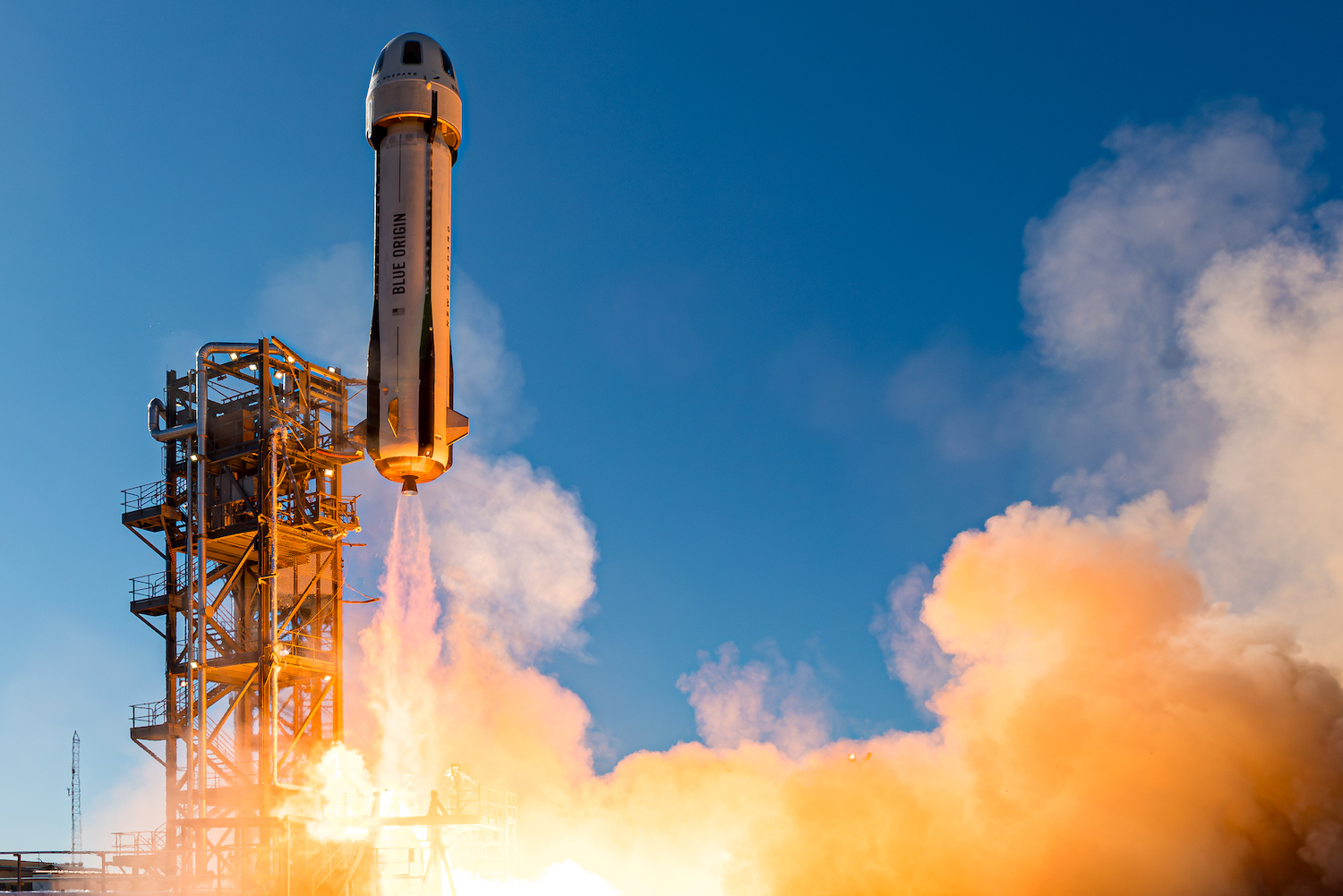
Blue Origin’s New Shepard NS-29 Mission Aims to Simulate Lunar Gravity

Blue Origin’s New Shepard rocket is set to launch its NS-29 mission on January 31, 2025, at 11:30 a.m. EST from Launch Site One in West Texas. This uncrewed flight will focus on testing 30 experiments, with the majority of them being developed for NASA, aimed at advancing technologies crucial for lunar exploration. The mission is particularly notable for including a test designed to simulate lunar gravity, providing valuable insights for future missions to the Moon. This marks Blue Origin’s first suborbital mission of the year, further emphasizing its commitment to supporting NASA’s Artemis program and the broader goals of space exploration.

Among the 30 experiments being carried out, 17 are being developed by NASA to tackle various challenges related to lunar exploration. One such experiment, the Electrostatic Dust Lofting project from NASA’s Kennedy Space Center, will study the behavior of lunar dust under ultraviolet light. This is vital for understanding how dust might affect lunar landers, rovers, and equipment on the Moon’s surface. Another significant project is Purdue University’s FEMTA, which aims to test a water-based microthruster for small satellites, a technology that could play a pivotal role in lunar missions. Additionally, Honeybee Robotics will conduct the H-Bee experiment, which examines how bubbles behave in thick liquids in low gravity, mimicking conditions on the Moon.

A key feature of the NS-29 mission is its lunar gravity simulation. To achieve this, the New Shepard capsule will use its reaction control thrusters to spin at about 11 revolutions per minute during the flight. This spinning action will generate an environment similar to the Moon’s one-sixth gravity for two minutes, allowing researchers to study how various materials and equipment behave under these unique conditions. This simulation will provide data that could accelerate the development of technologies needed for future lunar missions.

The data collected from the NS-29 mission will be invaluable in enhancing the technology used for planetary exploration and in shaping the tools needed for both scientific and commercial lunar missions. As NASA and its partners prepare for the challenges of returning to the Moon, experiments like those in the NS-29 mission are crucial in addressing the technical hurdles that come with such ambitious endeavors. Blue Origin’s efforts contribute significantly to the growing infrastructure for lunar exploration, supporting both governmental space programs and private industry goals.

Enormous 500,000-Mile Coronal Hole on the Sun Sends Solar Winds Toward Earth

A massive coronal hole, stretching approximately 800,000 kilometers across, has appeared on the sun’s surface, sending high-speed solar winds hurtling toward Earth. This vast opening in the sun’s magnetic field is allowing charged particles to escape at speeds of over 500 kilometers per second. The solar wind generated by this coronal hole is expected to reach Earth by January 31, and space weather experts predict it could trigger minor geomagnetic storm conditions. This event provides an exciting opportunity for enhanced auroral displays, particularly for observers in high-latitude regions.

The impact of this solar wind on Earth’s magnetosphere is being closely monitored by experts. According to data from spaceweather.com, a minor geomagnetic storm watch (classified as G1) has been issued by the National Oceanic and Atmospheric Administration (NOAA). This storm classification is the lowest on NOAA’s scale, ranging from G1 (minor) to G5 (extreme). While this storm is not expected to be particularly intense, it is still likely to enhance auroras, especially in polar regions, offering skywatchers a rare celestial spectacle.

The arrival of charged particles from the solar wind triggers interactions with Earth’s magnetic field, which excites oxygen and nitrogen molecules in the atmosphere. This results in the formation of vibrant auroras, more commonly known as the northern and southern lights. As the intensity of the solar wind increases, the auroras can become more vivid and widespread, with colors ranging from green to red to purple. While a G1 storm usually has limited effects on Earth, it still provides an opportunity for those in the right locations to witness this mesmerizing natural phenomenon.

Although the expected storm will be minor, fluctuations in space weather conditions can lead to variations in the visibility and intensity of auroras. Those living in areas near the poles or at higher latitudes may have the best chance to observe these brilliant light displays, while the rest of the world can still enjoy the excitement surrounding the cosmic event. The coronal hole’s activity serves as a reminder of the dynamic nature of the sun and its ongoing influence on our planet’s space environment.

Comet 2024 G3 (ATLAS) Set to Dazzle as the ‘Great Comet’ of 2025

Comet 2024 G3 (ATLAS) has truly captivated skywatchers, earning the title of the “Great Comet of 2025” thanks to its extraordinary celestial display. The comet’s bright, vivid tails and remarkable brightness have drawn attention from astronomy enthusiasts across the globe. Discovered on April 5, 2024, by the Asteroid Terrestrial Impact Last Alert System (ATLAS) in Chile, it has delivered a breathtaking show that many observers won’t soon forget. The comet reached its closest approach to the Sun on January 13, 2025, dazzling viewers with a complex tail and heightened luminosity.

The celestial event is being hailed as historic due to the comet’s unprecedented brightness, reaching magnitudes not seen since Comet McNaught in 2007. During its perihelion, Comet 2024 G3 shone brightly, rivaling Venus in the sky, with a recorded magnitude of -3.8. This was based on careful data analysis from experts, including Polish researcher Mieczyslaw Paradowski. The Solar and Heliospheric Observatory (SOHO) also contributed observations, highlighting the comet’s brilliance as it moved closer to the Sun, offering a rare and awe-inspiring sight for observers around the world.

Although Comet 2024 G3 was visible to those in the Northern Hemisphere for a brief period in early January, its position soon shifted, making it more prominent in the Southern Hemisphere. Observers in southern regions were treated to a spectacular view, with the comet’s tail stretching across an impressive 15 degrees of the sky. This stunning display was particularly noted by astronomer Michael Mattiazzo in Swan Hill, Australia, who confirmed the breathtaking sight visible to many in the Southern Hemisphere.

As the comet continues its journey, it has left an indelible mark on those who had the opportunity to witness it, and its status as the “Great Comet of 2025” is firmly established. Its beauty and brightness serve as a reminder of the wonders of our universe and the excitement that celestial phenomena can bring to the global community of skywatchers.