
Donald Trump’s Crypto Firm Unveils Strategic Token Reserve and DeFi Investment Plans

World Liberty Financial (WLF), a cryptocurrency firm backed by US President Donald Trump, has recently unveiled its strategic token reserve aimed at navigating market fluctuations and maintaining a crypto-backed fund pool. This announcement was made public on the firm’s official X (formerly Twitter) account on Wednesday, February 12, 2025. The launch of the reserve marks a significant milestone for WLF, which was introduced by President Trump in September 2024 as part of his broader vision to position the United States as a leading global hub for cryptocurrency innovation. While the firm’s goals were initially ambiguous, its direction is becoming clearer, with the reserve expected to play a key role in its strategy.

In a post shared on X, WLF emphasized that the establishment of a well-capitalized token reserve is a testament to their commitment to transparency and long-term sustainability. The company highlighted that this reserve will not only foster trust among its community and stakeholders but also provide institutions with transparent exposure to the rapidly evolving crypto market. The contributed assets will be securely held in WLFI’s publicly accessible wallet, ensuring that investors and institutions can monitor their engagement with the crypto space in real-time.

Five months into its operation, WLF is now expanding its vision, signaling its intention to bridge the divide between traditional finance (TradFi) and decentralized finance (DeFi). TradFi includes conventional banking systems and financial intermediaries that are governed by central banks and regulatory bodies. On the other hand, DeFi offers a decentralized approach to financial services, allowing individuals to access various financial products without the need for intermediaries like banks. WLF’s efforts to connect these two worlds could provide a new avenue for institutional players to engage with the decentralized finance ecosystem while navigating the complexities of traditional financial systems.

The move to establish a strategic token reserve and explore DeFi investments could have far-reaching implications for the cryptocurrency industry. By blending the reliability of traditional finance with the innovation of DeFi, WLF aims to create a more inclusive and sustainable financial ecosystem. As more details emerge about their DeFi strategies and token reserve management, the firm’s approach could pave the way for future collaborations and innovations within the broader financial sector, especially as the global demand for cryptocurrency-backed solutions continues to rise.

Star and Its Planet May Be Speeding Through the Galaxy at Unprecedented Velocity

A newly discovered exoplanet system could be setting a record for speed, traveling at a staggering 1.2 million miles per hour (540 kilometers per second). This potential record-breaker involves a low-mass star and a planet in orbit, both of which appear to be racing through the Milky Way at an incredible velocity. If confirmed, this discovery would be the first known instance of a planet orbiting a hypervelocity star, with the system moving nearly twice as fast as our own solar system does as it traverses the galaxy. This high-speed movement presents a fascinating new avenue for studying how celestial bodies interact under extreme conditions.

The system was first detected through microlensing, a technique that has proven to be a valuable tool in identifying distant objects in space. Researchers utilized data from the Microlensing Observations in Astrophysics (MOA) project, which recorded a significant lensing event in 2011. Microlensing occurs when the gravitational field of a massive object bends the light from a background star, allowing scientists to detect objects that would otherwise be invisible. Through this method, they were able to infer the presence of two celestial bodies in the system, with a mass ratio of approximately 2,300 to 1. Despite these calculations, the exact masses of the star and planet remain uncertain due to the unknown distance of the system from Earth.

David Bennett, Senior Research Scientist at the University of Maryland and NASA’s Goddard Space Flight Center, explained that while the mass ratio between the two objects is relatively straightforward to determine, calculating their actual masses requires additional observations. The initial analysis suggested two possible scenarios for the system’s composition. In one scenario, the star could have around 20 percent of the Sun’s mass, with a planet that has a mass roughly 29 times that of Earth. Alternatively, the system could consist of a rogue planet that is about four times the mass of Jupiter, accompanied by a smaller moon.

This discovery is significant not only because of the speed at which the system is traveling but also because of the potential implications for our understanding of planetary systems. If this system does indeed feature a planet orbiting a hypervelocity star, it would challenge many current assumptions about how such systems form and evolve. Further research and observations will be necessary to fully understand the dynamics of this high-speed system, but for now, it remains one of the most exciting discoveries in the field of astrophysics.

CERN’s ALPHA Experiment Successfully Measures Antihydrogen with Unprecedented Precision

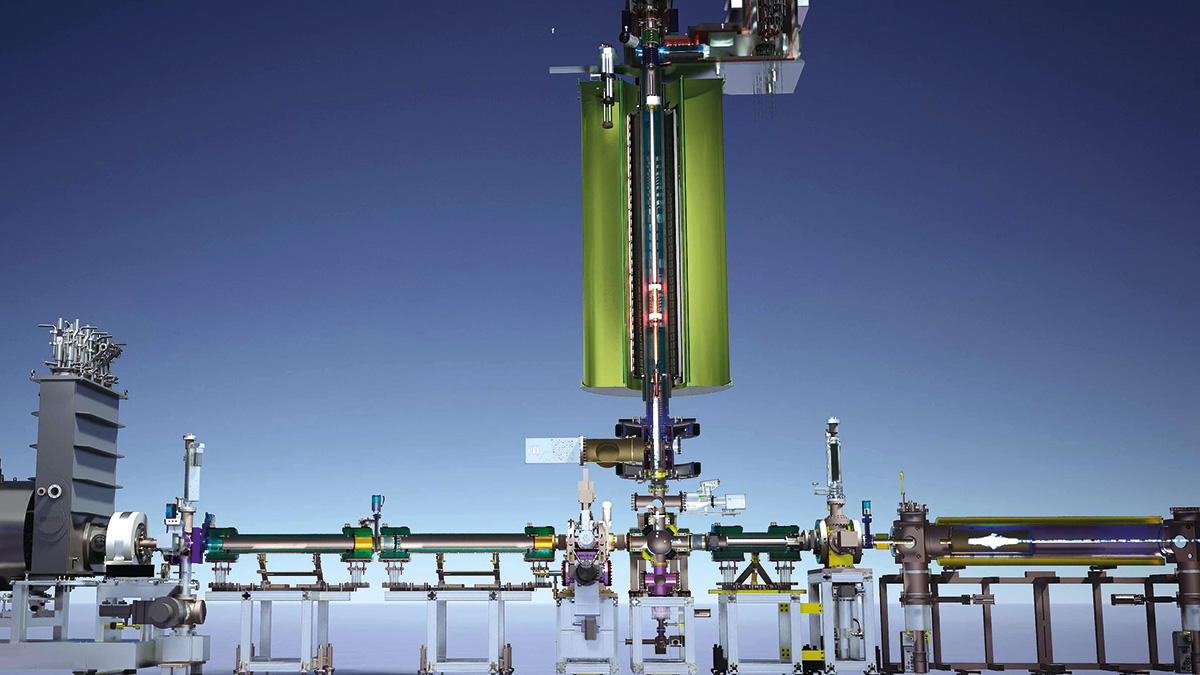
The study of antimatter has reached a new milestone with precise measurements conducted by the international team at CERN as part of the ALPHA experiment. This groundbreaking research focuses on antihydrogen, which is the antimatter counterpart of hydrogen, and aims to explore its fundamental characteristics. Recently, the ALPHA experiment achieved a remarkable breakthrough by measuring an electronic transition in antihydrogen with unprecedented accuracy. This advancement could provide key insights into whether antimatter adheres to the same physical principles as regular matter, shedding light on a fundamental question in physics.

The findings, detailed in a study published in Nature Physics, focus on the 1S–2S transition in antihydrogen atoms, which refers to an energy shift between two electronic levels. The team utilized advanced techniques that allowed them to observe this transition in both accessible hyperfine components, offering a deeper understanding of the internal structure of antihydrogen. To enhance the precision of these measurements, the researchers employed laser cooling methods, which effectively reduce the motion of the atoms, narrowing the spectral measurements and improving the overall accuracy of the study.

Jeffrey Scott Hangst, spokesperson for the ALPHA collaboration, emphasized the uniqueness of their ability to produce, confine, and study antihydrogen. In a statement to Phys.org, Hangst explained that these breakthroughs are a significant step forward in the quest to compare hydrogen and antihydrogen with such high precision. The ability to examine both substances side by side could potentially reveal key differences or similarities that would help determine whether antimatter follows the same laws of physics as ordinary matter.

This research represents a crucial step in antimatter studies, as scientists continue to probe the fundamental building blocks of the universe. By improving the precision of measurements and expanding our understanding of antimatter, the ALPHA experiment could pave the way for new discoveries that challenge or confirm long-held theories in physics. The success of this experiment is not only a triumph for the ALPHA team but also for the broader scientific community, marking an important achievement in the ongoing search for answers about the nature of antimatter.