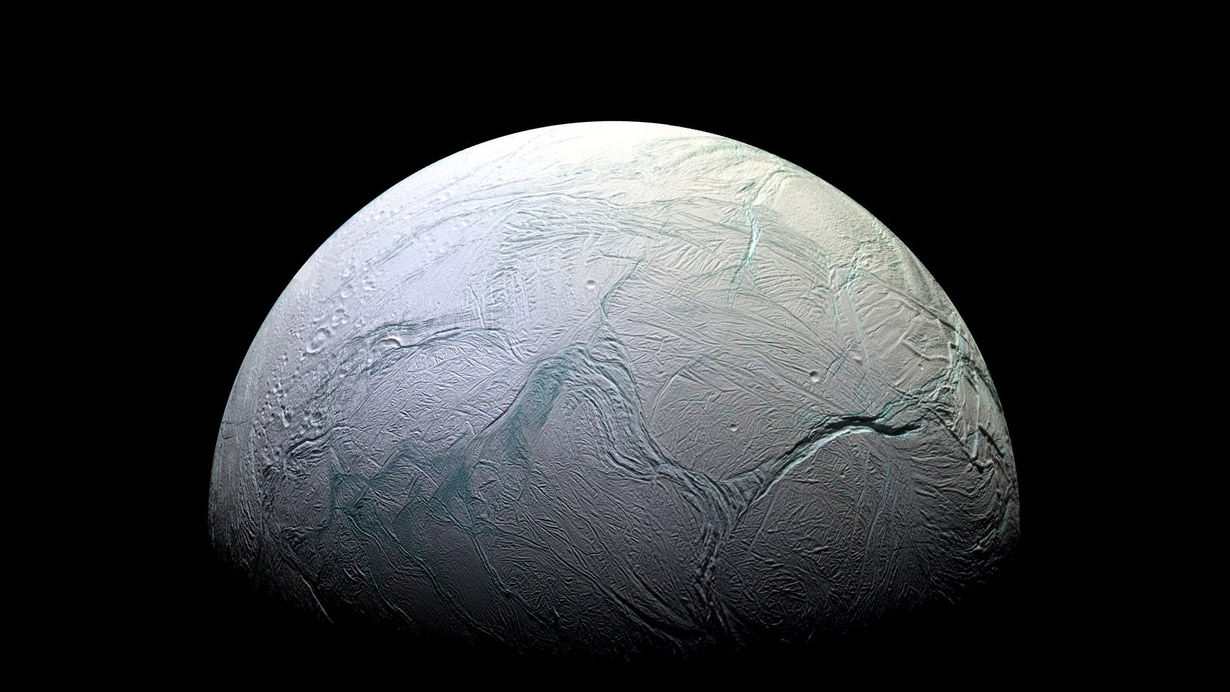
Study Suggests Enceladus’ Geysers May Have a Different Origin Than Its Underground Ocean

Saturn’s moon Enceladus has long captivated scientists due to its dramatic geysers, which were thought to be directly connected to a vast underground ocean beneath its icy crust. This subsurface ocean has been considered a potential habitat for extraterrestrial microbial life, making Enceladus a key target for astrobiological exploration. However, new research challenges this assumption, suggesting that the geysers may instead originate from a slushy, salt-laden layer within the ice shell itself rather than from the deep ocean. This discovery reshapes our understanding of the moon’s geologic activity and its potential for supporting life.

A study published in Geophysical Research Letters by researchers from Dartmouth College proposes that Enceladus’ plumes do not necessarily require fractures that extend all the way down to the underground ocean. Instead, the study suggests that a semi-liquid layer within the ice shell, rich in salts, could be responsible for the observed eruptions. Because salts lower the freezing point of water, certain regions of the ice may remain in a slushy state, providing a reservoir for the plumes without needing a direct link to the ocean below.

The research also highlights the role of “tiger stripe” fractures in Enceladus’ southern hemisphere, where these eruptions occur. Scientists propose that friction between ice layers, a process known as shear heating, could generate enough warmth to maintain pockets of briny water within the shell. This process would explain how water vapor and ice particles are ejected into space without requiring a deep-seated oceanic source. If this theory is correct, it could mean that Enceladus’ geysers are more localized surface phenomena rather than direct windows into the moon’s global ocean.

This new perspective on Enceladus’ geysers has significant implications for future space missions. If the plumes are not directly linked to the subsurface ocean, they may not be as useful for detecting potential signs of life as previously hoped. However, the presence of liquid reservoirs within the ice shell still suggests intriguing geologic activity that warrants further investigation. As scientists continue to study Enceladus, upcoming missions such as NASA’s Europa Clipper and potential future probes to Saturn’s moons could help clarify the true nature of these mysterious eruptions.

Mistral Unveils OCR API for Converting PDFs into AI-Optimized Format

Mistral has unveiled its Optical Character Recognition (OCR) API, a new AI-powered tool designed to process and convert PDF documents into AI-ready text formats such as Markdown or raw text. Announced on Thursday, this API aims to simplify the extraction of textual data from PDFs, making it more accessible for artificial intelligence models. The Paris-based AI company claims that the Mistral OCR API will not only enable developers to build AI applications capable of analyzing PDF files but also assist in generating datasets for training new AI models.

PDF documents present a significant challenge for AI-driven applications. Traditional large language models (LLMs) struggle to process information from PDFs due to their formatting, which prevents direct text extraction using conventional Retrieval-Augmented Generation (RAG) techniques. This limitation means that if an AI system is asked to search through a collection of PDFs for specific information, it may have difficulty retrieving accurate results.

Currently, AI developers working on PDF-processing solutions face constraints in implementing efficient analysis tools. While major companies like Google and Adobe have developed proprietary OCR solutions—such as NotebookLM and Adobe’s AI assistant—open-source developers lack access to a similarly advanced tool. Mistral’s OCR API aims to bridge this gap by providing a high-efficiency, AI-compatible solution for extracting text from PDFs.

By introducing this API, Mistral is positioning itself as a key player in the AI-driven document processing space. The tool could be particularly beneficial for businesses, researchers, and AI developers seeking to automate data extraction from PDFs, ultimately improving the efficiency of AI applications that rely on structured textual input. With the increasing demand for AI-ready data, Mistral’s latest innovation has the potential to transform how digital documents are processed and utilized in machine learning applications.

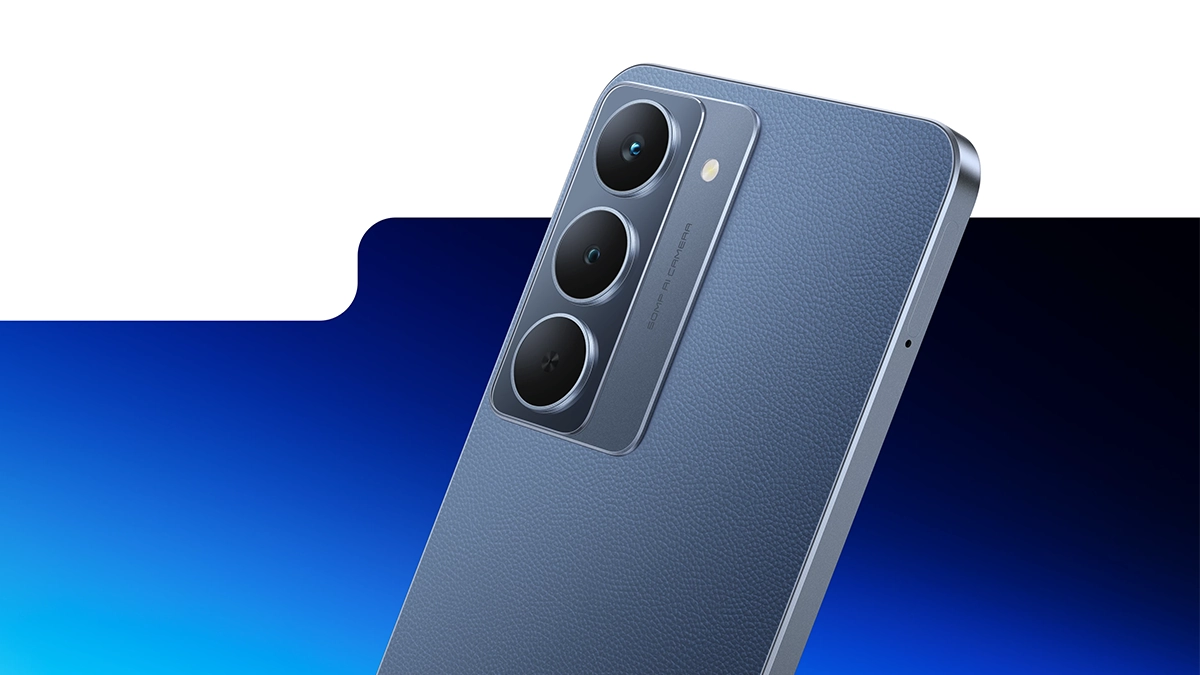
Realme Narzo 80x 5G India Variant: Leaked Details on RAM, Storage, and Color Options

The Realme Narzo 80x 5G is expected to debut in India soon, following in the footsteps of its predecessor, the Realme Narzo 70x 5G, which launched in April 2024. Recent leaks have shed light on some key aspects of the upcoming device, including its RAM, storage configurations, and available color options. Additionally, there have been reports suggesting that Realme is also working on higher-end models, namely the Narzo 80 Pro and Narzo 80 Ultra. However, the company has yet to make any official announcements regarding the Narzo 80 series.

According to a report by 91Mobiles, the Realme Narzo 80x 5G is identified by the model number RMX3944. Interestingly, this is the same model number associated with the already launched Realme P3x 5G, leading to speculation that the Narzo 80x 5G could share several specifications with the P3x 5G. While the exact hardware details remain unconfirmed, this similarity suggests that the two devices may have overlapping features.

The report further claims that the Narzo 80x 5G will be available in multiple RAM and storage variants. Expected configurations include 6GB RAM with 128GB storage, 8GB RAM with 128GB storage, and a high-end option with 12GB RAM and 256GB storage. This range of choices will likely appeal to users with varying performance and storage needs, from casual users to power users who require more memory and storage capacity.

In terms of aesthetics, the Realme Narzo 80x 5G is rumored to be available in two color options—Sunlit Gold and Deep Ocean. These choices suggest that Realme is catering to both those who prefer vibrant, eye-catching designs and those who favor more classic, understated looks. While leaks have provided some insight into the upcoming smartphone, Realme has not officially confirmed any details, so fans will have to wait for an official announcement to get a complete picture of the Narzo 80x 5G.