
Apple Said to Be Working on Upgraded C1 Modem with mmWave Support for Next iPhone

Apple is reportedly working on a refreshed version of its proprietary C1 modem, addressing a key functionality missing from the current iteration. The original C1 modem, which was first introduced with the iPhone 16e last month, marked a significant step for Apple, as it reduced the company’s reliance on Qualcomm for cellular modem technology. While the C1 modem represents an important advancement, the iPhone 16e, powered by this modem, lacks mmWave support, a feature that allows for faster 5G speeds in certain conditions. However, Apple is now said to be developing a new version of the modem that will include mmWave functionality, potentially offering significant improvements.

According to TF Securities analyst Ming-Chi Kuo, the current C1 modem in the iPhone 16e utilizes a 4nm or 5nm baseband, 7nm low-frequency transceivers, 7nm transreceivers for immediate frequency, and a 55nm Power Management Integrated Circuit (PMIC). This setup supports only sub-6GHz 5G, which is sufficient for most uses but falls short in areas where mmWave support is critical. While Apple claims the C1 modem is the “most power-efficient modem ever,” the lack of mmWave support has been a limiting factor, especially when it comes to download and upload speeds. To address this, Apple is now focused on developing a refreshed version that can handle mmWave frequencies, which could significantly enhance the performance of future iPhones.

The upcoming C1 modem refresh is expected to include new transreceivers and front-end components based on a 28nm node to support mmWave. While this upgrade is technically feasible, Kuo notes that balancing high-performance capabilities with power efficiency remains a challenge. The addition of mmWave support isn’t particularly complex from a technical standpoint, but it requires careful tuning to ensure that power consumption doesn’t increase significantly. Apple will likely focus on maintaining its reputation for power efficiency while delivering faster 5G speeds, particularly in regions where mmWave 5G is available.

While the refreshed C1 modem is still under development, its inclusion of mmWave support is expected to bring a considerable boost to the iPhone’s 5G capabilities, especially in urban areas where mmWave infrastructure is more common. This move further solidifies Apple’s push to reduce its dependency on third-party suppliers like Qualcomm and establish a more independent approach to modem technology. As 5G networks continue to expand and evolve, Apple’s ongoing advancements in this area will play a crucial role in shaping the performance and competitiveness of its future devices.
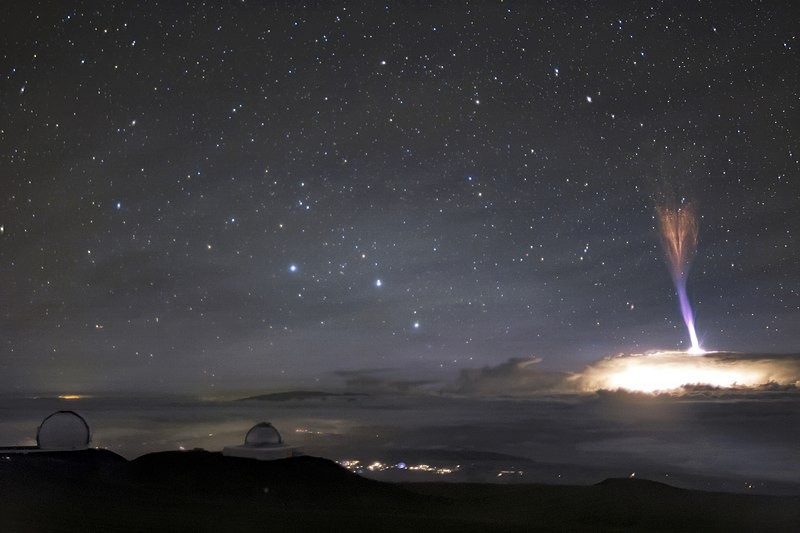

Astronaut Captures Stunning Image of ‘Gigantic Jet’ Lightning Reaching 50 Miles Above Earth

A rare and stunning phenomenon known as a “gigantic jet” of lightning has been captured in a photograph taken from space. The image, which shows the lightning reaching nearly 50 miles above the Earth’s surface, was taken by an astronaut aboard the International Space Station (ISS) on November 19, 2024. However, the photograph wasn’t immediately shared by space agencies. It wasn’t until photographer Frankie Lucena, who specializes in documenting rare lightning events, discovered the image on NASA’s Gateway to Astronaut Photography of Earth website that it gained widespread attention. The images were later featured by Spaceweather.com on February 26, 2025, highlighting the remarkable capture.

The gigantic jet is believed to have originated from a thunderstorm near New Orleans, Louisiana. Spaceweather.com reports that the ISS was flying over the Gulf of Mexico when the photograph was taken, offering clues as to where the storm may have occurred. However, due to the dense cloud cover visible in the image, pinpointing the exact location of the event proved difficult. In total, four separate lightning events were identified in the astronaut’s photo sequence, but it was the unique upward-shooting jet that caught the most attention, standing out from the usual downward lightning strikes seen in typical thunderstorms.

Gigantic jets are a rare and fascinating phenomenon in the world of atmospheric science. Unlike traditional lightning, which typically strikes downward, gigantic jets extend upward from thunderstorms, reaching into the ionosphere, which is about 50 miles above Earth’s surface. These powerful electrical discharges are the result of inverted charge layers within clouds, causing them to shoot high into the atmosphere. The jets glow with a blue hue due to interactions with nitrogen in the upper atmosphere, creating an ethereal and almost otherworldly appearance. However, they are extremely brief, lasting for less than a second, making them incredibly difficult to observe.

This rare occurrence provides scientists with an important opportunity to study these powerful electrical phenomena. While gigantic jets are known to happen sporadically, capturing one from space allows for a deeper understanding of their behavior and the conditions that cause them. These high-altitude lightning discharges remain one of the many mysterious and captivating aspects of Earth’s weather systems, continuing to intrigue both scientists and skywatchers alike.

NASA Explores Cutting-Edge Infrared Technology to Enhance Wildfire Tracking and Response

In January, wildfires in California caused widespread devastation, leaving a trail of destruction across communities and ecosystems. In an effort to improve wildfire monitoring and response, NASA has deployed an advanced scientific instrument designed to provide detailed, real-time data on active fires. The Compact Fire Infrared Radiance Spectral Tracker (c-FIRST) was tested aboard NASA’s B200 King Air aircraft over fire-ravaged areas such as Pacific Palisades and Altadena. This technology, originally developed for satellite missions, aims to enhance wildfire understanding and improve strategies for fire mitigation by capturing high-resolution thermal infrared images.

The c-FIRST instrument was created by NASA’s Jet Propulsion Laboratory (JPL) and is managed with support from NASA’s Earth Science Technology Office. Its compact design allows it to be easily deployed on airborne platforms, simulating the capabilities of satellite-based observation systems while providing near-instantaneous data. The technology has the ability to capture an extensive range of fire characteristics, including temperature variations across vast areas. Unlike traditional infrared imaging systems, c-FIRST can detect temperatures exceeding 1,000 degrees Fahrenheit (550 degrees Celsius) with significantly improved clarity, offering a much more detailed picture of fire dynamics.

According to Sarath Gunapala, the principal investigator for c-FIRST at NASA JPL, traditional fire monitoring instruments have limitations that prevent them from fully capturing the full scope of wildfire behavior. In particular, previous technologies have struggled to provide comprehensive data on fire size, frequency, and intensity. This gap in information can hinder timely response and accurate predictions about fire growth and behavior. Gunapala’s team hopes that the enhanced capabilities of c-FIRST will bridge these gaps, providing more precise and timely information for decision-makers and emergency responders.

The potential applications for c-FIRST go beyond immediate fire response. Scientists aim to use the technology to enhance their understanding of wildfire behavior and its impact on ecosystems. By monitoring fires in greater detail, researchers can gain valuable insights into how different fire conditions interact with the environment, potentially leading to better prediction models and more effective fire management strategies. As wildfires continue to pose a growing threat in many parts of the world, innovations like c-FIRST could play a critical role in safeguarding both communities and the environment from the devastating effects of these natural disasters.