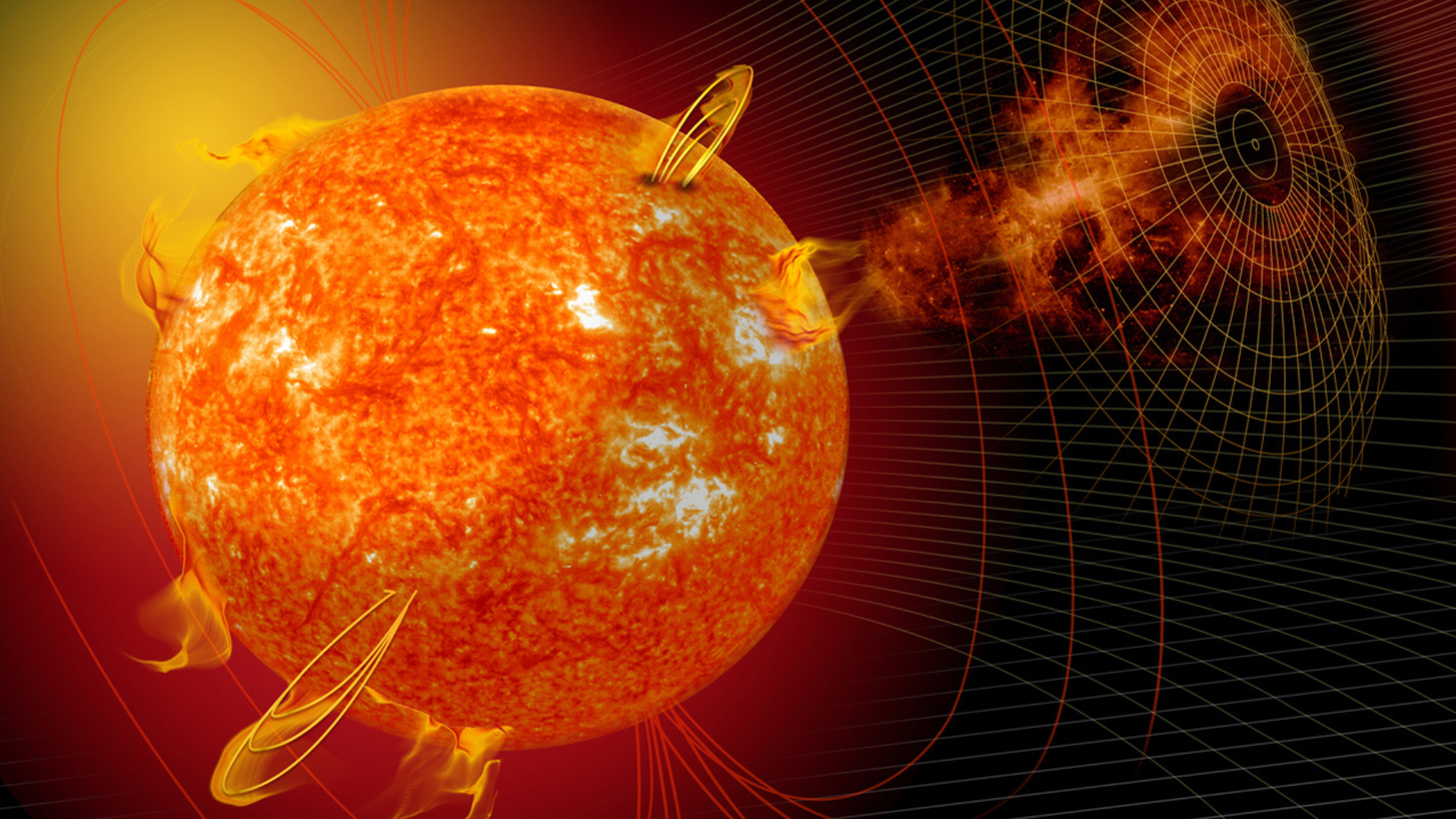
NOAA Warns of Increased Solar Storm Risk with Double CME Strike on Earth

A rare and powerful event took place, as two separate coronal mass ejections (CMEs) erupted from the Sun, heading directly toward Earth. These solar eruptions are predicted to result in a spectacular display of auroras or northern lights, with the most intense show expected around April 16. However, the impact of these CMEs goes beyond just the visual beauty they may bring. Due to the magnitude and trajectory of the solar particles, the event is also anticipated to cause geomagnetic storms, which could affect various regions on Earth. The phenomenon was closely monitored by space agencies, who have deemed the likelihood of geomagnetic activity particularly high.

The CMEs originated from an unusually active sunspot region, known for producing both M-class and X-class solar flares in the preceding days. According to the National Oceanic and Atmospheric Administration (NOAA), these intense solar eruptions have prompted the issuance of a geomagnetic storm watch. The storm is expected to reach Earth on April 16, bringing with it the potential for moderate (G2) or even strong (G3) geomagnetic storms. While these types of storms can disrupt communications and power systems, they also offer a rare opportunity for skywatchers to witness extraordinary auroral displays. NOAA’s Space Weather Prediction Center is closely tracking the event to provide up-to-date information to the public.

Typically, auroras are visible in the polar regions, where geomagnetic storms are most intense. However, this particular event is expected to extend the auroral visibility much further south than usual. Regions like Canada, Minnesota, Michigan, Idaho, New York, and parts of Northern Europe may experience glimpses of the northern lights. Predictions from the European Space Agency (ESA) suggest that the incoming solar material could generate powerful auroras across these areas. According to space weather physicist Tamitha Skov, the solar storms are expected to travel slowly, but with their high density, they could still pack a significant punch, producing particularly vibrant and widespread displays.

CMEs are massive explosions of solar plasma and magnetic fields that, when directed toward Earth, interact with our planet’s magnetosphere. This interaction triggers a chain reaction, causing the charged particles to collide with Earth’s atmosphere. The result is the formation of colorful auroras, which are often seen as shimmering green, purple, and red lights. However, CMEs can also disrupt communication systems, such as radio waves and GPS signals, and even cause power outages by interfering with electrical grids. As scientists continue to study the Sun’s activity, they anticipate more solar storms throughout the remainder of the solar cycle, particularly as the Sun reaches its peak activity. These storms will likely become a more frequent phenomenon in the coming months.
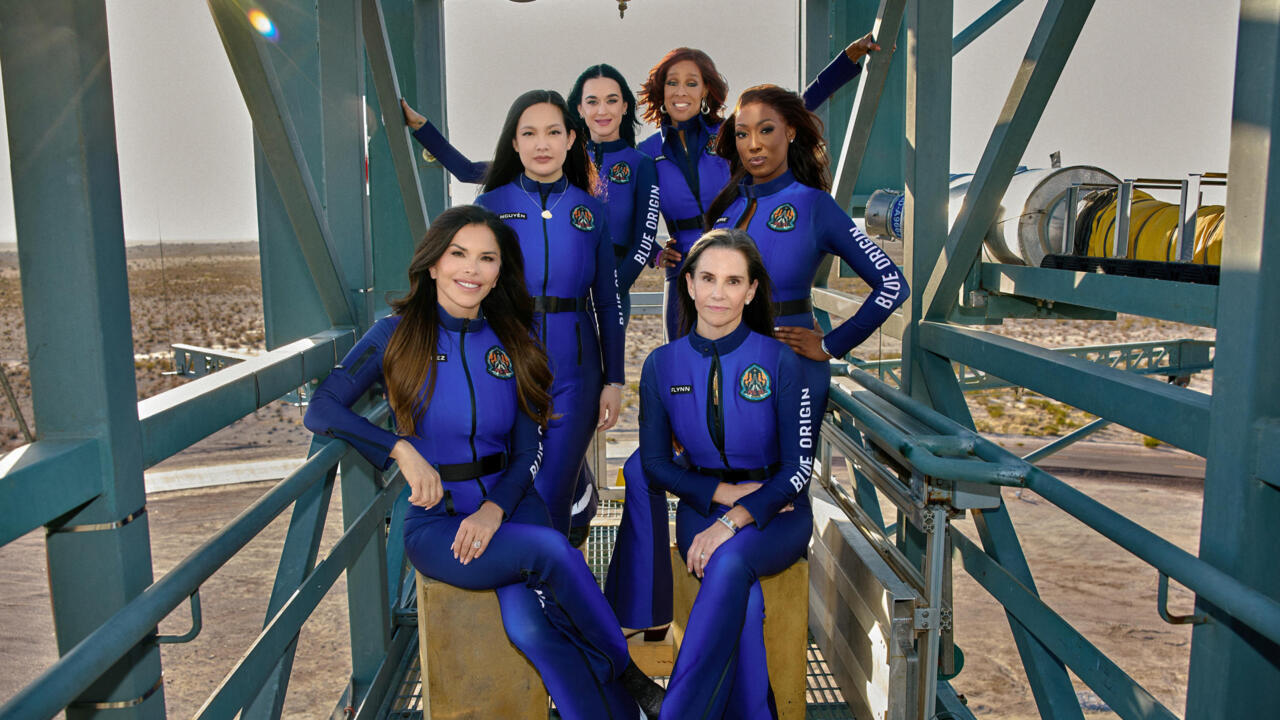

Katy Perry and All-Female Crew Complete Successful Spaceflight Return

Blue Origin Successfully Completes Historic All-Female Spaceflight Featuring Katy Perry and Others

Blue Origin, the aerospace company founded by Jeff Bezos, marked a historic milestone on Monday, April 14, by completing the first-ever all-female crewed spaceflight. This landmark mission, NS-31, was the 31st overall launch and the 11th human spaceflight for Blue Origin’s reusable New Shepard spacecraft. Notably, it was the first time since 1963 — when Valentina Tereshkova became the first woman in space — that an all-female group journeyed to the edge of space together.

The crew included a dynamic mix of personalities: global pop icon Katy Perry, television journalist Gayle King, NASA rocket scientist Aisha Bowe, film producer Kerianne Flynn, civil rights advocate Amanda Nguyen, and journalist Lauren Sánchez, who is also Jeff Bezos’ fiancée. The initiative was largely spearheaded by Sánchez, and it celebrated the achievements of women from various walks of life. The team’s spirit was reflected in their specially designed mission patch, “the six taking up space,” featuring symbolic elements representing each astronaut’s background and contributions.

The New Shepard lifted off at 9:31 a.m. ET from Blue Origin’s West Texas launch site, reaching the Kármán line — the recognized boundary of space, situated roughly 100 kilometers above Earth. During their brief but unforgettable journey, the crewmembers experienced a few minutes of weightlessness, floating freely while marveling at the breathtaking views of the Earth below and the endless expanse beyond. One touching moment captured during the livestream was Katy Perry’s joyful reaction upon seeing the Moon, exclaiming, “Oh my God, that’s our pink Moon!”

The entire mission lasted approximately 11 minutes and concluded with a safe landing back at the launch site. This successful flight not only underlined Blue Origin’s focus on broadening space access but also symbolized a powerful message of female empowerment and achievement. The NS-31 mission stands as a tribute to how far space travel — and the role of women within it — has evolved over the past six decades.

Mark Zuckerberg Defends Meta Against US Antitrust Allegations During Trial Testimony

Meta CEO Mark Zuckerberg testified on Monday in a closely watched antitrust trial in Washington, defending the company against claims that it acquired Instagram and WhatsApp to stifle competition. US regulators argue that Meta’s multibillion-dollar deals were strategically aimed at neutralizing emerging threats to Facebook’s dominance in the social media landscape.

The Federal Trade Commission (FTC) is seeking a major structural remedy that could force Meta to divest Instagram and WhatsApp. This case, viewed as a major test of the US government’s willingness to challenge Big Tech, comes at a critical time when Meta’s revenue heavily depends on platforms like Instagram, which reportedly contributes to nearly half of the company’s US advertising income.

During his testimony, Zuckerberg, dressed in a dark suit and light blue tie, maintained a calm demeanor as he refuted claims that the acquisitions were motivated solely by a desire to crush competition. He insisted that connecting friends and family was only one part of Meta’s broader vision for its apps. Zuckerberg highlighted that Facebook’s strategy also emphasized helping users discover public content, beyond just personal sharing.

Zuckerberg also addressed a pivotal 2018 decision when Facebook shifted its focus back to content shared by friends, a move that failed to keep pace with how users were increasingly sharing through private messages rather than public posts. Meanwhile, the FTC presented internal communications suggesting Zuckerberg had viewed acquiring Instagram and WhatsApp as strategic moves to preempt future rivals, particularly with the rising competition from newer platforms like TikTok.