
Oppo A5 Pro 5G Launch Timeline Tipped Alongside Expected Price and Key Specifications

Oppo seems to be preparing for the India launch of its Oppo A5 Pro 5G, following its debut in China late last year. Although the company hasn’t officially confirmed the release date, recent leaks suggest that the launch could happen by the end of this month. The Chinese variant of the smartphone comes with a MediaTek Dimensity 7300 chipset and a dual rear camera system, including a 50-megapixel primary sensor. It also packs a massive 6,000mAh battery, supported by 80W wired fast charging — a specification that could make it stand out in the budget 5G segment.

According to a report from 91Mobiles, which cites tipster Yogesh Brar, the Oppo A5 Pro 5G will arrive in India before the month concludes. The leak also includes what is claimed to be a live image of the device’s rear panel. Interestingly, the Indian model may differ slightly in design from the Chinese variant, featuring a square-shaped camera module instead of the circular layout seen earlier. This suggests that Oppo might be tweaking the design to better align with regional preferences or differentiate between markets.

In terms of pricing, the Chinese version of the Oppo A5 Pro 5G launched in December 2023 with a price tag of CNY 1,999 (approximately Rs. 23,300) for the 8GB RAM + 256GB storage configuration. Given Oppo’s usual pricing strategy in India, the device is expected to carry a similar price point locally, possibly placing it in direct competition with other mid-range 5G smartphones like the Redmi Note 13 series or the Realme Narzo 70 Pro.

If the leaked specifications and design tweaks hold true, the Oppo A5 Pro 5G could offer an appealing mix of battery life, fast charging, and processing power for users looking for a capable daily driver. With 5G networks expanding across India, Oppo’s upcoming phone may serve as an accessible entry point into next-gen connectivity while offering reliable hardware for multimedia and multitasking. More details, including official pricing and availability, are expected in the coming weeks as the launch date approaches.

Study Suggests Earth’s Mantle May Contain an Ancient Ocean of Magma Formed Billions of Years Ago

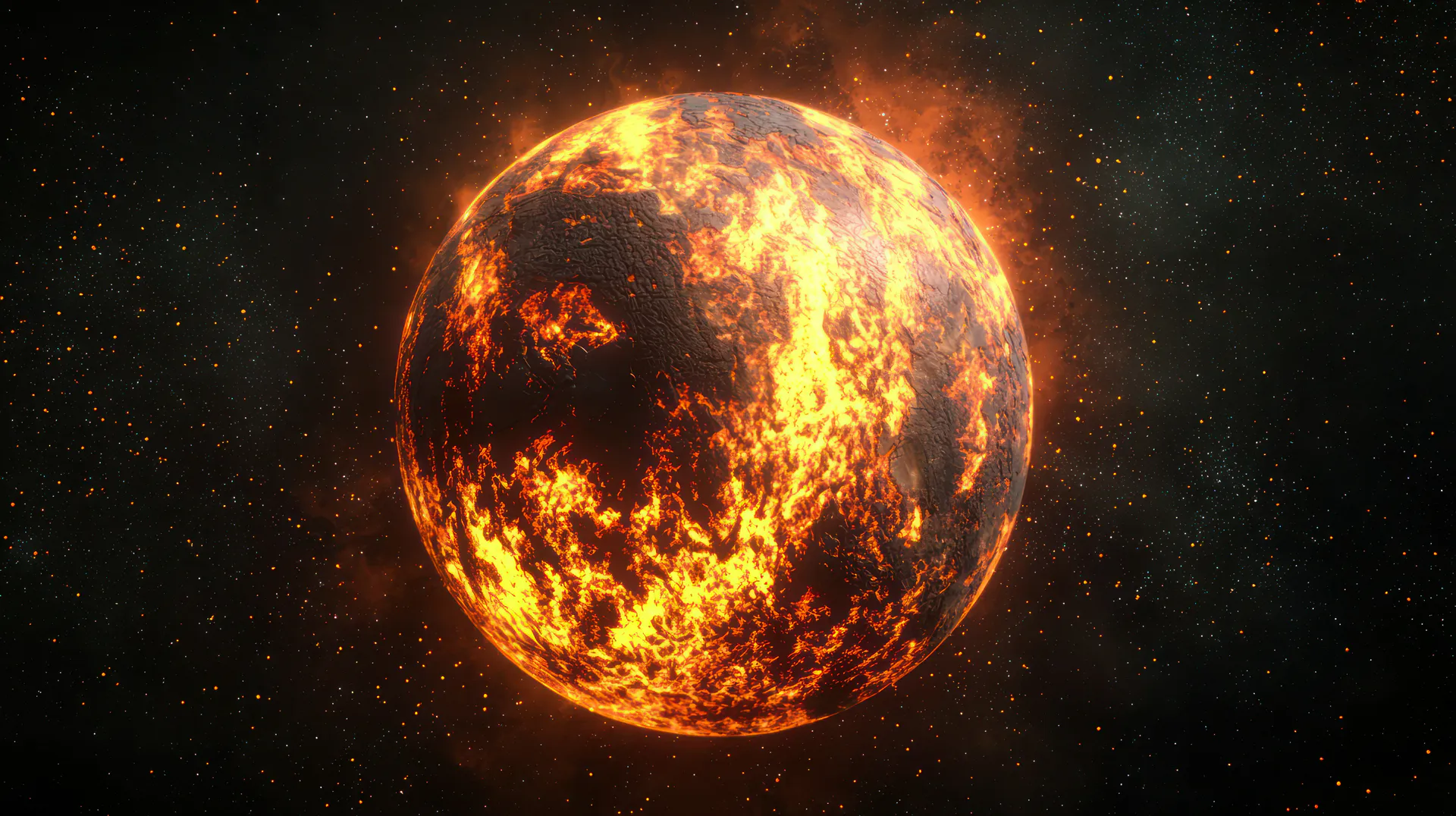
A groundbreaking study published in Nature on March 26 reveals that Earth’s mantle may harbor remnants of an ancient ocean of magma that formed around 4.4 billion years ago. This molten layer, situated near the boundary between Earth’s mantle and core, could be influencing the planet’s geological activity today, manifesting as unusual mantle anomalies. The research sheds light on the large-scale structures within the Earth’s interior, such as the Large Low-Velocity Provinces (LLVPS), which were identified using advanced seismic imaging techniques. These discoveries suggest that the formation of a magma ocean in Earth’s early history played a pivotal role in shaping the planet’s thermal and tectonic evolution.

The study, led by Assistant Professor Charles-Édouard Boukaré from York University, Toronto, proposes that the magma ocean, formed deep within Earth’s interior, could be affecting the thermal communication between the mantle and the core. This interaction, in turn, might influence the behavior of tectonic plates and the dynamics of Earth’s surface. According to Boukaré, this molten layer is a key element in understanding the current behavior of Earth’s geological processes, highlighting how ancient conditions continue to impact the planet today.

In their study, Boukaré and his team, including James Badro and Henri Samuel from French research institutions, combined geochemical and seismic data to develop a new model explaining how early crystallization in Earth’s interior led to the formation of this persistent magma ocean. The team proposes that dense, iron oxide-rich solids sank towards the core under extreme temperatures and pressures, remelting into a permanent ocean of magma. This model suggests that such a magma ocean formed regardless of how Earth’s mantle solidified, whether from the core outwards or vice versa, challenging previous assumptions about the planet’s internal evolution.

The lasting effects of this ancient magma ocean are believed to have shaped the internal structure of Earth, leaving a geological “memory” that continues to influence tectonic movements and mantle convection. The LLVPS, which date back over 4.4 billion years, are thought to be remnants of this primordial magma layer, providing a tangible link to the early history of the planet. Boukaré’s findings offer a fascinating glimpse into the Earth’s deep past, suggesting that the imprint of the magma ocean still affects geological processes, influencing the shape and dynamics of the planet as we know it today.

Looking beyond Earth, Boukaré is eager to expand the model to other rocky planets. His research could offer valuable insights into the formation of planets across the solar system, potentially revealing that magma oceans were not unique to Earth but may have been a common feature in the early history of other rocky worlds. This work could open new avenues in planetary science, helping scientists better understand the processes that shaped not only Earth but also its neighboring planets.

Gigabyte Unveils GeForce RTX 5060 Series GPUs Featuring Nvidia Blackwell RTX Architecture and DLSS 4

Gigabyte has officially launched its GeForce RTX 5060 series graphics processing units (GPUs), marking a significant step in the mid-range GPU market. These new models, the GeForce RTX 5060 Ti and RTX 5060, are designed to provide gamers with an exceptional experience at 2K and 1080p resolutions. Powered by Nvidia’s latest Blackwell RTX architecture, these GPUs come equipped with cutting-edge features such as DLSS 4 Multi Frame Generation, aimed at improving performance and delivering smoother frame rates. Alongside these upgrades, Gigabyte has also focused on optimizing the cooling system to ensure a balanced combination of high performance and efficient power consumption, catering to a wide range of users with various needs.

In terms of availability, the GeForce RTX 5060 Ti models have already been made available for purchase, offered in both 8GB and 16GB memory configurations. However, the GeForce RTX 5060 GPU will officially go on sale in May. Gigabyte’s diverse range of models ensures that there’s something for everyone, from casual gamers to enthusiasts looking for top-tier performance. The company offers various versions of the GPUs, including Aorus Elite, Gaming, Aero, Eagle, Eagle Ice, Windforce, and even low-profile models to suit different user preferences and system setups.

The specifications for these GPUs vary across the different models, providing options for both stock-clocked and factory-overclocked configurations. For instance, the Aorus GeForce RTX 5060 Ti Elite 16G model stands out with its 32GB of GDDR7 memory and an impressive core clock speed of 2,722 MHz, making it the flagship model in the lineup. In contrast, the GeForce RTX 5060 Ti Gaming model features a core clock speed of 2,647 MHz and a memory clock of 28 Gbps. At the lower end, the GeForce RTX 5060 Ti Windforce is positioned as the entry-level option with a 2,572 MHz core clock speed. On the standard RTX 5060 side, the Aorus GeForce RTX 5060 Elite model comes with 8GB of GDDR7 memory and 3,847 CUDA cores, providing excellent performance for most gaming and creative workloads.

All of the GPUs in the GeForce RTX 5060 series are built on Nvidia’s Blackwell architecture, which incorporates the latest fifth-generation Tensor cores and fourth-generation ray tracing cores. This allows the GPUs to offer support for full ray tracing, with advanced neural rendering capabilities. DLSS 4 Multi Frame Generation is a standout feature of these GPUs, offering enhanced performance and smoother gameplay, even in demanding titles. Whether you’re a gamer looking for high frame rates or a content creator who needs powerful GPU performance, the GeForce RTX 5060 series is designed to meet the needs of a wide audience, bringing next-generation technology to mid-range users at an accessible price point.