Anthropic Reportedly Preparing to Launch Claude 4.5 Opus With Enhanced Jailbreak Resistance

Anthropic is reportedly nearing the release of Claude 4.5 Opus, the most advanced model in its Claude 4.5 series. According to recent leaks, the San Francisco-based AI company has begun testing a new large language model (LLM) with red-teamers — experts tasked with probing AI systems for vulnerabilities. The model, internally codenamed Neptune V6, is said to place a strong emphasis on resisting jailbreaks and prompt-injection exploits, marking a notable step forward in AI safety research. The company has already introduced Claude 4.5 Sonnet and Claude 4.5 Haiku, leaving Opus as the last expected variant in the lineup.

Anthropic Begins Red-Teaming Phase for New Model

As per a post by Tibor Blaho, Lead Engineer at AIPRM, Anthropic has distributed the Neptune V6 model to external red-teamers for testing. Blaho also revealed that the firm has launched a 10-day “universal jailbreak” challenge, where participants who successfully identify confirmed vulnerabilities or bypasses in the model’s safeguards will receive bonus rewards. This initiative signals a rigorous pre-release security audit process — one that encourages ethical testing before the model is made available to the public.

Focus on Reinforcing Safety and Jailbreak Resistance

The leak suggests that Anthropic is doubling down on safety and robustness, areas where the company has historically distinguished itself from competitors. Claude models are already known for their strong alignment capabilities and resistance to manipulation, but the upcoming Opus version reportedly takes these defenses even further. The focus on resisting jailbreaks highlights Anthropic’s commitment to ensuring its AI systems remain compliant, even in adversarial conditions where users attempt to override restrictions or induce unsafe responses.

Anticipation Builds for Claude 4.5 Opus Launch

If these reports prove accurate, the Claude 4.5 Opus could represent one of Anthropic’s biggest advancements since the Claude 4 series debuted earlier this year. The company has not officially commented on the leaks or provided a launch timeline, but given the red-teaming phase is already underway, a public release could be imminent. As the AI landscape heats up with models like GPT-5 and Gemini Ultra, Anthropic’s move to bolster its flagship model’s security could set a new standard for responsible AI deployment.

YouTube to Tighten Age Limits on Graphic Gaming Content and Live Streams

YouTube is introducing significant updates to its content moderation policies, with a particular focus on violent gaming videos and livestreams. Starting November 17, the platform will begin enforcing stricter age restrictions on video game footage that includes scenes of “graphic violence.” Under the new rules, viewers under 18 — as well as those not logged into their accounts — will be unable to access videos or streams that meet the threshold for excessive violence. The platform says this decision reflects its ongoing efforts to create a safer environment for younger audiences while maintaining creative freedom for content creators.

According to YouTube, the updated guidelines will evaluate violent gaming content using a more nuanced system. The review process will consider multiple factors, including the level of realism in violent scenes, how prominently the violence is featured, and the overall duration of such moments. This means that brief, stylized depictions of combat may still be accessible to general audiences, while realistic or prolonged scenes of gore or harm will likely be age-restricted. The company emphasized that creators will be notified about affected videos, and violations will be handled through its standard moderation process.

This policy expansion builds on YouTube’s existing rules regarding violent and graphic content but introduces clearer boundaries specifically for gaming-related videos. The platform has long faced criticism from parents, educators, and advocacy groups for the accessibility of violent gaming material to minors. By tightening restrictions, YouTube aims to strike a balance between protecting younger users and allowing adult audiences to engage with gaming content freely.

Additionally, YouTube is also taking steps to curb the reach of gambling-related gaming videos, which often blur the lines between entertainment and real-money betting. These efforts, combined with the new violence policy, mark one of YouTube’s most comprehensive overhauls of gaming content regulation in recent years. The company hopes that the move will not only enhance user safety but also encourage responsible content creation within the gaming community.

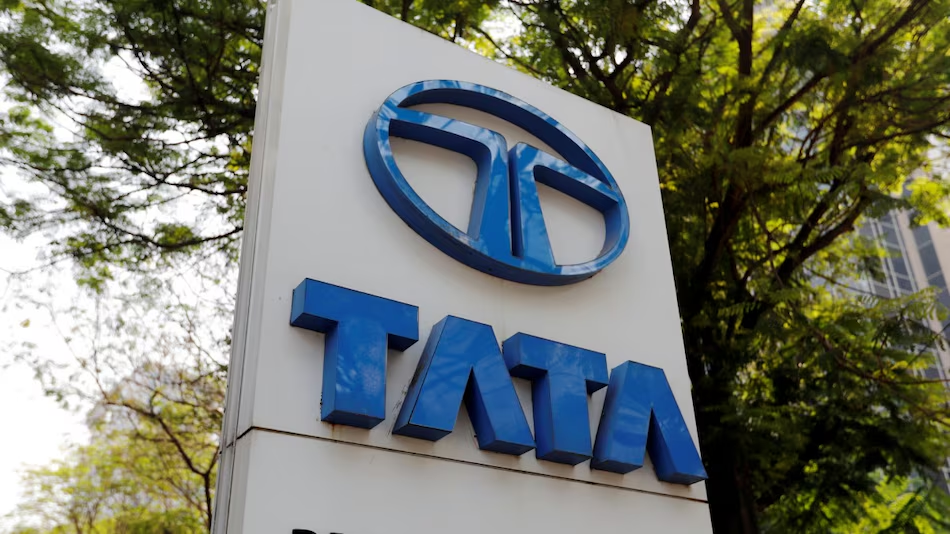
Tata Motors Said to Fix E-Dukaan and FleetEdge Vulnerabilities Following AWS Key Exposure

Tata Motors reportedly addressed several critical security flaws in two of its digital platforms — E-Dukaan and FleetEdge — following a disclosure from an independent cybersecurity researcher. According to the report, the vulnerabilities were identified in 2023 and were serious enough to potentially expose sensitive company data. The flaws were said to have revealed Amazon Web Services (AWS) access keys, which, if exploited, could have allowed attackers to download confidential information or upload malicious files to Tata Motors’ cloud servers.

Researcher Flags Data Exposure Risks

Cybersecurity researcher Eaton Zveare, who has previously reported vulnerabilities in major tech platforms, detailed his findings in a blog post published earlier this week. He claimed that Tata Motors’ E-Dukaan platform, the company’s e-commerce portal for vehicle parts, contained misconfigured access that exposed AWS credentials. These credentials, he explained, could have granted full access to the company’s cloud storage, including internal files and sensitive operational data.

FleetEdge Platform Also Found Vulnerable

In addition to E-Dukaan, Zveare also discovered flaws in FleetEdge, Tata Motors’ fleet tracking and management solution. The researcher identified four key vulnerabilities that could have allowed unauthorised users to access restricted data and system resources. He noted that the flaws could be exploited remotely, making them particularly dangerous if discovered by malicious actors.

Tata Motors’ Response and Remediation

Tata Motors was reportedly notified about the security lapses in 2023, and the company acted promptly to patch the exposed endpoints and revoke compromised AWS keys. Following internal investigations, both E-Dukaan and FleetEdge were updated with enhanced authentication and access control mechanisms. The automaker has not disclosed whether any data breaches occurred as a result of the vulnerabilities, but cybersecurity experts have praised the company for its swift response and transparency. The incident underscores the growing cybersecurity challenges facing large automotive companies as they continue expanding into connected and cloud-based services.