
New Discovery of PDS 70b’s Unusual Chemistry Shakes Up Planet Formation Theories

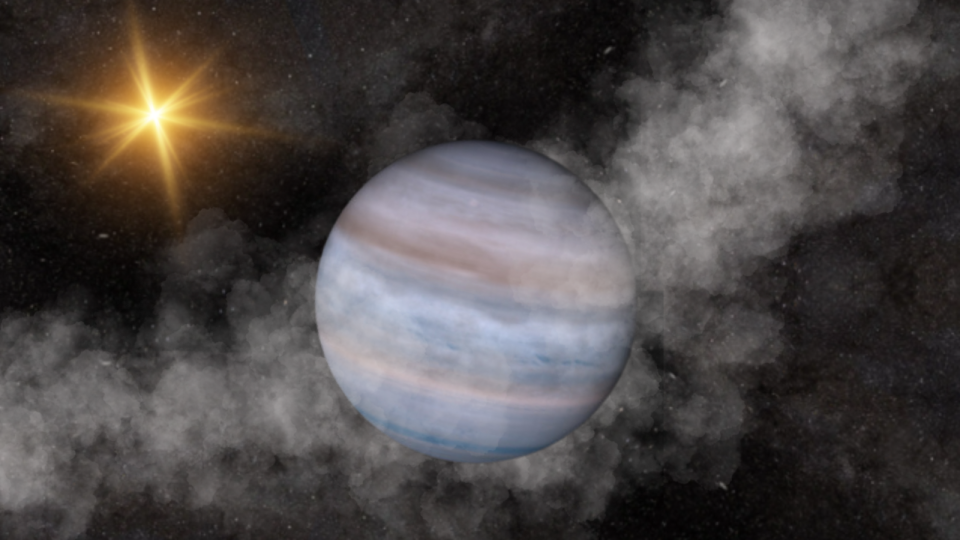
Recent research on PDS 70b, a young exoplanet situated about 400 light-years away in the Centaurus constellation, has prompted a reevaluation of our current understanding of planet formation. In a study published in Astrophysical Journal Letters, astronomers discovered a significant chemical mismatch between the planet’s atmosphere and the protoplanetary disk it formed from. This finding challenges the conventional models of how planets develop their mass and chemical composition over time, suggesting that our theories may need substantial revision.

PDS 70b, a gas giant nearly three times the size of Jupiter, resides in a two-planet system orbiting its host star at a distance comparable to Uranus’s orbit in our solar system. Researchers believe the planet has been in the process of accumulating material for around 5 million years, possibly nearing the final stages of its formation. Observations made with the Keck II telescope in Hawaii allowed scientists to analyze the planet’s atmosphere, looking for key elements like carbon monoxide and water vapor. These elements are vital in determining the planet’s chemical makeup and provide insights into how it came to be.

The research revealed a surprising discrepancy in the levels of carbon and oxygen in PDS 70b’s atmosphere, which were significantly lower than what current models would predict. This unexpected result has led to questions about the accuracy of existing theories. Dr. Chih-Chun Hsu, a postdoctoral researcher at Northwestern University and the study’s lead author, emphasized that the findings suggest the existing models might be oversimplified, overlooking crucial factors in planetary formation processes.

The discrepancy in PDS 70b’s chemical composition could have broad implications for the field of planetary science. It challenges the way scientists understand the processes that govern planet formation, particularly the mechanisms by which a planet gathers and incorporates elements from its surrounding environment. This new research opens up exciting possibilities for future investigations into planetary systems, especially those that are still in the early stages of development, and could lead to revised models that better account for the complexities of planet formation.

Study Suggests TRAPPIST-1b May Host a Carbon Dioxide-Dominated Atmosphere

Recent Observations Suggest Carbon Dioxide Atmosphere on TRAPPIST-1b

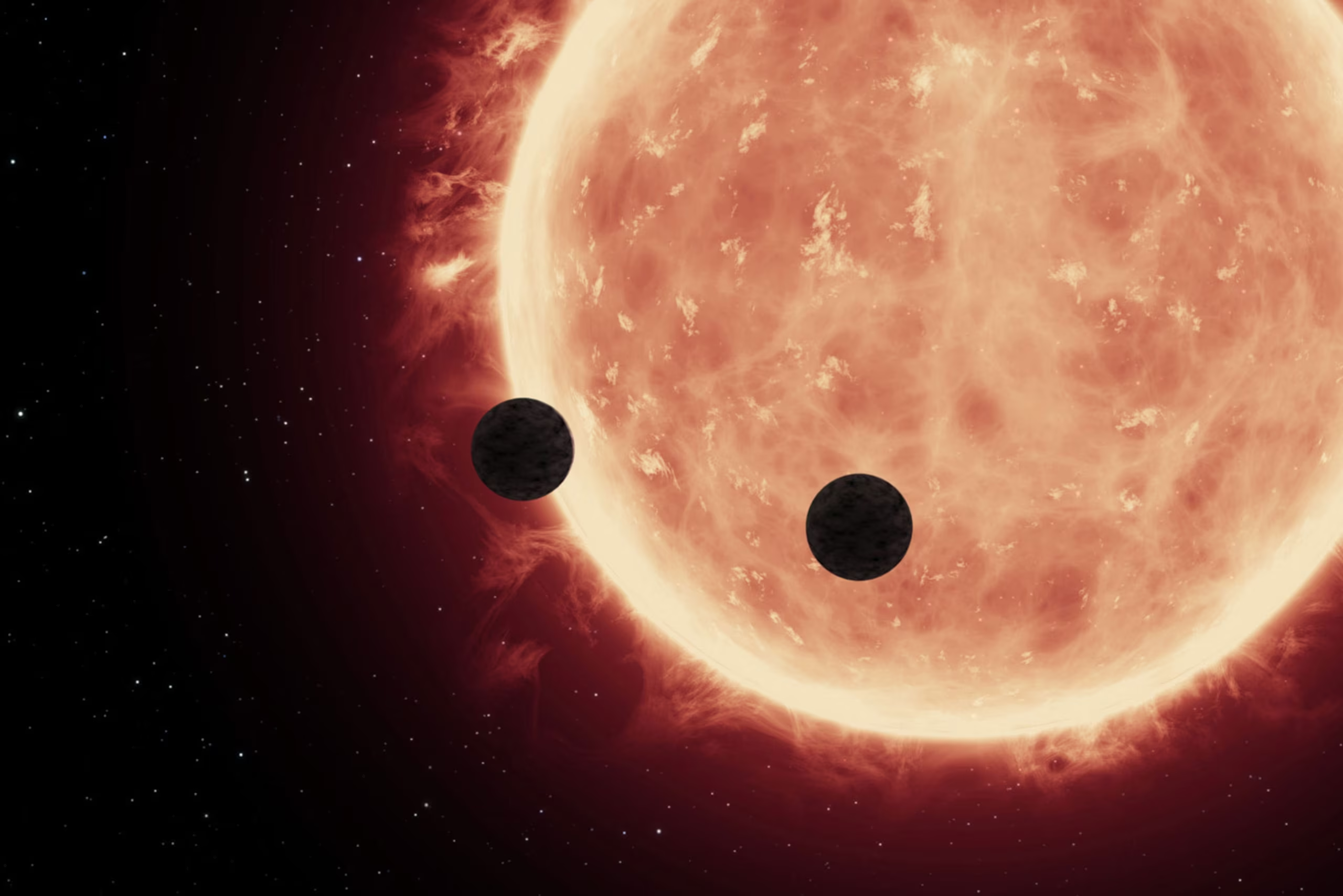
The innermost planet in the TRAPPIST-1 system, TRAPPIST-1b, may host a carbon dioxide-dominated atmosphere, according to a new study published in Nature Astronomy. Located approximately 40 light-years from Earth, the TRAPPIST-1 system has captivated astronomers with its seven Earth-sized exoplanets. While earlier findings suggested that intense stellar radiation might strip these planets of their atmospheres, new insights from the James Webb Space Telescope (JWST) indicate the potential presence of a hazy, CO₂-rich atmosphere on TRAPPIST-1b.

Evidence of Atmospheric Haze

The research presents intriguing data from measurements at 12.8 micrometres, which show a reflective haze in the planet’s upper atmosphere. This haze, according to the study, may cause the upper layers to emit radiation rather than absorb it, contradicting earlier models of atmospheric loss. Leen Decin, a co-author and researcher at KU Leuven in Belgium, emphasized that the new data allow scientists to explore possible atmospheric scenarios for TRAPPIST-1b, sparking renewed interest in its atmospheric composition and behavior.

Potential Volcanic Activity

The study also suggests that TRAPPIST-1b experiences high surface temperatures, which could be indicative of volcanic activity. Researchers have drawn comparisons to Titan, Saturn’s moon, which also exhibits surface and atmospheric interactions. However, Michiel Min from the SRON Netherlands Institute for Space Research highlighted that TRAPPIST-1b’s atmospheric chemistry might differ significantly from anything observed within our solar system, making it a unique subject for further exploration.

Broader Implications for Exoplanet Studies

These findings offer significant implications for understanding the atmospheres of exoplanets, particularly those subjected to high levels of stellar radiation. TRAPPIST-1b’s possible retention of a dense CO₂ atmosphere challenges prior assumptions about atmospheric erosion in such conditions. It also provides a foundation for studying habitability and atmospheric dynamics in other planetary systems, broadening our understanding of planetary evolution beyond the solar system.

Sony Unveils PS5 Pro’s Advanced Features Amid New Partnership with AMD

Sony Delivers In-Depth Look at PS5 Pro’s Advanced Technology

Sony has unveiled the highly anticipated PlayStation 5 Pro, an enhanced version of its flagship console, bringing a wave of technological upgrades to elevate gaming experiences. Mark Cerny, the lead architect behind the PS5, recently delved into the specifics of the PS5 Pro in a comprehensive deep-dive video presentation. Highlighting features such as improved ray tracing capabilities, cutting-edge AI-driven upscaling, and collaborative advancements with AMD, Sony has positioned the PS5 Pro as a powerhouse for mid-generation gaming.

Inside the Technical Innovations
Cerny’s presentation at Sony Interactive Entertainment headquarters provided a detailed look at the engineering behind the PS5 Pro. Clocking in at nearly 40 minutes, the session underscored Sony’s “developer-friendly” approach, ensuring the Pro’s enhancements require minimal adjustments from game creators. These upgrades include a revamped GPU for better performance, a dedicated hardware boost for ray tracing, and the introduction of PlayStation Spectral Super Resolution (PSSR), a machine-learning-based upscaling technology that delivers sharper and more immersive visuals.

Collaboration with AMD
A significant part of the PS5 Pro’s development involved a close partnership with AMD, focusing on leveraging machine learning to enhance both graphics and gameplay. This collaboration has enabled the integration of real-time rendering optimizations and dynamic scaling, ensuring that the console adapts to the increasing demands of next-generation titles. According to Cerny, this synergy between hardware and software innovation is pivotal to the PS5 Pro’s success.

A Step Toward the Future of Gaming
The PS5 Pro launched on November 7 in select markets, boasting a trifecta of core upgrades aimed at redefining player experiences. While its design emphasizes compatibility with existing PS5 games, the Pro’s advancements cater to gamers seeking heightened realism and performance. As Sony continues to explore the potential of AI and machine learning in gaming, the PS5 Pro represents a significant milestone in the evolution of console technology.