
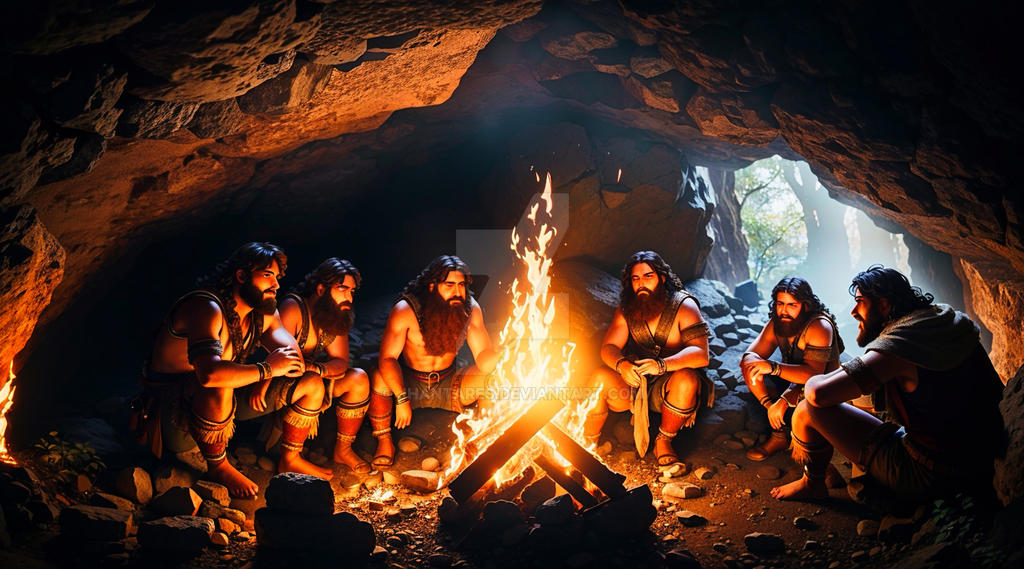
Fire was a vital resource for survival during the Ice Age, providing heat, light, and a means for cooking and crafting tools. Despite its crucial role, evidence of well-preserved fireplaces from the coldest regions of Ice Age Europe had remained elusive—until recently. A groundbreaking study, led by researchers and published in the journal Geoarchaeology, sheds new light on how Upper Paleolithic humans managed fire during the Last Glacial Maximum, which occurred between 26,500 and 19,000 years ago. These findings, highlighted in a press release from the University of Vienna on April 14, 2025, reveal that Ice Age individuals employed sophisticated fire-building techniques to survive the extreme conditions of the period.
The research team, led by archaeologist Philip R. Nigst from the University of Algarve and the University of Vienna, set out to uncover the mysteries surrounding fire use in the Ice Age. Their analysis of three hearths found at a prehistoric site along the Dnister River in Ukraine revealed that humans of the Last Glacial Maximum did not rely on a single method for making fire. Instead, they created a variety of hearths and employed materials like wood, bones, and fat—not only to ignite flames but also to sustain them in freezing temperatures. Charcoal analysis indicated that spruce wood was commonly used, highlighting the resourcefulness of these early humans in utilizing the materials at their disposal.
The study, which was published on April 1 in Geoarchaeology, provides compelling evidence of advanced fire-making techniques. The team conducted several types of analysis, including micro-stratigraphic, colorimetric, and micromorphology analysis, to study the hearths in detail. One particularly fascinating discovery was that one of the fires reached temperatures exceeding 650 degrees Celsius, suggesting that those who built the hearths had a sophisticated understanding of pyrotechnics, even in the harshest of environments. However, one of the scientists, Marjolein D. Bosch, a zooarchaeologist, raised the question of whether the animal bones burned at such high temperatures were intentionally used as fuel or if the burning was an incidental occurrence.
The study also reveals that the design of these fireplaces was carefully thought out and tailored to different seasons. One hearth, in particular, appeared larger and more robust, indicating that it was built to withstand higher temperatures. These findings suggest that Ice Age hunter-gatherers adapted their fire-making strategies to suit the varying conditions of the year. However, questions remain about why such evidence of fireplaces is so scarce, given their significance. The researchers speculate that freezing and thawing cycles may have destroyed much of the evidence. Additionally, Nigst points out that managing fuel during the Last Glacial Maximum would have been a significant challenge, potentially leading to the use of alternative technological solutions. As research continues, the team hopes to gain further insight into the role of fire in human evolution and how it may have contributed to the dominance of our species during such a harsh era.