Lava Agni 4 Battery Specs Leak Ahead of Imminent India Launch

Lava Agni 4 Set to Launch on November 20 With Premium Design and Bigger Battery

Lava is gearing up to launch its next mid-range powerhouse, the Lava Agni 4, in India on November 20. The smartphone will succeed the Agni 3 5G, which made its debut in October 2024, and is expected to bring several upgrades in both design and hardware. Unlike its predecessor’s plastic body, the Agni 4 will reportedly feature a premium aluminium frame paired with a sleek glass back, giving it a more sophisticated look and feel. The handset will also include a dual rear camera setup and a new side-mounted Action Button, said to function similarly to Apple’s camera control button introduced on recent iPhone models.

Ahead of its official unveiling, multiple leaks have revealed several key specifications of the upcoming smartphone. According to tipster Debayan Roy (@Gadgetsdata), the Lava Agni 4 will be powered by a 5,000mAh battery, ensuring a full day of use with ease. The device will also support 66W fast charging, marking a notable improvement over its predecessor and allowing users to top up the battery quickly.

Performance-wise, the Lava Agni 4 is expected to run on MediaTek’s Dimensity 8350 chipset, offering better efficiency and performance for multitasking and gaming. The device may also feature LPDDR5x RAM and UFS 4 storage, typically seen in higher-end smartphones, ensuring faster app loading times and smoother overall operation. These specifications suggest that Lava is positioning the Agni 4 as a serious contender in the competitive mid-range 5G smartphone segment.

In terms of photography, leaks suggest that the phone will sport a 50-megapixel main camera accompanied by an ultrawide secondary lens, offering users greater flexibility in capturing different scenes. Combined with its refreshed design, modern features, and powerful internals, the Lava Agni 4 appears poised to be one of the brand’s most refined and performance-focused smartphones yet — signaling Lava’s growing confidence in challenging established global competitors in the Indian market.
iPhone 18 Pro Series May Feature Transparent Back Design and Hole-Punch Display

iPhone 18 Pro Series Could Bring Bold Transparent Design and Hole-Punch Display

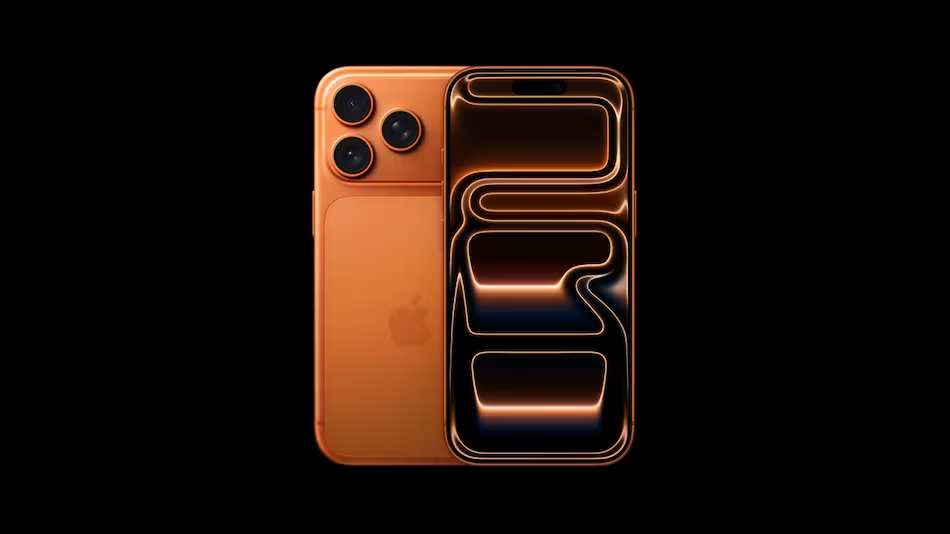
Apple’s next-generation flagship smartphones — the iPhone 18 Pro and iPhone 18 Pro Max — are already making headlines nearly a year ahead of their expected launch. Following the debut of the iPhone 17 lineup in September, new leaks suggest that Apple is planning a significant design refresh for its 2025 Pro models. According to early reports, the company might take inspiration from the design language of UK-based startup Nothing and earlier innovations from brands like HTC.

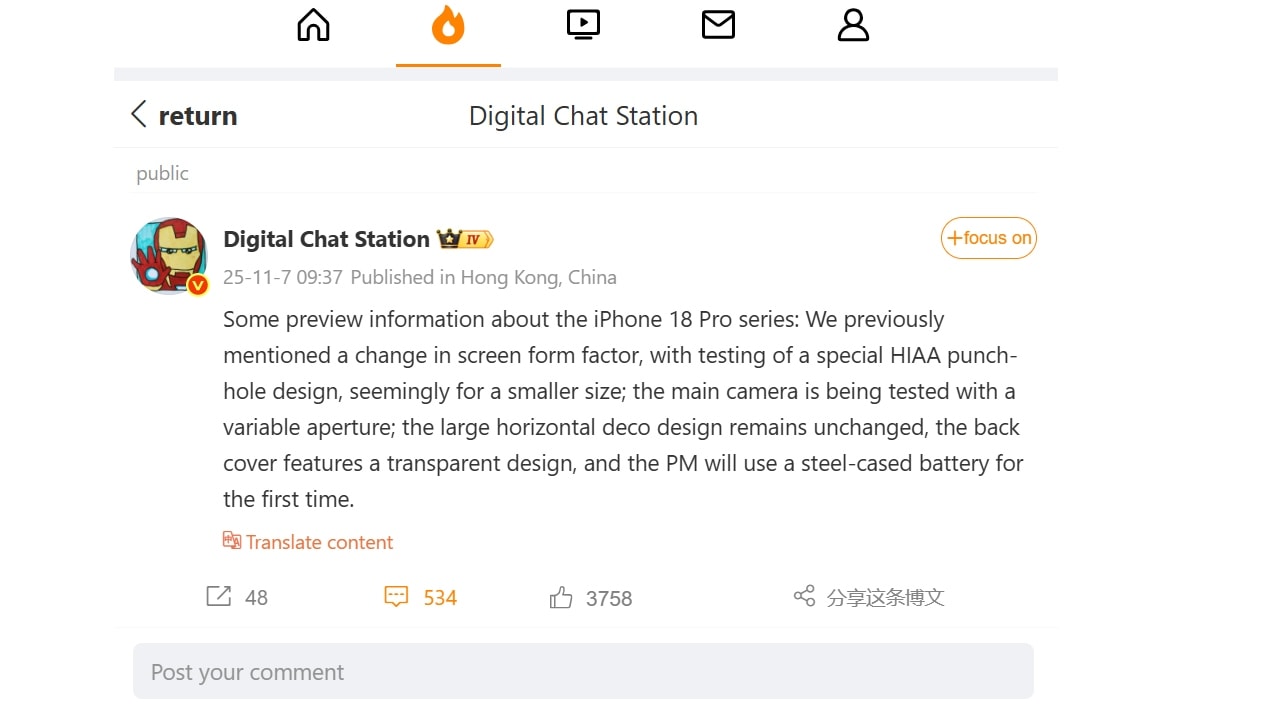
A major highlight of the leak points to the possibility of a transparent rear panel, marking a dramatic shift from Apple’s usual minimalist, solid-color aesthetic. If true, this would be the first time Apple adopts a design that exposes some of the internal components, adding a futuristic and tech-centric look. The iPhone 18 Pro Max may also feature a steel-encased battery, possibly for added durability and heat management — a design choice that could enhance both performance and longevity.

iphone 18 pro dcs weibo apple

The upcoming models are also rumored to introduce a hole-punch display for the selfie camera, replacing the long-standing notch and Dynamic Island design. Apple is reportedly testing hole-in-active-area (HIAA) technology, which would allow front-facing sensors like Face ID and the camera to be integrated beneath the OLED screen. This move would represent a major step toward achieving a truly full-screen iPhone experience — something fans have anticipated for years.

Under the hood, both iPhone 18 Pro models are expected to run on Apple’s next-generation A20 chip, promising major boosts in efficiency, graphics performance, and AI capabilities. While these details are based on early leaks and may change before launch, they hint at one of Apple’s boldest design overhauls yet — blending transparency, advanced display engineering, and raw power into a fresh new vision for the iPhone.

Microsoft Forms New Team to Develop ‘Humanist’ Superintelligence, Says AI Chief

Microsoft’s Vision for Humanist Superintelligence: A People-Centric Future for AI

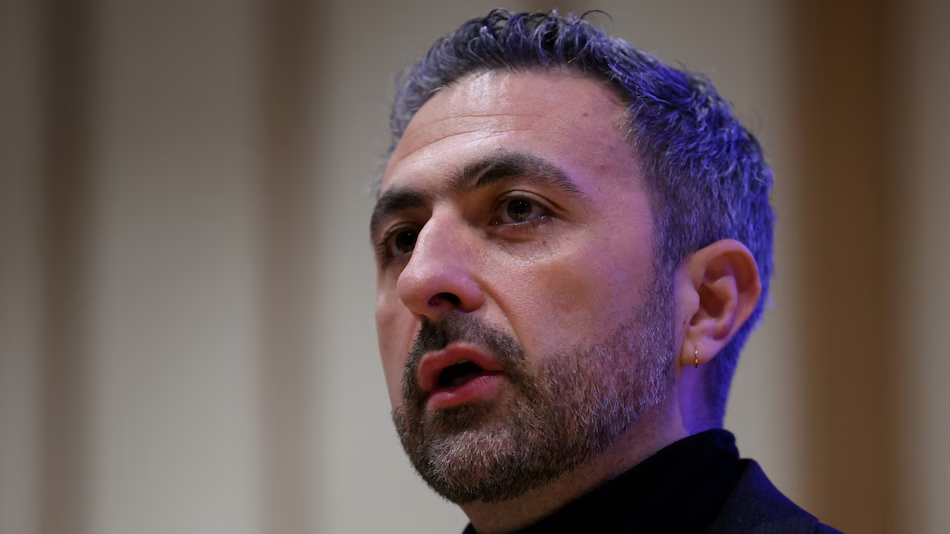
Microsoft has announced its ambitious goal to build what it calls a “humanist superintelligence” — an advanced form of artificial intelligence that serves humanity’s best interests. The company envisions this next-generation AI as one that “always works for, and in service of, people and humanity more generally.” The declaration comes amid an intensifying race toward achieving artificial general intelligence (AGI), with tech giants like Google, OpenAI, and Meta all vying for leadership in the space. Yet, Microsoft stresses that while the competition for capability continues, there must also be a global discussion about the kind of AI future society truly wants.

In a detailed blog post, Mustafa Suleyman, the CEO of Microsoft AI, emphasized that defining the purpose and boundaries of superintelligence should be a priority before the technology reaches maturity. He noted that the industry has already crossed an inflection point with the rise of “reasoning models” — AI systems capable of complex problem-solving and contextual understanding. According to Suleyman, this shift marks a crucial moment to set ethical and practical frameworks that ensure AI remains beneficial and controllable.

Suleyman further explained that Microsoft does not aim to create an “unbounded and unlimited entity with high degrees of autonomy.” Instead, the company seeks to develop systems that are “carefully calibrated, contextualized, and within limits.” This human-centered approach reflects Microsoft’s long-standing stance on responsible AI development, where transparency, accountability, and safety are integral to innovation.

Ultimately, the company’s vision of humanist superintelligence is rooted in empowering people rather than replacing them. Microsoft wants its AI to amplify human potential, helping address global challenges such as climate change, healthcare disparities, and education gaps. By focusing on a humanist framework, the tech giant hopes to ensure that the dawn of superintelligence strengthens — rather than disrupts — the foundations of human progress.