Realme Unveils UI 7.0 With Light Glass Aesthetics, AI Notify Brief, and AI Gaming Coach; Beta Rollout and Eligible Devices Announced

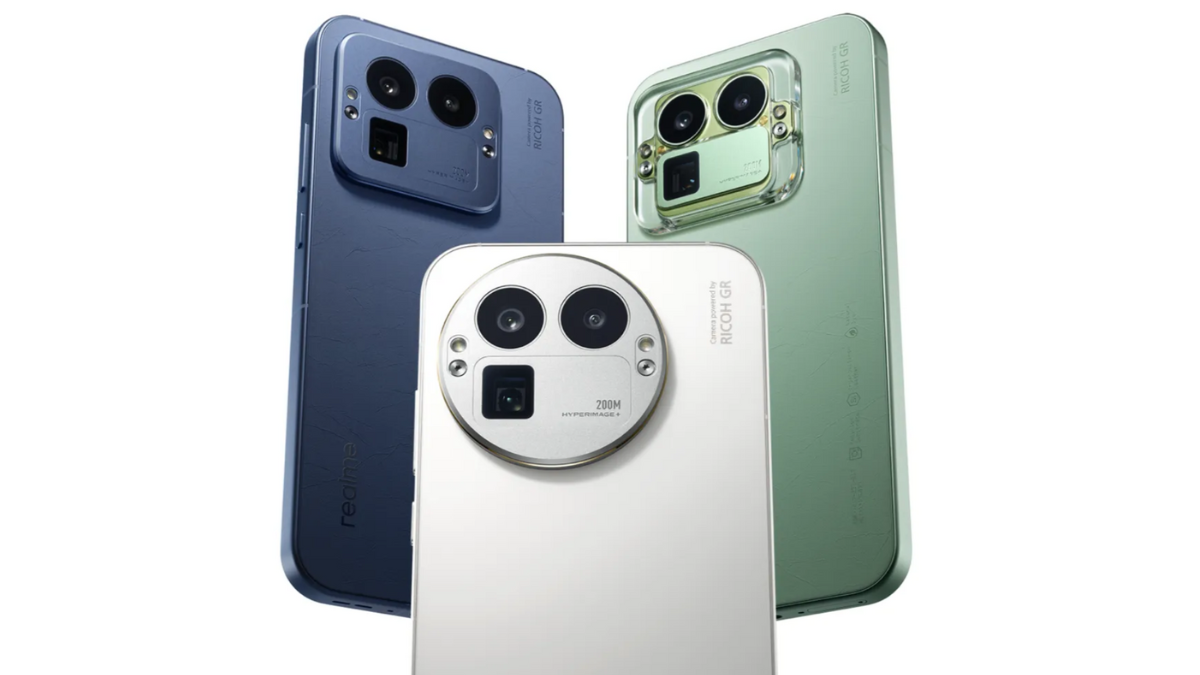
Realme has officially launched Realme UI 7.0, its latest Android 16-based user interface, on Wednesday. The new UI comes pre-installed on the recently unveiled Realme GT 8 Pro and introduces a host of visual and functional enhancements aimed at making the overall user experience more fluid and modern. Among the standout additions is the Light Glass Design, which appears inspired by Apple’s Liquid Glass approach, offering greater transparency and a sense of depth across system elements.

The Realme UI 7.0 redesign focuses heavily on aesthetics, featuring Ice Cube Icons for apps. These icons are square-shaped with rounded corners, providing a subtle tactile feel while maintaining a clean and minimal look. The updated interface is designed to give a more cohesive and immersive visual experience, especially when combined with the new Misty Glass Control Center, which replaces the traditional quick settings menu with a frosted, translucent layout. This makes navigation feel more fluid and visually pleasing.

In addition to the visual upgrades, the UI introduces functional enhancements like the dynamic Breathing Dock, which automatically adjusts the layout when elements are moved, improving multitasking efficiency. Users will also notice new widgets, enhanced lock screen customization options, and subtle animations throughout the interface, giving Realme devices a refreshed, premium feel.

Realme has also announced a public beta program for UI 7.0, allowing users to test the new features and provide feedback before the stable rollout. Eligible devices can join the beta program to experience the redesigned interface early and help refine the final release, ensuring a smoother experience when the update reaches all compatible devices.

Timeline Models
Q4 2025 Realme GT 7 Pro Realme Narzo 80 Pro 5G Realme C75 5G
Realme GT 7 Realme 15 5G Realme P3 Lite 5G
Realme GT 7 Dream Edition Realme P4 5G Realme C73 5G
Realme GT 7T Realme 12 Pro+ 5G Realme Narzo 80 Lite 5G
Realme GT 6T Realme 12 Pro 5G Realme 14x 5G
Realme GT 6 Realme P1 Pro 5G Realme 12 5G
Realme P3 5G Realme 13 Pro+ 5G Narzo 70x 5G
Realme 14T 5G Realme 13 Pro 5G Realme 12x 5G
Realme 15 Pro 5G Realme P2 Pro 5G Realme C65 5G
Realme P4 Pro Realme P3x 5G Narzo N65 5G
Realme 14 Pro+ 5G Realme Narzo 80x 5G Realme C63 5G
Realme P3 Pro 5G Realme C75 5G Realme 13 5G
Realme P3 Ultra 5G
Realme 14 Pro 5G
Q1 2026 Realme 13+ 5G Realme 12+ 5G Realme P1 5G
Realme Narzo 70 Turbo 5G Narzo 70 Pro 5G Realme 15T 5G
Realme P1 Speed 5G Narzo 70 5G Realme 15x 5G

Lava Agni 4 Launch, Colours, Price and Features Leaked Ahead of India Debut

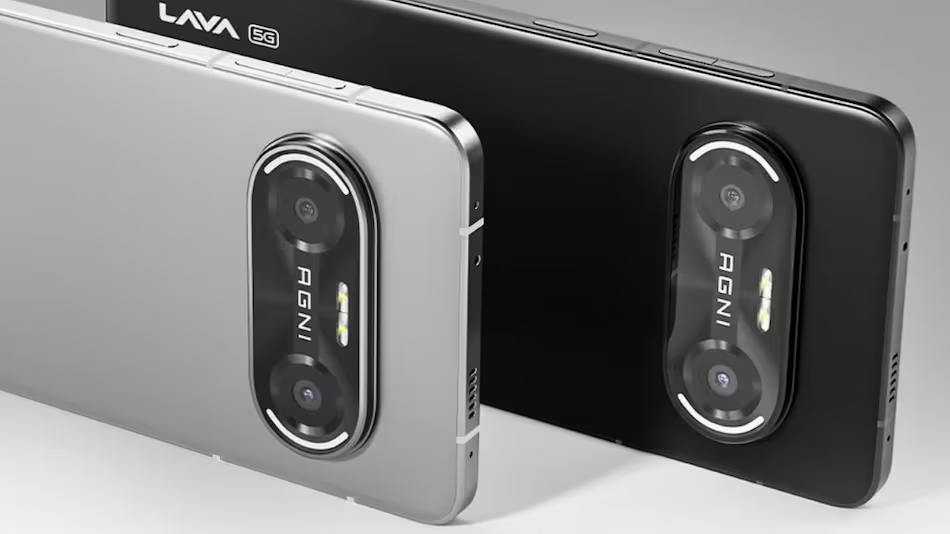
Lava Agni 4, the successor to the Agni 3 5G, is confirmed to launch in India on November 20. Ahead of the official unveiling, Lava has teased key details about the upcoming smartphone, revealing that it will feature a premium aluminium frame, a dual rear camera setup, and a new side button that may function similarly to Apple’s camera control button. The handset is expected to be powered by a MediaTek Dimensity chipset, continuing Lava’s trend of offering capable mid-range performance.

The company has now confirmed that Lava Agni 4 will be available in two colour options: Lunar Mist and Phantom Black. These shades aim to give users a choice between a sleek, understated look and a more striking design. Alongside the colourways, the aluminium frame hints at improved durability compared to its plastic-bodied predecessor.

Leaks have also suggested a possible price range for the Lava Agni 4, indicating that the handset will compete in the upper mid-range segment of the Indian market. While the exact pricing has yet to be officially revealed, industry insiders expect the phone to be priced competitively to attract both existing Lava fans and new customers seeking value for money.

In addition to the confirmed design and colour options, Lava has been gradually teasing other features of the Agni 4. Beyond the dual-camera setup, it is expected to offer a large display with minimal bezels and enhanced battery life. The inclusion of a dedicated side button may also suggest innovative functionality for photography or app shortcuts, providing users with a slightly more premium experience than its predecessor.

Realme Plans to Offset Rising Component Costs Ahead of New Device Launches, Says Executive

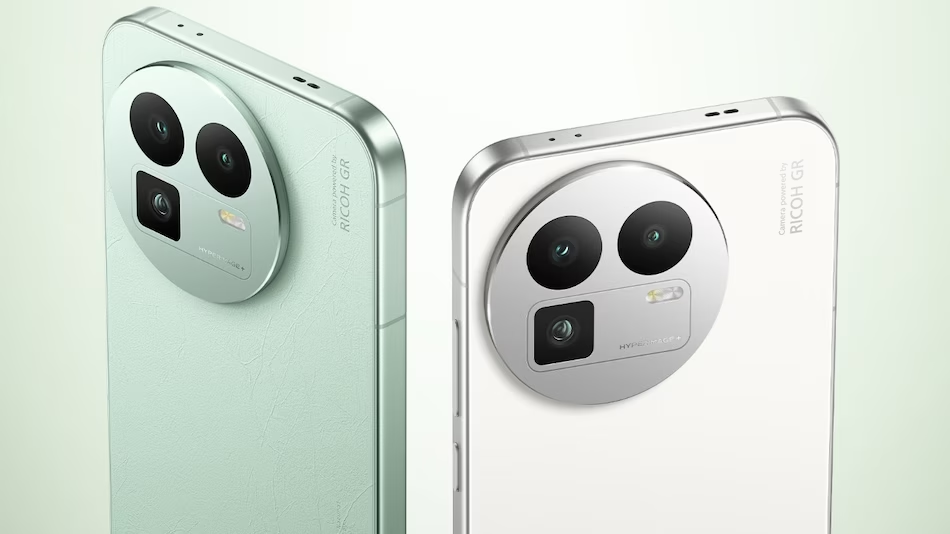
Realme is preparing to navigate rising smartphone component costs without passing them on to consumers, according to a senior company executive. Reports indicate that prices for storage and memory modules are climbing, largely driven by growing demand for AI processing and cloud infrastructure. Despite these pressures, Realme plans to absorb much of the cost increase ahead of its upcoming product launches, including the recently unveiled Realme GT 8 Pro in China.

The company is exploring strategies to mitigate the impact of higher component prices, such as diversifying its supplier base, refining product design, and enhancing supply chain coordination. Realme’s Head of Product Marketing, Francis Wong, emphasized that these measures are aimed at ensuring that the price of forthcoming devices remains stable, even as the broader industry faces potential cost hikes.

Wong also noted that the price pressure is not limited to premium smartphones; mid-range and budget segments are similarly affected. Rising costs are being driven by multiple factors, including the surge in AI-related hardware demand, shifts in manufacturing priorities, evolving trade policies, and an increasing reliance on local production.

By proactively managing these challenges, Realme aims to maintain consumer trust while continuing to deliver competitively priced devices. The company’s approach highlights a broader trend in the smartphone industry, where brands must balance component costs with market expectations in an increasingly AI-driven tech landscape.