
Oppo Unveils Find X9 Pro With 7,500mAh Battery and 200MP Telephoto Lens, Launches Find X9 Duo

Oppo has officially launched its latest flagship smartphones — the Find X9 Pro and Find X9 — at a global event in Barcelona. The unveiling follows their debut in China last month, confirming identical specifications for the international market. Both devices are powered by MediaTek’s cutting-edge 3nm Dimensity 9500 chipset, paired with up to 16GB of LPDDR5x RAM and up to 512GB of UFS 4.1 storage. The duo ships with ColorOS 16, based on Android 16, offering a smooth, high-performance experience. A standout feature is the massive 7,500mAh battery on the Find X9 Pro, while the standard Find X9 houses a slightly smaller 7,025mAh unit. The series is expected to arrive in India soon.

In terms of pricing, the Oppo Find X9 Pro starts at EUR 1,299 (approximately ₹1,34,000) for the variant with 16GB RAM and 512GB storage. The standard Oppo Find X9 is priced at EUR 999 (around ₹1,03,000) for its 12GB RAM and 512GB configuration. Both models will be sold through Oppo’s official online channels and select retail partners worldwide. The Find X9 Pro will be available in two color options — Silk White and Titanium Charcoal — while the Find X9 will come in Space Black, Titanium Grey, and Velvet Red.

The Oppo Find X9 Pro features a 6.78-inch AMOLED display with a resolution of 1,272×2,772 pixels, offering a 120Hz refresh rate and an impressive peak brightness of 3,600 nits. The screen supports HDR10+, Dolby Vision, and HDR Vivid, ensuring a premium viewing experience with vibrant colors and deep contrast. It also includes Corning Gorilla Glass Victus 2 protection and TUV Rheinland Intelligent Eye Care 5.0 certification for better eye comfort during prolonged use. The device boasts IP66, IP68, and IP69 ratings for water and dust resistance, making it one of the most durable phones in its class.

Under the hood, the Find X9 Pro uses an advanced vapor chamber cooling system with a massive 36,344.4 sq mm dissipation area to ensure sustained performance during intensive use. It also includes an X-axis haptic motor for improved tactile feedback. The camera setup — headlined by a 200-megapixel telephoto sensor — represents one of the most ambitious upgrades in Oppo’s flagship lineup, promising exceptional low-light and zoom performance. With five years of promised OS updates and six years of security patches, the Find X9 Pro is designed to offer long-term reliability alongside cutting-edge performance, positioning it as a strong contender in the premium smartphone market.
Samsung Developing Pro Camera Presets and Quick Share Integration for Upcoming One UI 8.5 Update

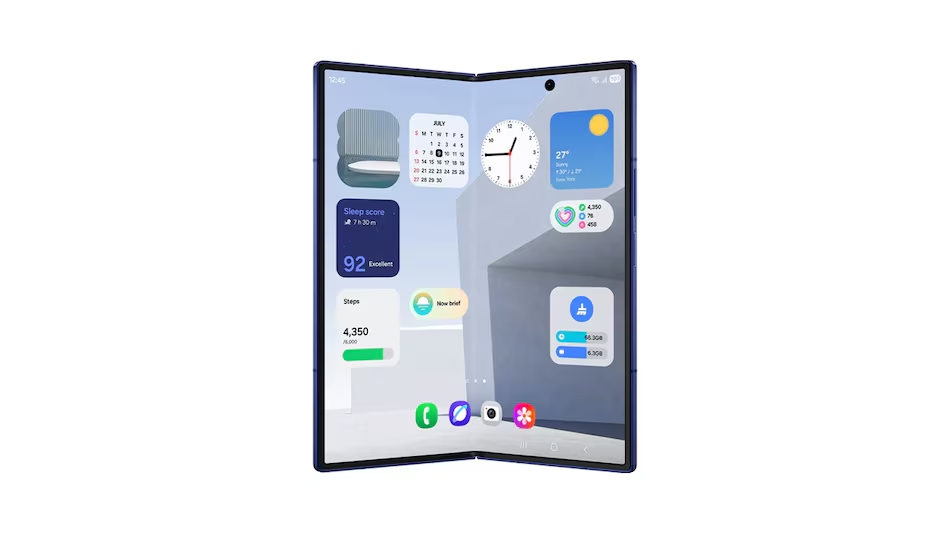
Samsung appears to be moving full speed ahead with its next major software milestone, One UI 8.5. Following the rollout of Android 16-based One UI 8 across its flagship Galaxy lineup and mid-range A and M series devices, the company is now preparing to introduce several new features designed to enhance user experience. Among the most anticipated additions is a powerful Pro camera preset system, which would let users save and reuse their preferred shooting configurations — a significant upgrade for photography enthusiasts.

According to findings from an APK teardown of a leaked One UI 8.5 build by Android Authority, Samsung is developing functionality that will allow users to save multiple Pro camera presets. These presets would include detailed settings such as ISO, shutter speed, white balance, focus type, and exposure levels. Once saved, users could easily switch between these presets without having to manually readjust each parameter before taking a shot — streamlining the entire process for those who frequently capture photos in varying environments.

In addition to simplifying camera customization, One UI 8.5 is also expected to integrate Samsung’s Quick Share app into this feature. This would allow users to share their personalized Pro camera presets with friends or colleagues using other Galaxy devices. The inclusion of Quick Share support could make it easier for professional photographers or content creators to collaborate, maintaining consistency in shooting styles and quality across devices.

While Samsung has yet to officially announce the update, One UI 8.5 is rumored to debut early next year, likely arriving first on the Galaxy S24 series before expanding to other models. If these camera enhancements materialize, they could mark a meaningful step toward closing the gap between smartphone photography and dedicated camera systems — offering Galaxy users even greater control and flexibility in their creative workflows.

Apple Keeps iPhone Air Production Steady Despite Rumors of Potential Manufacturing Reductions

Apple’s latest ultra-slim iPhone Air, unveiled in September alongside the iPhone 17 series, continues to attract attention—not for a design change this time, but for its production consistency. Despite weeks of speculation hinting at weak demand and a potential manufacturing cut of up to 1 million units, new data points in a different direction. Recent reports suggest that Apple’s production plans for the iPhone Air remain completely unchanged, signaling confidence in the model’s long-term demand.

According to a new investor note shared by TD Cowen and obtained by AppleInsider, Apple has no plans to reduce production of the iPhone Air through 2025. The note, dated October 26, highlights that Apple’s forecasts remain stable, with targets of 3 million units for the third quarter and 7 million units for the fourth quarter of 2025. This steadiness contradicts earlier claims comparing the iPhone Air to the iPhone mini—an earlier compact model that struggled to find a large audience.

Furthermore, TD Cowen estimates that Apple’s broader iPhone 17 lineup is on track for a robust year. The firm projects total builds of 54 million units for the September quarter and 79 million units for the December quarter. These figures reinforce the idea that Apple’s supply chain remains steady, and that demand across its lineup is healthy, even amid global market uncertainty and shifting consumer preferences.

However, production numbers alone don’t paint the full picture. Apple frequently adjusts manufacturing schedules based on internal forecasts rather than direct sales figures. While consistent output suggests steady demand, it could also reflect Apple’s commitment to maintaining a balanced supply chain and avoiding shortages. Either way, the latest reports indicate that the iPhone Air’s performance may be far stronger than initially believed—signaling that Apple’s bold bet on a thinner, sleeker device might just be paying off.