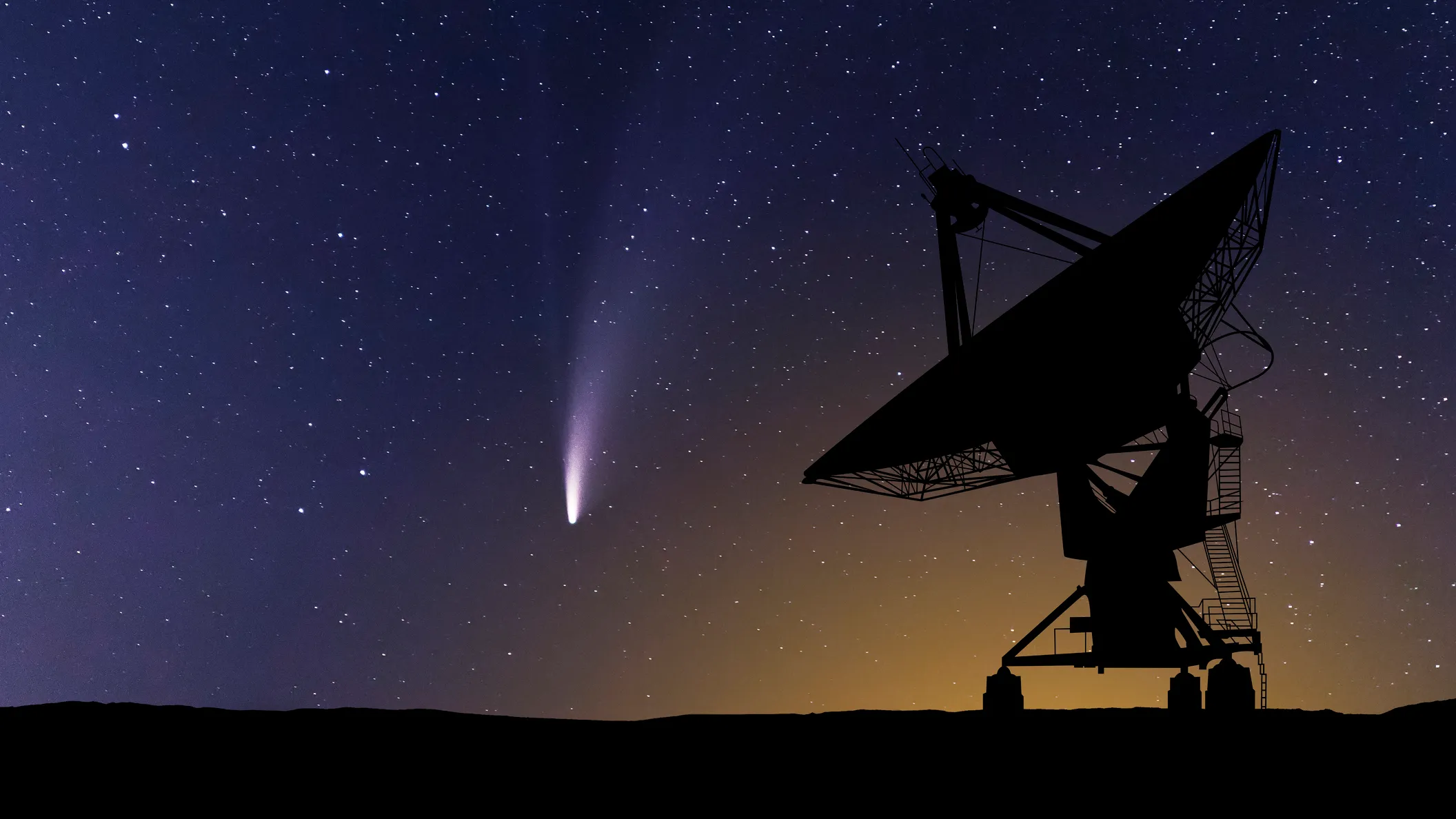
Comet 2024 G3 (ATLAS) Set to Dazzle as the ‘Great Comet’ of 2025

Comet 2024 G3 (ATLAS) has truly captivated skywatchers, earning the title of the “Great Comet of 2025” thanks to its extraordinary celestial display. The comet’s bright, vivid tails and remarkable brightness have drawn attention from astronomy enthusiasts across the globe. Discovered on April 5, 2024, by the Asteroid Terrestrial Impact Last Alert System (ATLAS) in Chile, it has delivered a breathtaking show that many observers won’t soon forget. The comet reached its closest approach to the Sun on January 13, 2025, dazzling viewers with a complex tail and heightened luminosity.

The celestial event is being hailed as historic due to the comet’s unprecedented brightness, reaching magnitudes not seen since Comet McNaught in 2007. During its perihelion, Comet 2024 G3 shone brightly, rivaling Venus in the sky, with a recorded magnitude of -3.8. This was based on careful data analysis from experts, including Polish researcher Mieczyslaw Paradowski. The Solar and Heliospheric Observatory (SOHO) also contributed observations, highlighting the comet’s brilliance as it moved closer to the Sun, offering a rare and awe-inspiring sight for observers around the world.

Although Comet 2024 G3 was visible to those in the Northern Hemisphere for a brief period in early January, its position soon shifted, making it more prominent in the Southern Hemisphere. Observers in southern regions were treated to a spectacular view, with the comet’s tail stretching across an impressive 15 degrees of the sky. This stunning display was particularly noted by astronomer Michael Mattiazzo in Swan Hill, Australia, who confirmed the breathtaking sight visible to many in the Southern Hemisphere.

As the comet continues its journey, it has left an indelible mark on those who had the opportunity to witness it, and its status as the “Great Comet of 2025” is firmly established. Its beauty and brightness serve as a reminder of the wonders of our universe and the excitement that celestial phenomena can bring to the global community of skywatchers.


Bayeux Tapestry, 1,000 Years Old, Chronicles William the Conqueror’s Triumph

The Bayeux Tapestry, a remarkable medieval embroidery, is not just a work of art but a significant historical document, offering a glimpse into 11th-century life and the events surrounding William the Conqueror’s rise to power. Stretching nearly 230 feet in length, the tapestry is an intricate piece of craftsmanship made from linen and decorated with wool threads. Its 58 detailed scenes capture the dramatic story of William’s victory at the Battle of Hastings and the subsequent demise of King Harold, marking a pivotal moment in British history—the Norman conquest of England.

The tapestry is believed to have been commissioned in the 1070s, possibly by Bishop Odo of Bayeux, a half-brother to William, making it a piece of personal and political propaganda. Its earliest known reference was in 1476, when it was listed as part of the Bayeux Cathedral’s inventory in Normandy, France. The tapestry vividly portrays events from 1064 to 1066, starting with Harold’s controversial oath of fealty to William and continuing through the death of King Edward the Confessor. The final chapters of this visual narrative show Harold’s death at Hastings, solidifying William’s claim to the English throne and his emergence as the new ruler of England.

Among the many captivating details of the tapestry, one notable scene includes a depiction of Halley’s Comet, which was observed at the time of Harold’s coronation. Historians interpret this celestial event as a bad omen, hinting at the ill-fated events that would follow. The tapestry concludes with the tragic death of Harold and the subsequent defeat of his forces, though some believe that portions of the tapestry are missing, possibly depicting William’s coronation. Despite some uncertainties around its historical accuracy, the tapestry remains an invaluable source of medieval history.

More than just a visual record of the battle, the Bayeux Tapestry offers a snapshot of medieval society, showing the weapons, clothing, ships, and architecture of the time. Its detailed artwork provides invaluable insights into the culture and technology of the 11th century, making it a key artifact for both historians and art lovers alike. Though its historical accuracy may be debated, the tapestry’s ability to blend history and artistry ensures its place as one of the most significant medieval works still admired today.

NASA’s X-59 Jet Undergoes Afterburner Test Ahead of Supersonic Flight Trials

NASA’s X-59 supersonic jet, developed in collaboration with Lockheed Martin, has achieved a major milestone with the successful completion of afterburner engine tests. This aircraft is a key component of NASA’s Quesst program, which aims to revolutionize supersonic travel by significantly reducing the disruptive sonic booms that have long restricted such flights over populated areas. Conducted at Lockheed Martin’s Skunk Works facility in Palmdale, California, the tests showcased the X-59’s ability to meet supersonic performance benchmarks, bringing it closer to its first flight.

Performance Evaluation of Engine Systems

The X-59 is powered by the General Electric F414-GE-100 jet engine, a modified version of the one used in Boeing’s F/A-18 Super Hornet. NASA subjected the engine to rigorous afterburner trials to evaluate its performance under supersonic conditions. These tests assessed whether the engine could operate within safe temperature limits while maintaining sufficient airflow to sustain high-speed travel. Lockheed Martin shared images on X (formerly Twitter) highlighting the afterburner tests, which involved injecting fuel into the exhaust system to increase thrust. The trials also ensured compatibility between the engine and other onboard subsystems.

Flight Testing and Public Reaction Studies

With successful engine tests completed, the next phase for the X-59 involves ground testing and final flight preparations. Once ready, NASA will conduct a series of flight tests, during which F-15 aircraft equipped with specialized probes will analyze the shockwaves produced during supersonic travel. This data will be critical in validating the X-59’s quiet supersonic technology. Unlike traditional supersonic jets that produce loud sonic booms, the X-59 is designed to create a much softer “sonic thump.”

A Step Toward Commercial Supersonic Travel

NASA’s long-term goal is to use the X-59 to gather public response data by flying over select residential areas in the United States. Researchers will measure how people perceive the aircraft’s reduced sonic impact, providing crucial insights for regulatory agencies. If successful, this program could pave the way for future commercial supersonic flights over land, ultimately transforming air travel by significantly cutting flight times without the disruptive noise that has hindered supersonic aviation in the past.