Google Reportedly Developing New ‘Min Mode’ for Always-On Display in Android 17

Google is reportedly working on a fresh upgrade for its Always-on Display (AOD) feature, which has become a staple on modern smartphones with LED or OLED screens. Typically, the AOD shows basic details like the time, date, battery percentage, and notification icons — allowing users to glance at essential information without unlocking their devices. Now, with the upcoming Android 17 update, Google appears to be expanding this functionality with a new feature called “Min Mode.” This addition could bring more flexibility and interactivity to the always-on experience by opening the door for third-party apps to display their own minimalist interfaces on the screen.

According to a report from Android Authority, early findings within the Android SystemUI package suggest that Min Mode is currently in development. The feature seems designed to let apps create persistent, low-power mini interfaces that can appear while the phone is in its locked AOD state. For example, fitness or music apps could use this mode to show ongoing stats, playback controls, or step counts in a sleek, simplified view — all without draining the battery or requiring users to wake the device. This discovery hints that Google is preparing to make the AOD more functional and customizable than ever before.

If fully implemented, Min Mode could reshape how users engage with their smartphones even when idle. Imagine seeing live navigation directions, weather updates, or smart home status alerts directly on your lock screen, all presented in a subtle, power-efficient design. This would make the AOD not just a passive display for notifications, but an interactive mini-hub that offers useful, real-time insights at a glance. Such a change could also inspire developers to create new app experiences specifically tailored for this lightweight display mode.

While Google hasn’t officially confirmed the feature, its presence in leaked Android 17 builds suggests the company is experimenting with ways to push ambient interfaces further. If Min Mode rolls out in the stable release expected next year, it could become one of Android 17’s standout innovations — giving users more control, convenience, and creativity right from the lock screen.
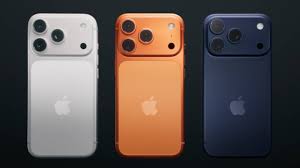
Apple Expands Self Service Repair Programme to Include iPhone 17 Series and iPhone Air in US, Canada, and Europe

Apple has broadened the scope of its Self Service Repair programme to include the latest iPhone 17 series and the iPhone Air, allowing customers to access genuine parts, tools, and manuals for the iPhone 17, iPhone 17 Pro, iPhone 17 Pro Max, and iPhone Air. The initiative enables users to repair displays, batteries, cameras, and other key components from the comfort of their homes. Originally launched in 2022, the programme aims to empower technically skilled customers to perform authentic repairs using official Apple resources.

This expansion reflects Apple’s ongoing commitment to making its devices more repair-friendly. By offering official parts and detailed guides, the company ensures that repairs are performed safely and effectively while maintaining device integrity and warranty coverage. The programme emphasizes transparency and control, giving users an alternative to third-party repair services.

Currently, the Self Service Repair programme is available in select regions, including the US, Canada, and several European countries. Customers in Germany, France, Italy, Spain, the Netherlands, Belgium, Sweden, Switzerland, Ireland, the UK, and North America can now access components for the iPhone 17 lineup and iPhone Air directly through Apple’s online Self Service Repair Store.

Apple’s online portal not only provides replacement parts but also step-by-step repair manuals for each device, guiding users through the repair process. While the programme is gradually expanding, it remains unavailable in regions like India, highlighting Apple’s cautious approach to rolling out repair accessibility globally.

Google Confirms Release Timeline for Gemini 3 AI Model, Promises Enhanced Reasoning Abilities

Google has confirmed that its Gemini 3 AI model will be released later this year, as announced by CEO Sundar Pichai during the Q3 2025 earnings call. The announcement came alongside the company celebrating a record-breaking $102.3 billion (roughly Rs. 9.06 lakh crore) quarterly revenue, marking Google’s first $100 billion quarter. Gemini 3 is slated to arrive roughly seven months after the Gemini 2.5 Pro model, which was rolled out globally to all users in July.

Gemini 3 Release and Development

The confirmation of Gemini 3 ends months of speculation across social media and AI forums. Rumors had circulated that the model could launch as early as October 22, but Google has now clarified the actual release timeline. Observers also noted the appearance of two unnamed models—lithiumflow and orionmist—on crowd-sourced AI ranking platforms like LMArena, which may indicate Google’s internal testing of Gemini 3 in stealth mode.

Expected Features and Capabilities

Early leaks and discussions suggest that Gemini 3 will bring significant improvements in reasoning and coding capabilities compared to its predecessor. Analysts and social media users have speculated that the model might use a trillion-parameter mixture-of-experts (MoE) architecture, capable of processing 15–20 billion tokens per query. Additional features rumored include real-time 60fps video processing, an in-built Deep Think reasoning module, and ultra-fast response times under one second in its Flash variant.

Implications for AI Adoption

Gemini 3 is expected to further cement Google’s position in the rapidly expanding AI landscape. By enhancing both reasoning and multimedia processing capabilities, the model could have far-reaching applications across search, productivity tools, and generative AI services. With the official timeline now confirmed, industry watchers are anticipating a surge of interest from developers and enterprises eager to integrate Google’s latest AI innovations into their workflows.