Falling Satellites Offer Scientists New Clues on Atmospheric Pollution from Spacecraft Reentries
Scientists Track Fiery Satellite Reentry to Study Atmospheric Pollution
In a rare and ambitious effort, European scientists took to the skies in September 2024 to observe the fiery reentry of a defunct satellite and gather firsthand data on atmospheric pollution caused by spacecraft disintegration. Aboard a specially equipped aircraft carrying 26 high-resolution cameras, the team followed the descent of the Cluster Salsa satellite over the Pacific Ocean. Launched from Easter Island, the mission aimed to capture visual and chemical signatures released during the satellite’s high-speed fall through Earth’s atmosphere. Despite interference from bright natural light, the team succeeded in documenting the satellite’s breakup and associated chemical emissions for the first time.
Preliminary findings, presented at the European Conference on Space Debris, revealed emissions of lithium, potassium, and aluminum during the satellite’s descent. These elements, researchers warn, may pose potential risks to the ozone layer and contribute to changes in atmospheric chemistry and climate. According to Stefan Löhle of the University of Stuttgart, the satellite began to fracture around 80 kilometers above sea level, with observations halting at 40 kilometers due to visual extinction. The weak, fragmented trail observed suggests a less intense burn-up than initially expected, indicating smaller fragments splintered off during reentry.
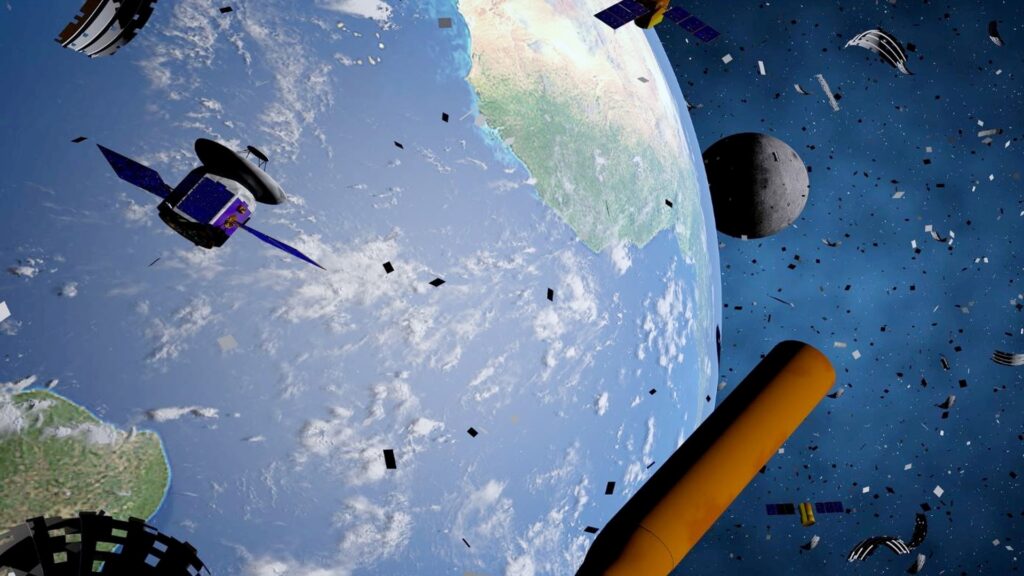
This mission underscores growing concerns about the environmental impact of satellite reentries, which are becoming more frequent with the rise of megaconstellations like SpaceX’s Starlink. While many modern satellites are designed to disintegrate completely upon reentry, some components and combustion byproducts, such as aluminum oxide, may persist and interact with the upper atmosphere. These particles have been linked to potential disruptions in thermal dynamics and ozone chemistry. Notably, this marked only the fifth time a spacecraft reentry was successfully tracked from the air, giving researchers a rare chance to calibrate their models with real-world data. It’s also suspected that some titanium parts from the 550-kilogram Cluster Salsa may have survived the descent and reached the Pacific.
Looking ahead, scientists plan to conduct similar airborne tracking missions for the remaining satellites in the Cluster constellation—Rumba, Tango, and Samba—which are projected to reenter Earth’s atmosphere by 2026. Although the bright sky limited certain types of measurements during the Salsa mission, researchers are optimistic that continued observations will deepen understanding of how spacecraft reentries affect atmospheric conditions and contribute to long-term climate dynamics.