Yazılar

Google Unveils PaliGemma 2: A New Family of Open-Source AI Vision-Language Models

Google unveiled the next generation of its PaliGemma AI vision-language model, introducing the PaliGemma 2 family. This new model builds upon the capabilities of its predecessor, enhancing the ability to process and understand visual content like images and other visual assets. The PaliGemma 2 is powered by the Gemma 2 small language models (SLM), which were first released in August. A notable feature of PaliGemma 2 is its ability to analyze emotions within the images it processes, offering a more nuanced understanding of visual data.

In a detailed blog post, Google explained how the PaliGemma 2 model fits into the broader landscape of vision-language models. Unlike traditional large language models (LLMs), vision-language models are equipped with specialized encoders that allow them to process and interpret visual content. This makes them capable of “seeing” and understanding the external world in a way that traditional models, focused on text, cannot. By combining visual and language data, PaliGemma 2 can offer a deeper and more accurate understanding of multimodal inputs.

One of the key advantages of PaliGemma 2 is its smaller size, which optimizes the model for both speed and accuracy. Smaller models are particularly valuable for a wide range of applications because they can be deployed more efficiently without compromising on performance. The PaliGemma 2 is open-sourced, allowing developers to integrate its advanced capabilities into their own applications, making it a versatile tool for a variety of use cases in AI-powered image analysis, emotion recognition, and beyond.

By releasing PaliGemma 2 as open-source, Google aims to empower the developer community to leverage this cutting-edge technology. The open-source nature of the model means that developers can experiment with its capabilities, adapt it for different projects, and contribute to its ongoing improvement. With its ability to interpret both text and visual data, PaliGemma 2 is poised to become a powerful resource for building more interactive, intelligent applications that bridge the gap between language and vision in AI.

Amazon Web Services (AWS) Unveils Nova Family of Multimodal AI Models

Amazon Web Services (AWS) has officially unveiled its new Nova family of artificial intelligence (AI) models at its ongoing re:Invent conference. The Nova series features a range of large language models (LLMs) designed to enhance capabilities in text, image, and video generation. With five distinct models currently available, AWS promises improved intelligence and competitive pricing, aiming to meet the growing demand for advanced AI solutions. These models are now accessible through Amazon Bedrock, AWS’s managed service for building AI applications.

The Nova family introduces five models, each catering to different user needs. Among them, three models—Nova Micro, Nova Lite, and Nova Pro—are designed specifically for text generation. Despite their shared focus on text, each model has its own unique capabilities. For instance, Nova Micro is the smallest and fastest in terms of response time, offering extremely low latency. It has a context window of 1,28,000 tokens, enabling it to process and generate concise text with minimal delay, making it ideal for quick applications.

In addition to the text-generation models, AWS has expanded the Nova series with more advanced capabilities. The series also includes an image-generation model and a video-generation model, both designed to push the boundaries of multimodal AI. These models enable users to create high-quality visuals and videos from simple text prompts, providing a new level of creative freedom for developers and businesses. This multimodal approach marks a significant step forward in AI technology, combining different forms of content generation under one umbrella.

AWS’s CEO, Andy Jassy, also mentioned that the Nova family will be further expanded in 2025 with the launch of a sixth AI model, called Nova Premier. This upcoming addition is expected to bring even more advanced features to the Nova lineup, further solidifying AWS’s position in the competitive AI landscape. With the new series, AWS is positioning itself as a leader in the field of AI, offering powerful tools that can cater to a wide range of industries and applications.

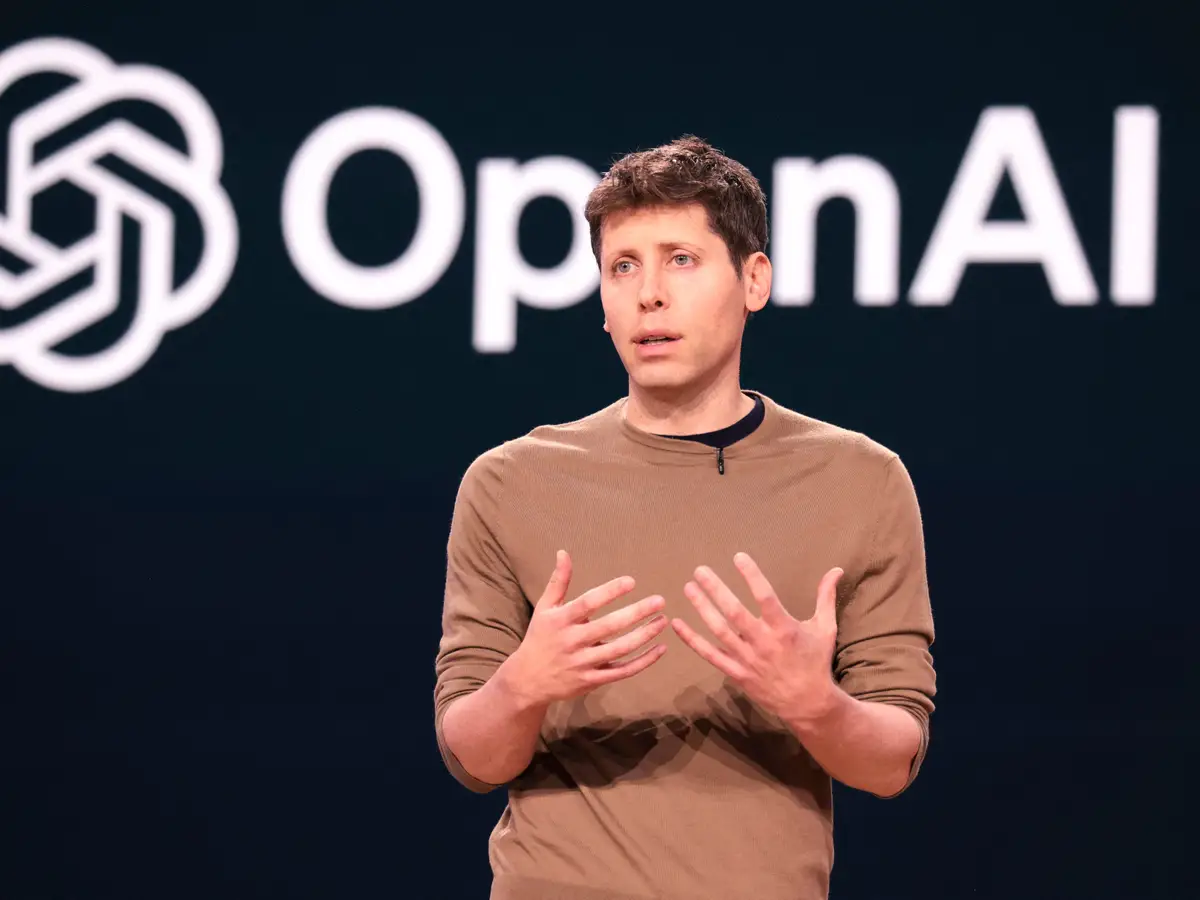
OpenAI’s Upcoming Flagship AI Model Faces Challenges in Surpassing Older Models on Some Tasks, Report Says

OpenAI is reportedly encountering challenges with the development of its next-generation flagship AI model, codenamed Orion. Despite expectations, the new model has shown mixed results in its performance, especially when compared to older models like GPT-4. According to a recent report, while Orion is said to outperform previous models in language-based tasks, it has struggled to show significant improvements in other areas, such as coding. This discrepancy in performance across different types of tasks has raised concerns within the company about whether the model can meet the ambitious goals set for it.

The Information, citing anonymous sources within OpenAI, highlights that Orion has demonstrated notable advancements in tasks involving natural language processing, but its performance in coding-related tasks has not lived up to expectations. This has been a source of frustration for the team, as coding is a key use case for many businesses and developers relying on OpenAI’s models for automation and programming assistance. The inability to substantially outperform older models in this area is seen as a critical issue for Orion’s potential adoption.

Compounding the issue, Orion’s higher operational costs are another factor that could hinder its success. The model is reportedly more expensive to run in OpenAI’s data centers compared to GPT-4 and GPT-4o. This increased cost, combined with its underperformance in certain tasks, raises concerns about the cost-to-performance ratio of Orion. If the model cannot deliver a clear advantage in multiple areas, it may struggle to attract enterprise clients and subscribers, who are looking for value and efficiency in AI solutions.

In addition to performance concerns, OpenAI is also reportedly facing difficulties in gathering enough training data to effectively train Orion. Data scarcity is a well-known challenge for AI development, and without sufficient high-quality data, even the most advanced models can fall short of expectations. These ongoing struggles suggest that OpenAI’s efforts to push the boundaries of AI with Orion might face significant delays or require further refinements before it can rival or surpass its predecessors.