Yazılar

Microsoft Enhances Copilot AI With Memory, Podcast Creation, and Agent-Like Abilities

Microsoft has unveiled a major update to its Copilot AI, introducing a suite of new features designed to make interactions more personalized, intelligent, and functional. These enhancements aim to bring Copilot closer to being a truly versatile assistant by enabling it to remember user preferences, create podcasts, and perform more complex tasks online. Previously limited to the web version, many of these features are now being rolled out across mobile devices and Windows desktop apps, broadening their accessibility.

One of the most significant additions is Copilot’s new memory capability. This feature allows the AI to retain important user-specific details like favorite foods, birthdays of family members, and personal interests. By recalling this information, Copilot can offer more contextually relevant suggestions and proactive reminders tailored to each individual. Microsoft emphasizes that users retain full control over this memory function — they can view, modify, or completely disable it at any time, ensuring privacy and comfort remain a priority.

In addition to memory, Microsoft has also introduced agentic capabilities to Copilot, giving it the power to independently complete certain web-based tasks on behalf of users. This means it can now perform multi-step actions like booking appointments, conducting in-depth research, or even completing shopping tasks — all with minimal user input. This is part of Microsoft’s broader effort to make AI more action-oriented and capable of handling real-world tasks with efficiency and minimal supervision.

Other features being rolled out include the expansion of Copilot Vision, which enhances the AI’s ability to understand visual content, and the addition of new tools such as Podcasts, Shopping, and Deep Research. These allow users to create audio content, browse and compare products more intelligently, and dive deep into complex topics with structured assistance. With this comprehensive upgrade, Microsoft is positioning Copilot as a deeply integrated assistant that can evolve with the user’s needs — blurring the lines between a chatbot and a full-fledged digital agent.
Microsoft Unveils AI-Powered Playable Quake II Demo for Gamers

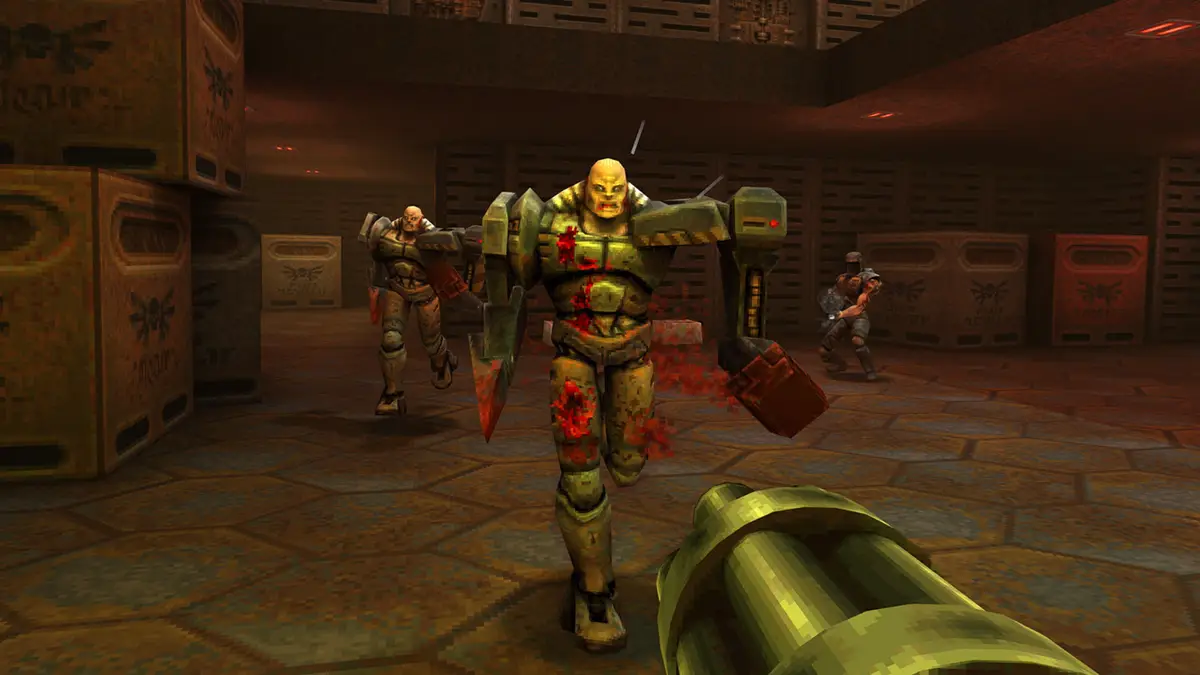
Microsoft introduced an innovative AI-generated playable demo of Quake II through its Copilot Labs platform. This interactive real-time gameplay experience showcases the potential of artificial intelligence in video game development. The tech giant used its newly released Muse AI models in combination with a cutting-edge approach called World and Human Action MaskGIT Model (WHAMM) to create the demo. This new method allows for dynamic world generation within the game, offering an experience that adapts in real-time to player actions. While this demo is currently available as a research preview to the public, Microsoft has outlined several limitations to the AI-generated gameplay, providing users with an understanding of its current boundaries.

In a detailed blog post, Microsoft’s researchers elaborated on how they harnessed the power of AI to build this playable demo. The integration of AI into 2D and 3D game generation has become an exciting frontier for game developers and researchers alike. The challenge lies in training AI models to generate real-time, interactive environments that can also adapt to the mechanics of a human player. This experiment is more than just a game demo—it’s part of a larger effort to test AI’s capabilities in simulating real-world tasks, such as controlling robots and other physical systems, by leveraging its ability to respond to user inputs in a digital environment.

Quake II, the iconic 1997 first-person shooter developed by id Software and published by Microsoft-owned Activision, serves as the perfect testing ground for this AI-driven experiment. The game, known for its fast-paced action and intricate level design, incorporates a variety of mechanics including shooting, jumping, crouching, and environmental destruction, which all needed to be accurately replicated by the AI. The demo available through Copilot Labs allows users to experience one level of Quake II for about two minutes, offering a glimpse into how AI can mimic complex gameplay mechanics.

For players, this demo provides an exciting opportunity to experience Quake II in a way never seen before, using either a controller or keyboard to navigate through the AI-generated world. While the demo is still in its early stages, the potential applications for AI in game development are vast. By demonstrating its ability to create interactive, responsive game environments, Microsoft is pushing the boundaries of both gaming and artificial intelligence, offering a sneak peek into the future of gaming technology.

OpenAI Set to Launch Open-Source AI Model Focused on Reasoning Capabilities

OpenAI to Release Open-Source AI Model Focused on Reasoning

OpenAI is preparing to launch its first open-source artificial intelligence (AI) model with a focus on reasoning. This marks a significant shift for the San Francisco-based AI firm, which has not released an open-source model since the GPT-2 back in November 2019. The new model is expected to be unveiled in the coming months, with OpenAI specifically seeking feedback from the developer community to refine the model based on their needs and insights. One of the primary concerns during development is ensuring the model’s safety, with OpenAI emphasizing responsible deployment.

The open-source AI space has seen significant growth in recent years, with a variety of players, including Meta, Mistral, Alibaba, and major tech companies like Google and Microsoft, all releasing multiple models for public use. However, OpenAI has largely stayed away from open-source initiatives since the launch of GPT-2, instead focusing on closed software solutions. These proprietary models have not been available for downloading or modification, limiting research and commercial applications.

Earlier this year, OpenAI’s CEO, Sam Altman, addressed the company’s position on open-source AI during an AMA session on Reddit. Altman acknowledged that OpenAI had been “on the wrong side of history” in its approach to open-source releases. He expressed the need to adopt a more open strategy but noted that it wasn’t the company’s top priority at the time. His comments highlighted OpenAI’s awareness of the evolving landscape and its desire to adjust its approach.

With this upcoming open-source release, OpenAI aims to re-enter the competitive landscape of open AI models, focusing on addressing key issues like reasoning capabilities and safety. This move is expected to enhance collaboration within the AI research community and contribute to more transparent and accessible AI development.