Yazılar

Alpha Centauri Might Be Responsible for Millions of Asteroids Entering the Solar System

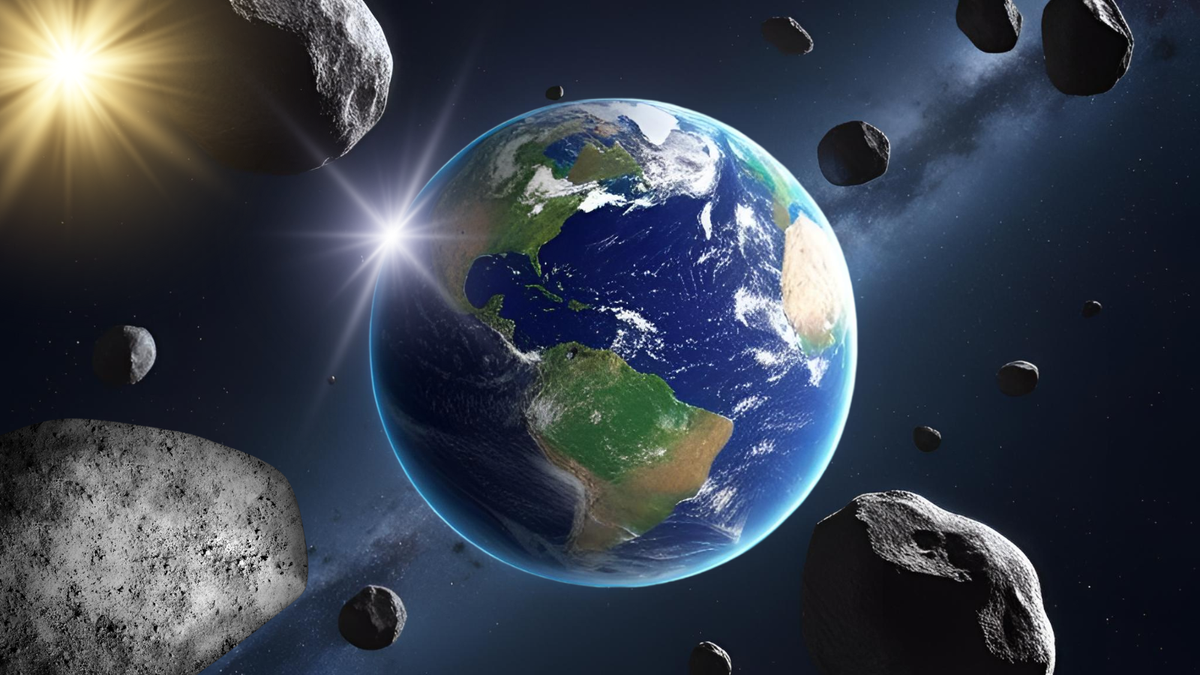
A new study suggests that a substantial number of asteroids originating from Alpha Centauri may have made their way into the solar system. Researchers estimate that if the amount of material ejected by Alpha Centauri is similar to that released by the solar system, nearly a million space rocks larger than 100 meters in diameter could be scattered throughout the Oort Cloud. Some of these interstellar objects might even migrate toward the inner solar system over time. As Alpha Centauri gradually moves closer to the solar system over the next 28,000 years, the influx of such objects is expected to increase.

According to research published on the preprint server arXiv, scientists from the University of Western Ontario conducted simulations to track the movement of Alpha Centauri’s ejected material over a span of 100 million years. Paul Wiegert, one of the researchers, explained to Space.com that detecting material from another star system at significant levels was unexpected. While space is vast, the possibility of foreign objects infiltrating the solar system in such numbers challenges previous assumptions about interstellar debris.

The study also reveals that approximately 50 objects from Alpha Centauri may enter the outer edge of the solar system each year. However, only a small fraction of these interstellar asteroids are likely to move inward. The researchers estimate that the probability of one such object currently residing within the orbit of Saturn is about one in a million. Due to their high velocities, most of these objects are unable to be captured by the sun’s gravity, making their presence within the solar system only temporary.

If confirmed, this discovery could reshape our understanding of interstellar material exchange between star systems. The potential presence of Alpha Centauri’s asteroids within our solar system raises intriguing questions about their composition and origins. Future space missions and telescope observations may provide further insights into these foreign visitors, helping scientists determine whether interstellar asteroids contribute to the chemical and physical evolution of planetary systems like our own.
Recent Space Research Sheds Light on Chiron’s Unique Surface and Coma

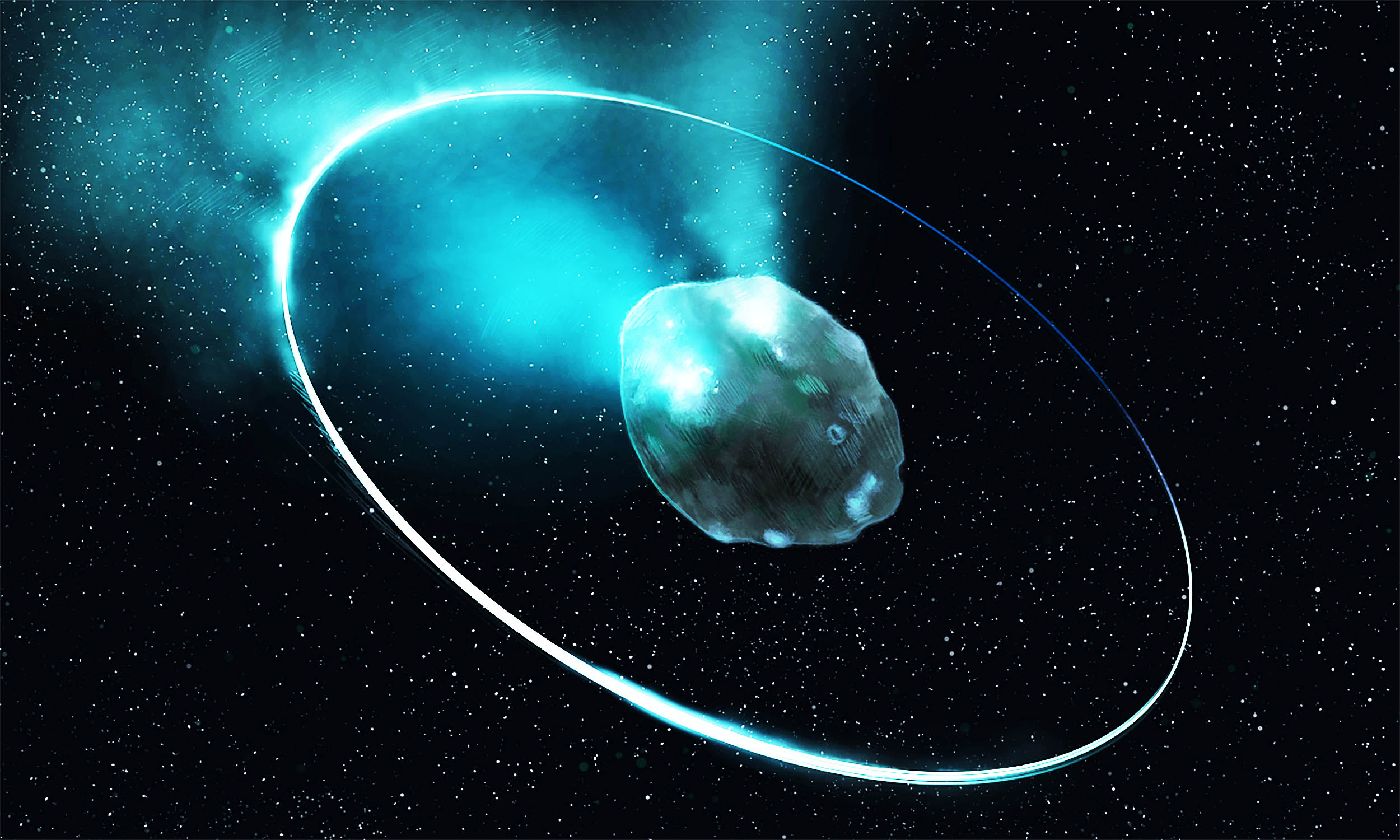
Researchers have recently turned their focus on (2060) Chiron, a celestial object that orbits between Jupiter and Neptune, unveiling new details about its unusual surface and the composition of its coma. A study published in Astronomy & Astrophysics classifies Chiron as a centaur, a category of celestial body that shares characteristics of both asteroids and comets. The James Webb Space Telescope provided critical data on Chiron’s surface, detecting carbon dioxide and carbon monoxide ice, as well as methane and carbon dioxide gases in its coma. This discovery offers valuable insights into the early history and evolution of our solar system, according to the research team from the University of Central Florida (UCF).

Chiron’s surface and coma are unique compared to other celestial bodies, largely due to the presence of volatile ices and gases. Dr. Noemí Pinilla-Alonso, an Associate Scientist at UCF’s Florida Space Institute and the lead researcher, emphasized the importance of these features. She explained that the presence of volatile materials sets Chiron apart from other centaurs, which often undergo active transformations due to solar heating. These changes allow scientists to study how Chiron’s surface composition evolves and how these transformations provide insights into the object’s behavior. The coma, a gaseous envelope surrounding the surface, is particularly important as it gives researchers a direct view of gases originating from beneath the surface—something that is not as easily observed in typical asteroids or trans-Neptunian objects.

The study of Chiron’s surface and coma not only deepens our understanding of this unique centaur but also has broader implications for understanding the dynamics of the solar system. Dr. Charles Schambeau, an Assistant Scientist at UCF with expertise in centaurs and comets, pointed out that Chiron’s unique activity and its potential for debris rings make it a fascinating case. By investigating the interaction between Chiron’s surface ices and its coma gases, researchers hope to uncover thermophysical processes that could explain the behavior of other similar celestial bodies in our solar system.

Chiron’s combination of asteroid-like and comet-like features makes it a crucial subject of study for those looking to understand the fundamental processes that govern the evolution of the solar system. This research highlights how centaurs, with their complex mixtures of ice and gas, can provide valuable clues about the conditions and transformations that shaped early planetary bodies. As more data is collected from missions and observations, scientists expect to further unravel the mysteries surrounding these enigmatic objects, offering a window into the past and future of our cosmic neighborhood.

Study Identifies Three Young Asteroid Families as Key Origins of Earth’s Meteorites

Earth experiences a constant influx of meteorites, most of which disintegrate in our atmosphere before making contact with the surface. However, some do survive, and significant impacts can have dramatic effects on our planet. Through extensive research, scientists have confirmed that the vast majority of these meteorites originate from the asteroid belt, located between Mars and Jupiter. This belt is filled with rocky remnants from the early solar system, and new research is shedding light on which specific asteroid sources contribute to Earth’s meteorite collection.

Identification of Asteroid Families

An international team of researchers has pinpointed three main asteroid families in the belt that are responsible for a large proportion of meteorites landing on Earth. According to their study, the Karin, Koronis, and Massalia families are the primary contributors, accounting for about 70 percent of all meteorites collected on our planet. These families formed as a result of collisions millions of years ago: the Karin family roughly 5.8 million years ago, the Koronis family around 7.5 million years ago, and the Massalia family approximately 40 million years ago. Of these, the Massalia family stands out, being linked to 37 percent of all known meteorites.

Methodology of Research

The research team used a combination of telescopic surveys and computer simulations to conduct their study. The telescopic surveys helped in analyzing the mineral composition of the asteroid families, while the simulations modeled the long-term evolution and movement of these asteroid fragments. This dual approach allowed scientists to track how these fragments made their way from the asteroid belt to Earth’s orbit. In the past, only about 6% of meteorites had clear origins linked to bodies like the Moon, Mars, or Vesta. The sources of the remaining 94% were ambiguous, making these findings a significant advancement in planetary science.

Implications for Future Research

The identification of these young asteroid families has implications for understanding the solar system’s history and the potential threats posed by near-Earth objects. By pinpointing these sources, scientists can better predict the frequency and type of meteorite impacts Earth might face in the future. Moreover, understanding the timeline of these collisions and the subsequent dispersion of asteroid fragments provides valuable insight into the asteroid belt’s dynamic nature. Future research may focus on how these findings can contribute to planetary defense strategies and space exploration missions targeting these asteroid families.