Yazılar

M87 Black Hole Unveils Chaotic Plasma Motion and Accretion Mechanism

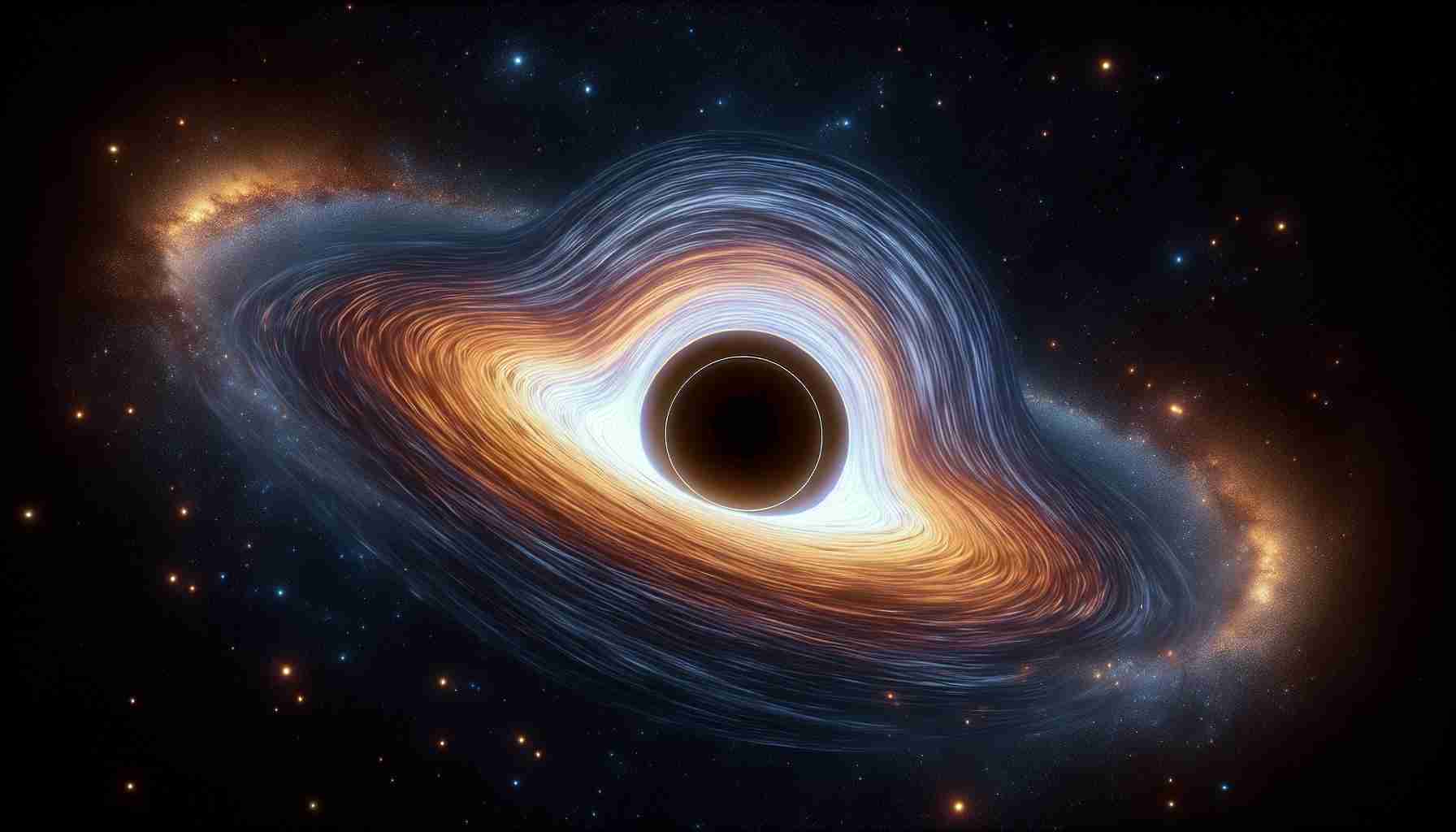
The supermassive black hole M87*, located 55 million light-years away in the Messier 87 galaxy, continues to captivate astronomers with its dynamic accretion process. Observations from the Event Horizon Telescope (EHT) have provided new insights into the turbulence within the flow of gas and plasma that spirals into the black hole. With a mass equivalent to 6.5 billion suns, M87* rotates along an axis pointing away from Earth. The latest findings, derived from EHT data collected in April 2017 and April 2018, have significantly improved our understanding of the chaotic environment near the event horizon.

Tracking Plasma Motion Over Time

A study published in Astronomy & Astrophysics analyzed multi-year observations of M87*, revealing critical changes in the plasma surrounding the black hole. By combining advanced simulations with real-time data, researchers observed that the bright plasma ring encircling M87* displayed noticeable shifts in brightness and structure. Notably, the brightest section of the ring moved counterclockwise by approximately 30 degrees between 2017 and 2018, suggesting the presence of turbulence in the gas flow. Eduardo Ros of the Max Planck Institute for Radio Astronomy emphasized the significance of long-term data collection in refining our understanding of black hole behavior.

The Black Hole’s Feeding Process

Recent findings have also shed light on how M87* consumes surrounding matter. According to Space.com, the study suggests that gas spirals inward toward the black hole, occasionally moving against the direction of its rotation. Researchers leveraged three times the data from 2017 to construct more refined models of this process. These insights align with previous observations made using other radio telescope arrays, reinforcing the complexity of black hole accretion mechanisms.

Advancing Our Understanding of Black Holes

Christian M. Fromm, a member of the EHT theory group, highlighted the importance of combining data from multiple observation periods with sophisticated models. By continuously refining simulations and integrating new observational data, scientists are gradually uncovering the intricate physics governing supermassive black holes. The evolving picture of M87* not only deepens our knowledge of black hole feeding dynamics but also contributes to broader studies on galaxy evolution and cosmic structure formation.
NASA Discovers Black Hole Spinning at Surprising Angle in NGC 5084 Galaxy

NASA researchers have made a groundbreaking discovery involving a black hole located at the heart of the galaxy NGC 5084. Using advanced analysis techniques, scientists revisited legacy data from NASA’s Chandra X-ray Observatory and uncovered an unexpected phenomenon—the black hole in this galaxy appears to be rotating at an angle that contradicts previous expectations. The new findings reveal the presence of an unusual X-shaped pattern created by four plumes of plasma emanating from the galaxy’s core. This discovery challenges long-standing assumptions about the orientation of black holes relative to their host galaxies.

The X-ray data from Chandra revealed two distinct pairs of plasma plumes, each behaving differently from typical black hole jets. One pair is oriented perpendicularly, extending above and below the galaxy’s plane, while the other pair is aligned within the plane itself. This configuration forms a striking cross-like shape, an anomaly that is rarely seen in other galaxies. The presence of these plumes suggests that something significant may have disrupted the normal formation or behavior of the galaxy, providing new insights into the dynamic processes at play in this distant system.

To gain a deeper understanding of the galaxy’s structure, researchers turned to archival data from the Hubble Space Telescope and the Atacama Large Millimeter Array (ALMA) in Chile. These additional observations revealed a small dusty disk at the center of NGC 5084, adding further complexity to the black hole’s unusual orientation. The inner disk, aligned at a 90-degree angle to the galaxy’s overall rotation, suggests that the supermassive black hole is positioned “sideways” relative to the galaxy’s core.

This discovery is a significant step forward in our understanding of black holes and their interaction with the galaxies they inhabit. The unusual orientation and the presence of the X-shaped plasma pattern raise new questions about how black holes form and evolve, and how they influence the surrounding galactic environment. As further research is conducted, these findings could reshape our understanding of galactic dynamics and the role black holes play in shaping the universe.

Hubble Unveils NGC 5643’s Stunning Spiral Arms and Hidden Black Hole

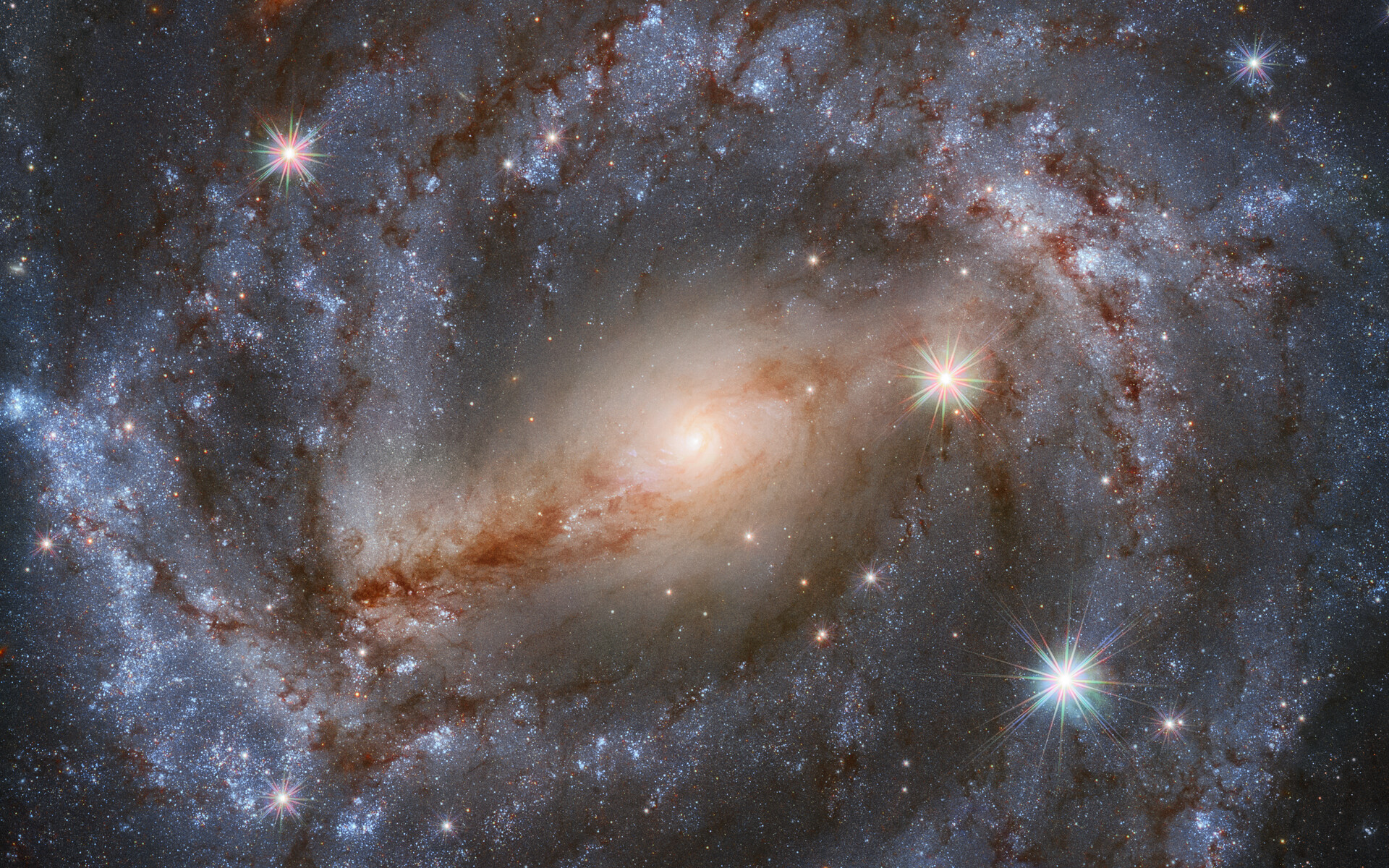
The spiral galaxy NGC 5643, located roughly 40 million light-years away in the constellation Lupus, has been vividly captured by the NASA/ESA Hubble Space Telescope. This “grand design spiral” galaxy boasts a symmetrical structure defined by its striking, well-organized spiral arms. These arms are adorned with vibrant, young blue stars interspersed with reddish-brown dust clouds. Within the galactic disc, regions of intense star formation are evident, showcasing pinkish hues that signify the presence of ionized hydrogen gas illuminated by young, massive stars.

While the galaxy’s beauty is readily apparent in visible light, its true nature is revealed in other wavelengths. According to a NASA blog post, ultraviolet and X-ray imaging have uncovered an active galactic nucleus at the heart of NGC 5643, powered by a supermassive black hole. Gas swirling toward the black hole heats up to extreme temperatures within the accretion disk, emitting radiation across the electromagnetic spectrum. This dynamic process, particularly prominent in X-rays, highlights the galaxy’s energetic core.

Surprisingly, the brightest X-ray source in NGC 5643 is not the supermassive black hole itself but a separate, smaller black hole identified as NGC 5643 X-1. Observations from ESA’s XMM-Newton Observatory suggest that this object, with an estimated mass of 30 Suns, is part of a binary system. It pulls gas from its companion star, forming an accretion disk that emits intense X-rays, outshining even the galactic nucleus in this wavelength.

These findings emphasize the complexity and diversity of activity within NGC 5643. From its elegantly structured spiral arms and regions of vibrant star formation to its hidden black holes emitting powerful radiation, this galaxy exemplifies the richness of the universe. Observations like these continue to deepen our understanding of galactic evolution and the interplay between massive celestial objects.