Yazılar

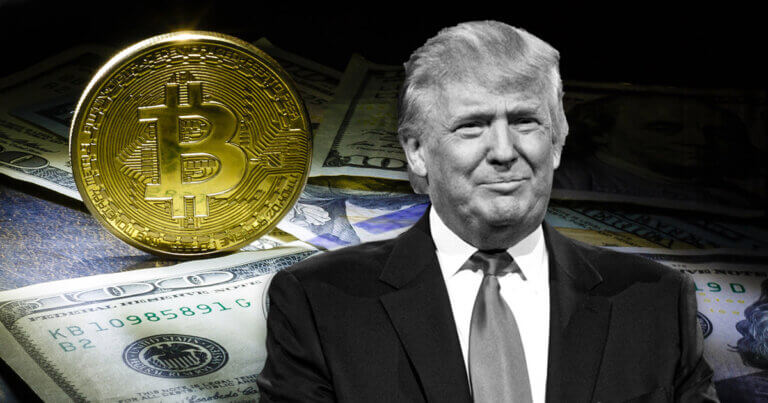
Donald Trump’s Crypto Firm Unveils Strategic Token Reserve and DeFi Investment Plans

World Liberty Financial (WLF), a cryptocurrency firm backed by US President Donald Trump, has recently unveiled its strategic token reserve aimed at navigating market fluctuations and maintaining a crypto-backed fund pool. This announcement was made public on the firm’s official X (formerly Twitter) account on Wednesday, February 12, 2025. The launch of the reserve marks a significant milestone for WLF, which was introduced by President Trump in September 2024 as part of his broader vision to position the United States as a leading global hub for cryptocurrency innovation. While the firm’s goals were initially ambiguous, its direction is becoming clearer, with the reserve expected to play a key role in its strategy.

In a post shared on X, WLF emphasized that the establishment of a well-capitalized token reserve is a testament to their commitment to transparency and long-term sustainability. The company highlighted that this reserve will not only foster trust among its community and stakeholders but also provide institutions with transparent exposure to the rapidly evolving crypto market. The contributed assets will be securely held in WLFI’s publicly accessible wallet, ensuring that investors and institutions can monitor their engagement with the crypto space in real-time.

Five months into its operation, WLF is now expanding its vision, signaling its intention to bridge the divide between traditional finance (TradFi) and decentralized finance (DeFi). TradFi includes conventional banking systems and financial intermediaries that are governed by central banks and regulatory bodies. On the other hand, DeFi offers a decentralized approach to financial services, allowing individuals to access various financial products without the need for intermediaries like banks. WLF’s efforts to connect these two worlds could provide a new avenue for institutional players to engage with the decentralized finance ecosystem while navigating the complexities of traditional financial systems.

The move to establish a strategic token reserve and explore DeFi investments could have far-reaching implications for the cryptocurrency industry. By blending the reliability of traditional finance with the innovation of DeFi, WLF aims to create a more inclusive and sustainable financial ecosystem. As more details emerge about their DeFi strategies and token reserve management, the firm’s approach could pave the way for future collaborations and innovations within the broader financial sector, especially as the global demand for cryptocurrency-backed solutions continues to rise.

Exploring the Central African Republic’s Controversial Memecoin Initiative

The Central African Republic (CAR) has ventured into the world of cryptocurrency with a bold and controversial experiment aimed at revitalizing its struggling economy. President Faustin-Archange Touadera recently announced the launch of a memecoin called $CAR, hoping to capitalize on the global memecoin craze to boost the nation’s financial standing. This move follows CAR’s adoption of Bitcoin as legal tender in 2022, inspired by El Salvador’s similar initiative. With around 80 percent of the population living in poverty, according to the World Bank and the United Nations Development Programme, the government is exploring unconventional avenues to improve its economic situation.

In a statement released on X (formerly Twitter), President Touadera introduced the $CAR memecoin as part of a national experiment. He expressed the belief that memecoins could foster national unity, drive development, and elevate the country’s global profile in a unique way. “The CAR has always believed in the power and the importance of a strong community. Based on this belief, I am proud to announce the launch of the official memecoin of the CAR,” said Touadera, framing this initiative as an exciting chapter for the nation.

The $CAR token is symbolized by the country’s flag, and each coin is currently valued at $0.1164 (around Rs. 10). According to data from CoinGecko, the memecoin has already seen a substantial surge, with a 24-hour trading volume of approximately $830 million, reflecting a 118.6 percent increase from the previous day. Despite being a new entrant in the cryptocurrency market, the $CAR token has a maximum supply of one billion, with nearly all of them already in circulation.

While the memecoin experiment has attracted global attention, it has also sparked criticism. Skeptics argue that such initiatives may be little more than speculative ventures with limited long-term benefits for the country’s economic stability. However, for CAR, this experiment represents a bold step in the quest for economic revival, with the hope that it will bring both local and international recognition. Whether the $CAR memecoin will succeed in achieving its goals or become a cautionary tale for other nations remains to be seen.

Malaysian Anti-Corruption Commission Adopts Blockchain and AI to Tackle Complex Crimes

Malaysia is turning to cutting-edge technologies like Artificial Intelligence (AI) and blockchain to enhance its anti-corruption efforts. Azam Baki, chief commissioner of the Malaysian Anti-Corruption Commission (MACC), stated that these advanced tools will improve the agency’s ability to track and investigate complex financial crimes. The MACC has been ramping up efforts to tackle high-profile corruption cases, particularly those under investigation since 2022. By integrating AI-driven analytics and blockchain’s immutable record-keeping capabilities, the commission aims to strengthen its detection and enforcement mechanisms.

Speaking at an event in the Maldives, Baki elaborated on the advantages of these technologies. According to a report by The Edge Malaysia, he emphasized that blockchain ensures transparent and tamper-proof financial records, making it harder for illicit transactions to go undetected. Meanwhile, AI enhances data processing and pattern recognition, helping investigators identify suspicious financial activities more efficiently. This dual approach is expected to significantly improve Malaysia’s ability to combat financial misconduct and fraud.

Corruption has been a persistent issue in Malaysia, with the country facing criticism in global corruption perception indexes. Reports from the World Bank highlight the challenges in tackling financial crime, as well as the institutional barriers that have historically allowed corruption to thrive. However, recent government efforts, coupled with technological advancements, suggest that Malaysia is making progress in its fight against corruption.

The adoption of AI and blockchain reflects Malaysia’s broader commitment to leveraging technology for governance and transparency. Experts believe that these tools will not only strengthen enforcement but also act as deterrents, making it increasingly difficult for criminals to manipulate financial systems. As the MACC continues to modernize its operations, Malaysia could set a precedent for other nations looking to integrate emerging technologies into their anti-corruption frameworks.