Yazılar

Dark Energy Spectroscopic Instrument Provides Ultimate Test for Einstein’s Theory of Relativity

A recent study from the Dark Energy Spectroscopic Instrument (DESI) project suggests that dark energy—the enigmatic force driving the accelerated expansion of the universe—may not be constant over time. This finding challenges a key assumption in cosmology but simultaneously reaffirms the accuracy of Albert Einstein’s theory of general relativity. The study, published on the DESI project’s website and arXiv, expands on earlier findings from April that pointed toward a similar conclusion. If confirmed, the results could have profound implications for our understanding of the universe’s long-term evolution.

DESI’s Revolutionary 3D Galaxy Mapping

The DESI project, based at the Kitt Peak National Observatory in Arizona, has constructed the most comprehensive 3D map of galaxies to date. By analyzing this detailed map, researchers can study the large-scale structure of the universe and how it changes over time. Unlike earlier studies that focused on baryon acoustic oscillations—echoes of sound waves from the universe’s infancy—DESI’s latest work delves into the evolution of galaxy clusters. These shifts are particularly sensitive to dark energy’s influence and could reveal changes in its behavior. Dr. Dragan Huterer, a cosmologist from the University of Michigan, noted that this approach provides critical insights into how gravitational forces and dark energy interact over cosmic timescales.

Variable Dark Energy: A Possible Shift in Paradigm

The study’s findings align with earlier DESI analyses, as well as data from other astronomical observations like the cosmic microwave background (CMB), the universe’s oldest light. Together, these data sets suggest that dark energy’s density may have fluctuated over time, rather than remaining static as traditionally assumed. Cosmologist Dr. Pauline Zarrouk of the National Centre for Scientific Research (CNRS) emphasized the importance of these results matching prior analyses, as consistency strengthens the case for a revision of existing cosmological models. If dark energy is indeed variable, it could lead scientists to reimagine the fate of the universe and refine theories about its fundamental composition.

Implications for General Relativity and Cosmology

Despite the intriguing possibility of changing dark energy, the DESI study reinforces the validity of Einstein’s theory of general relativity. The theory continues to accurately describe how gravity operates on both local and cosmic scales, even under the complex conditions observed in the universe’s evolution. However, these findings highlight the need for a deeper understanding of dark energy’s nature and role in shaping the cosmos. As DESI continues its galaxy-mapping mission, future discoveries may provide clearer answers to whether dark energy evolves over time or if alternative explanations better fit the data, potentially redefining our understanding of the universe’s structure and fate.
NASA’s Roman Space Telescope Upgraded with New Coronagraph to Detect Exoplanets

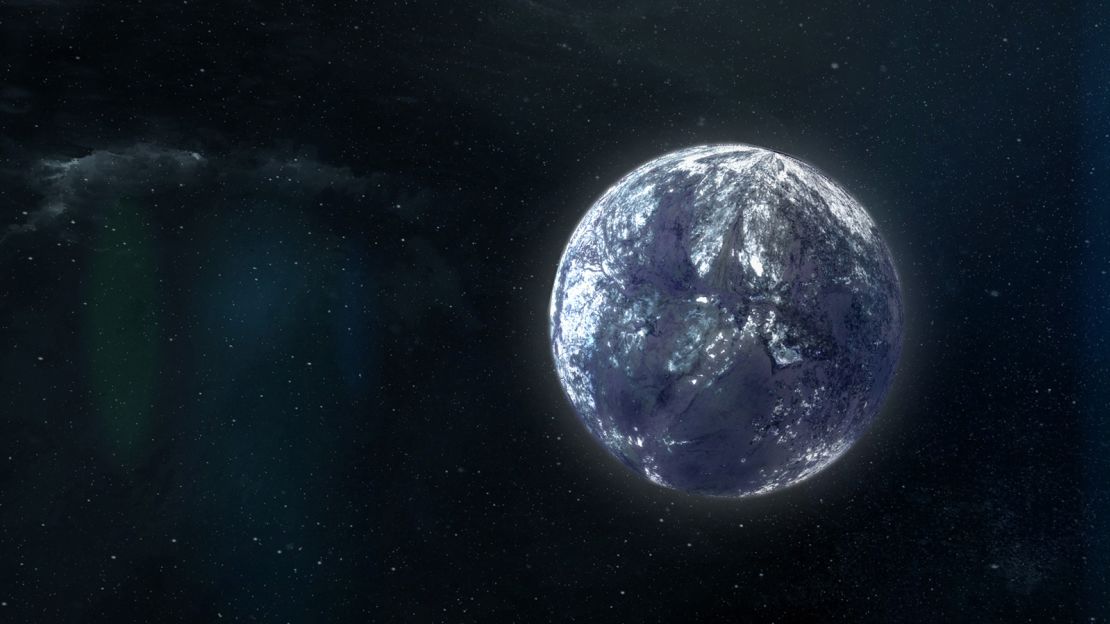
In October 2024, NASA’s Jet Propulsion Laboratory achieved a significant milestone by successfully integrating the Roman Coronagraph Instrument onto the Nancy Grace Roman Space Telescope, which is scheduled for launch in May 2027. This cutting-edge coronagraph is designed to detect exoplanets that are incredibly faint—up to 100 million times dimmer than their parent stars—by blocking out the overwhelming light from the stars. This breakthrough technology paves the way for future missions aimed at finding Earth-like planets in distant solar systems, making this integration a critical step in advancing exoplanet research.

The Roman Coronagraph, about the size of a baby grand piano, is a complex system composed of masks, prisms, and mirrors working together to block starlight. According to Rob Zellem, Deputy Project Scientist for the Roman Telescope, the instrument’s primary goal is to demonstrate the technologies needed for upcoming space missions such as the proposed Habitable Worlds Observatory, which aims to search for planets capable of supporting life. This crucial piece of technology was installed at NASA’s Goddard Space Flight Center, where it was integrated with the Telescope’s main frame, known as the “skeleton” of the observatory. The final integration will see it paired with the Wide Field Instrument, the Roman’s primary science tool, completing the telescope’s core functionality.

Historically, most exoplanet discoveries have been made using the transit method, where astronomers detect the slight dimming of a star’s light as a planet passes in front of it. However, this method is limited by the rare alignments of planetary orbits. The coronagraph-equipped Roman Space Telescope will go beyond this constraint by using direct imaging, allowing scientists to observe exoplanets without waiting for a transit event. This technique, known as coronagraphy, has been tested on the ground with some success, such as with the HR 8799 star system. But the Roman Coronagraph’s advanced capabilities promise to provide unprecedented sensitivity, offering a new way to study distant worlds in space.

With this new coronagraph, the Roman Space Telescope will significantly enhance our ability to directly image exoplanets, marking a major step forward in the search for habitable planets outside our solar system. By blocking out the blinding light of stars, it opens the door to studying planets that were previously too faint to observe, potentially identifying new candidates for life-supporting worlds. As the telescope nears its 2027 launch, the coronagraph will play a pivotal role in shaping the future of space-based exoplanet exploration.

Research Suggests Black Holes May Fuel the Expansion of the Universe

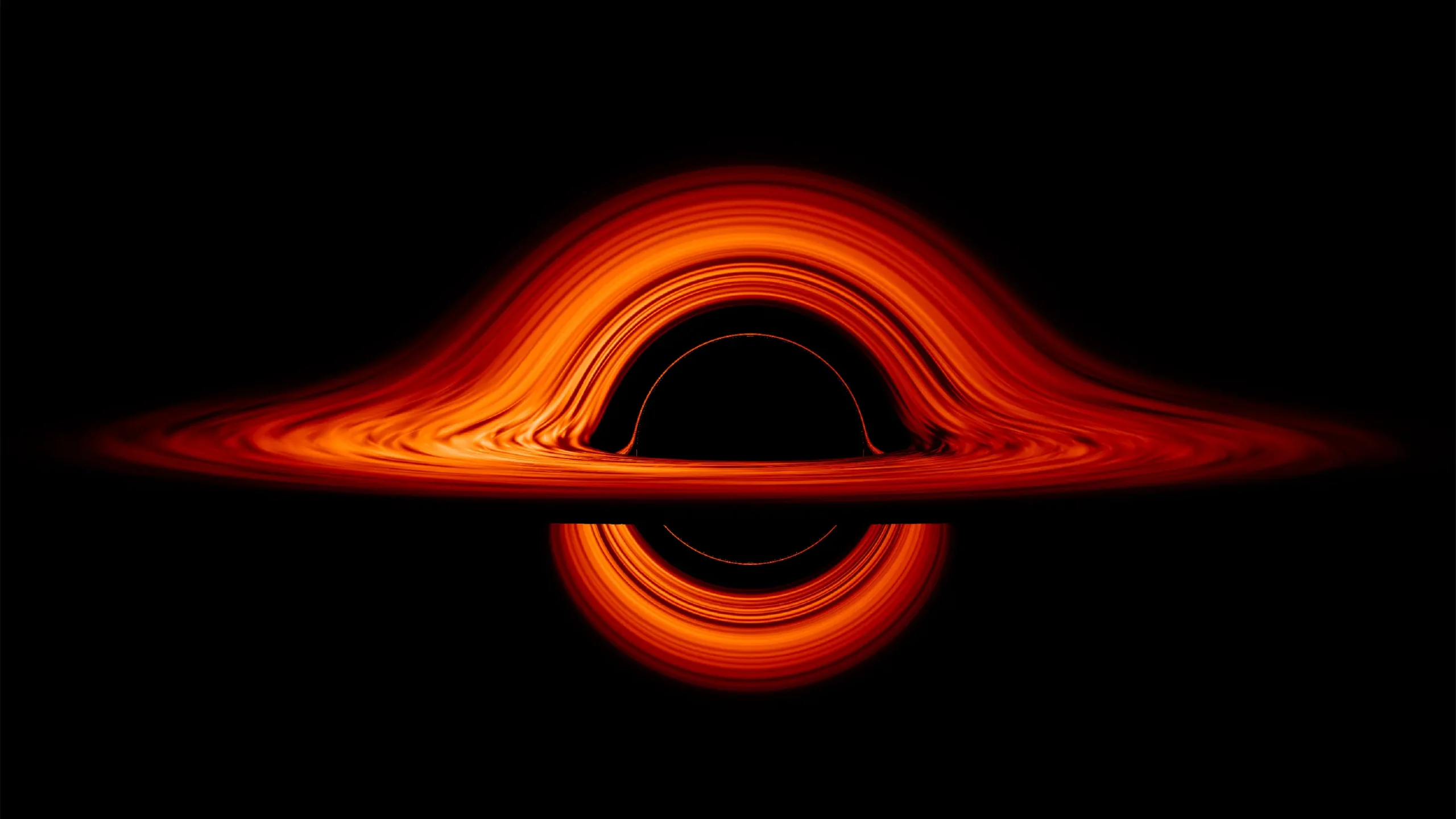
Astronomers are currently exploring a groundbreaking and controversial theory that black holes could be connected to the accelerated expansion of the universe, which is primarily attributed to dark energy. Dark energy, a mysterious force that makes up roughly 70 percent of the universe, has long been understood to cause the universe’s expansion by pushing galaxies apart. Since the discovery of dark energy, it has been assumed that it exists evenly throughout space, acting as a uniform force. However, a recent study published in the Journal of Cosmology and Astroparticle Physics presents a new perspective, suggesting a potential link between black holes and dark energy. This idea challenges traditional cosmological models and opens the door for further debate in the scientific community.

The research, led by a team using the Dark Energy Spectroscopic Instrument (DESI) at the Nicholas U. Mayall Telescope in Arizona, examined the relationship between black holes and dark energy. By analyzing data from deep space observations, the researchers sought to estimate the evolution of dark energy over cosmic history. Surprisingly, their results indicated a correlation between the growth of black holes and an increase in dark energy density over time. According to Dr. Gregory Tarlé, a professor of physics at the University of Michigan and co-author of the study, this relationship may suggest that the immense gravitational forces within black holes mimic the conditions that existed during the universe’s early stages. Tarlé likens this to a “reverse inflation” process, in which the collapse of a massive star could produce dark energy in a manner opposite to the Big Bang.

If this theory proves correct, it could help solve a major cosmological puzzle known as the “Hubble tension.” This refers to the observed discrepancies in the rate at which different regions of the universe expand, which current models struggle to reconcile. The idea that black holes might play a role in these variations in expansion offers a fresh avenue of exploration. Dr. Duncan Farrah, an associate professor of physics at the University of Hawaii and another co-author of the study, suggests that the evidence for a connection between black holes and dark energy is becoming increasingly plausible. If validated, this could lead to significant revisions in our understanding of cosmology and the forces shaping the universe’s evolution.

The implications of such a discovery would not only reshape theoretical physics but also have far-reaching consequences for future space exploration. If black holes are indeed contributing to the expansion of the universe, it would imply that their influence extends far beyond their immediate surroundings, potentially altering our perception of the role they play in the cosmos. This theory also calls for a reevaluation of dark energy itself, perhaps suggesting that it is not just a passive force but one actively involved in the cosmic processes that shape space-time. As research continues, the scientific community will undoubtedly continue to investigate this fascinating possibility, seeking answers to the most profound questions about the nature of the universe.