Yazılar

Oppo Unveils Agentic AI Initiative, Introduces New System-Wide AI Search Feature

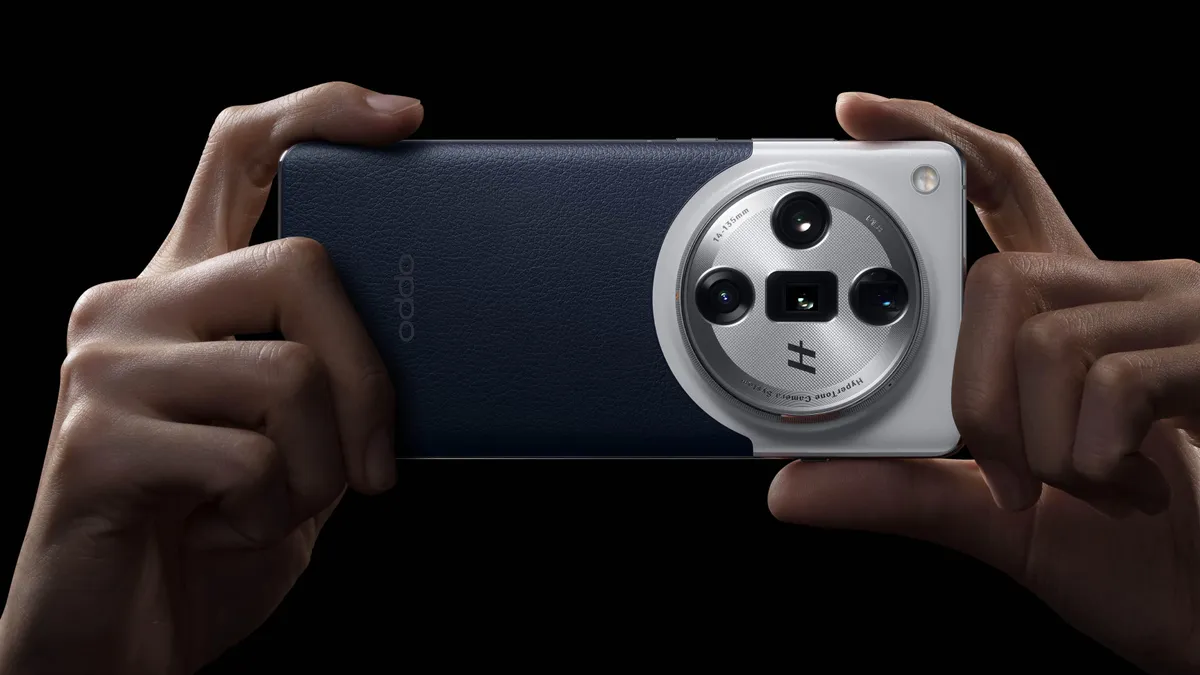
Oppo has revealed its ambitious plans for the future of artificial intelligence (AI) with the launch of its Agentic AI initiative at the Google Cloud Next 2025 event. The company is focused on advancing AI capabilities to create deeply personalized and intelligent experiences for its users. This new initiative aims to combine in-house AI development with a strategic collaboration with Google to introduce next-generation AI features that will enhance both hardware and software integration. Oppo is setting the stage for a future where AI agents, or agentic AI, take a central role in how users interact with their devices.

The core idea behind agentic AI is to create a system where a centralized AI model autonomously manages hardware and software components to perform tasks based on user commands. This innovative approach promises to make interactions with Oppo devices smarter, more intuitive, and highly personalized. Oppo’s goal is to ensure that its AI experiences are continuously refined, and the company is leveraging partnerships with industry leaders like Google Cloud to achieve this. Jason Liao, President of Oppo Research Institute, highlighted the company’s commitment to enhancing AI capabilities, signaling a new era for Oppo users in terms of seamless and intelligent device usage.

At the Google Cloud Next event, Oppo also unveiled a cutting-edge feature called AI Search. This system-wide AI tool will allow users to conduct multimodal searches across documents stored on their devices using natural language queries. With AI Search, users can quickly find specific information within their files directly from the home screen, streamlining how users interact with their content. This feature represents a leap forward in making AI a practical, everyday tool, seamlessly integrated into Oppo’s ecosystem. Additionally, Oppo highlighted its existing AI-driven features in areas such as productivity, imaging, and creativity, showcasing the breadth of its AI applications.

As part of this ambitious initiative, Oppo is developing a user knowledge system, which will serve as a central hub for storing and managing user data. This system is designed to tackle the issue of information fragmentation, a common problem with mobile devices, by creating a unified data repository. By leveraging this system, Oppo aims to further enhance the personalization of its AI features, ensuring that users’ experiences with their devices are not only smarter but also more tailored to their individual needs and preferences. With Agentic AI at its core, Oppo is positioning itself at the forefront of AI innovation, offering users more powerful and intuitive tech experiences.
Google Pixel Watch 4 Renders Leak, Suggest Subtle Design Tweaks and Wireless Charging Upgrade

Google Pixel Watch 4 Leak Hints at Familiar Looks, Potential Wireless Charging

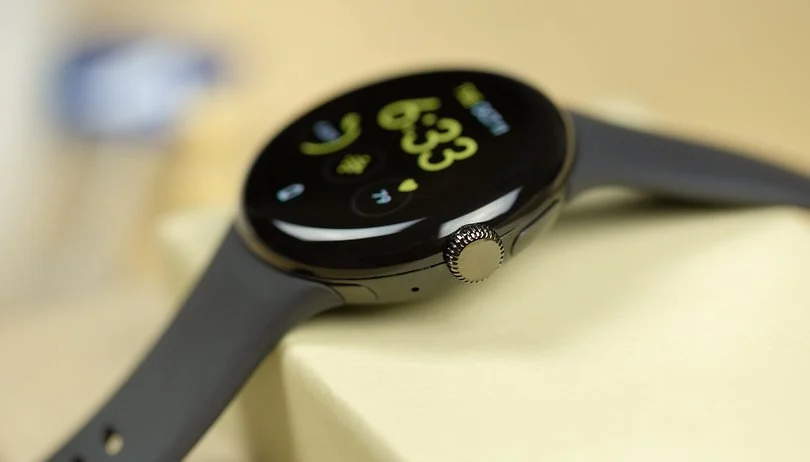
As the smartwatch market continues to evolve, Google appears to be sticking with a familiar formula for its next wearable. Though the Pixel Watch 4 is still months away from its official debut—likely alongside the Pixel 10 smartphone lineup—a recent leak has offered an early glimpse into what fans can expect. Courtesy of reliable tipster Steve Hemmerstoffer (aka @OnLeaks), high-resolution renders and a 360-degree video have surfaced, showcasing the design of the upcoming Pixel Watch 4 in all its detail.

From what the leaked visuals reveal, the Pixel Watch 4 doesn’t stray far from the aesthetic of its predecessor. It retains the signature circular face with minimalistic contours and a sleek silhouette, though subtle changes can be spotted. Most notably, the screen bezels appear to be slightly slimmer, potentially offering a more immersive display. The device shown is in black, continuing Google’s preference for understated, modern design choices.

One significant visual detail missing from the Pixel Watch 4 render is the set of magnetic charging pins present on the Pixel Watch 3. This omission has led to speculation that Google may be moving toward wireless charging for its next smartwatch. If true, this would be a welcome upgrade that aligns with broader industry trends. Along with this potential enhancement, the Pixel Watch 4 is also tipped to be a bit bulkier—reportedly measuring 14.3mm in thickness, up from 12.3mm in the previous generation. This increase could suggest a larger battery capacity, aimed at improving the watch’s longevity.

While Google hasn’t confirmed an official launch date, it’s reasonable to expect the Pixel Watch 4 to break cover around the same time as the Pixel 10 series, possibly in late summer or early fall. With two expected size variants—41mm and 45mm—the new smartwatch may once again cater to a broader range of wrist sizes. Add to that the return of side buttons and hints of upgraded internals, and it seems Google is refining its smartwatch strategy rather than overhauling it entirely.

Gemini 2.5 Pro Enters Public Preview as Google Boosts AI Studio Rate Limits

Google Expands Access to Gemini 2.5 Pro with Public Preview and New Pricing

Google has officially transitioned its Gemini 2.5 Pro AI model from experimental preview to public preview, allowing broader access for developers. Initially launched last month with limited rate caps, the advanced language model is now available with increased usage limits via the Gemini API and Google AI Studio. This shift opens the door for more robust experimentation and development, especially for those looking to integrate high-performance AI into their workflows.

According to Google, early interest in Gemini 2.5 Pro exceeded expectations, prompting the company to expand availability. While the model is now accessible through the Gemini API in AI Studio, it is still pending rollout on Vertex AI. Developers can take advantage of the new access tier immediately, giving them greater flexibility and speed in deploying AI-driven applications.

With expanded access comes clarified pricing. Google has introduced a two-tier pricing structure for Gemini 2.5 Pro. Under the standard tier, which includes up to 200,000 tokens, the model is priced at $1.25 per million input tokens and $10 per million output tokens. Input tokens cover all forms of content including text, images, and audio, while output tokens are calculated based on the model’s reasoning and response generation.

For developers who exceed the 200,000-token threshold, the higher tier pricing kicks in at $2.50 per million input tokens and $15 per million output tokens. Meanwhile, Google is continuing to offer the experimental version of Gemini with limited access at no cost. Emphasizing affordability, Google claims its rates are highly competitive — especially when compared to rivals like Anthropic’s Claude 3.7 Sonnet, which charges $3 and $15 for input and output tokens respectively.