Yazılar

Space Exploration Milestones of 2024: Lunar Ventures, Mars Breakthroughs, and Beyond

The year 2024 saw incredible progress in space exploration, with significant missions targeting the moon, Mars, Mercury, and beyond. A variety of government agencies, private companies, and research teams achieved remarkable milestones, deepening humanity’s understanding of the solar system and advancing the frontiers of space exploration.

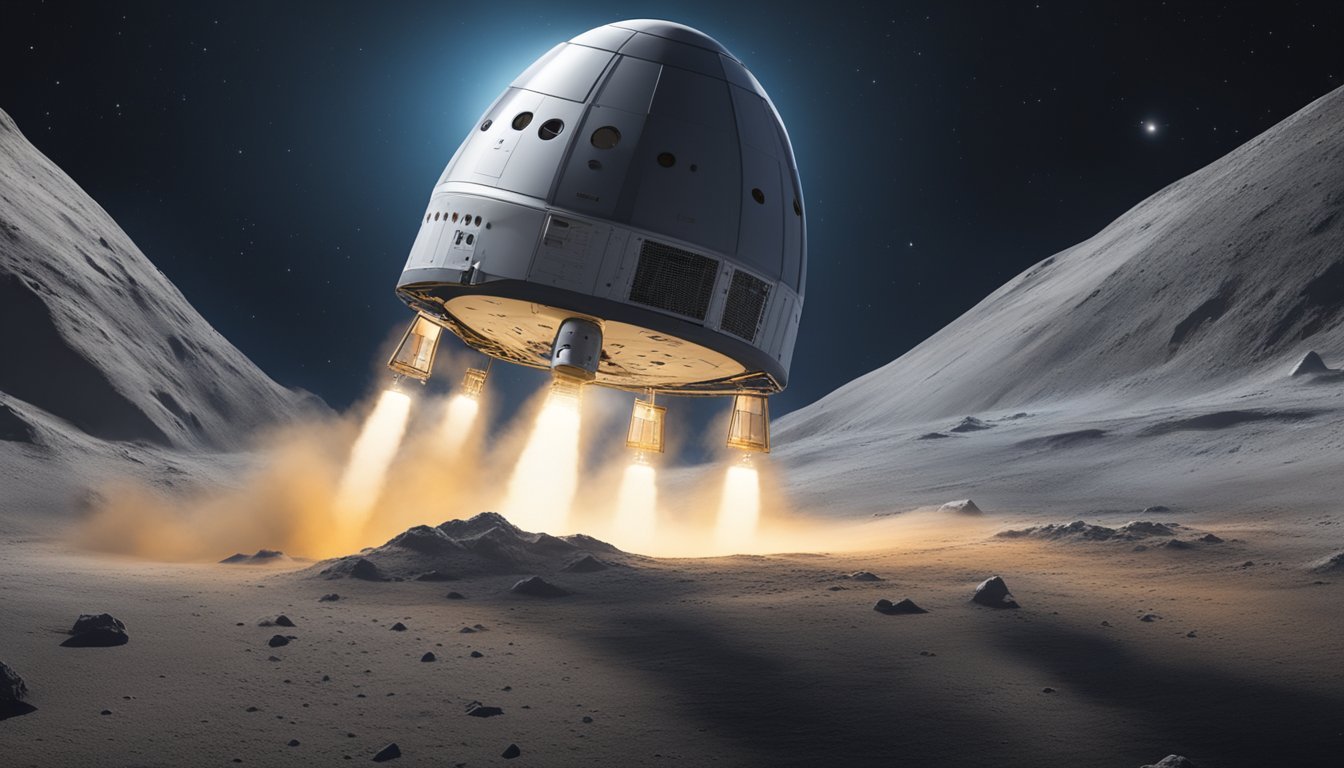
Among the most notable developments were several lunar missions that expanded our knowledge of Earth’s closest neighbor. Japan’s SLIM (Smart Lander for Investigating the Moon), which landed on the rim of a lunar crater in January, surpassed expectations by operating for three months rather than the planned two weeks. This extended mission provided invaluable data about the moon’s surface and topography. In February, the Odysseus spacecraft from Intuitive Machines, based in Houston, also made a noteworthy lunar achievement. Despite landing off-balance near the lunar south pole, the spacecraft completed its six-day mission successfully, providing important insights into the region.

China’s Chang’e 6 mission, launched by the China National Space Administration (CNSA), made headlines in June when it returned with soil samples from the moon’s far side. This was the first successful collection of samples from this previously unexplored region. Initial analysis of the samples suggested that the far side of the moon may have experienced volcanic activity as recently as 2.8 billion years ago, offering exciting new clues about the moon’s geological history.

Beyond lunar exploration, there were also significant strides made in the study of Mars and other celestial bodies. The year 2024 highlighted the increasing pace of discoveries, including new findings on Mars that could reshape our understanding of the planet’s potential to support life. As technology continues to advance, space agencies and private enterprises are rapidly pushing the boundaries of exploration, promising even more exciting developments in the years to come.

NASA’s Perseverance Rover Captures ‘Googly Eye’ Eclipse on Mars

NASA’s Perseverance rover, stationed in Mars’ Jezero Crater, recently captured a stunning celestial event as the Martian moon Phobos passed across the Sun. This moment, observed on September 30, provided a rare glimpse into the Martian sky and featured an intriguing “googly eye” effect, which was recorded by the rover’s Mastcam-Z camera. The eclipse offered a unique visual of Phobos’ orbit and helped scientists gain valuable data about the moon’s trajectory as it continues to slowly move closer to Mars. The footage released by NASA showcases the intricate dance of Mars’ moons and the dynamic nature of the Martian system.

The event unfolded as Perseverance observed Phobos casting its shadow across the Sun, creating a brief and distinctive visual effect. This “googly eye” effect occurred when Phobos partially blocked the sunlight, leaving a silhouette that was especially noticeable against the Martian backdrop. The eclipse, occurring on the 1,285th Martian day (sol) of the Perseverance mission, highlighted the moon’s rapid orbit around Mars. Phobos takes just 7.6 hours to complete one orbit, a much faster motion compared to Earth’s moon, which results in quick transits across the sky that last only about 30 seconds. This provides a fleeting but beautiful spectacle that is rarely visible from Earth.

Phobos, the larger of Mars’ two moons, follows an increasingly tight orbit around the Red Planet. Measuring around 27 kilometers at its widest point, Phobos appears much smaller in the Martian sky compared to Earth’s moon, and its proximity to Mars means that it crosses the sky more frequently. However, this close orbit comes at a cost: Phobos is gradually moving closer to Mars over time, and scientists predict that within the next 50 million years, it will either crash into the Martian surface or break apart, forming a ring around the planet. The periodic eclipses caused by Phobos’ orbit, including those recorded by Perseverance and previous rovers like Curiosity and Opportunity, have provided crucial insights into the moon’s orbit and its eventual fate.

This recent observation of Phobos’ eclipse adds to a growing body of knowledge about Mars and its moons. Each eclipse captured by rovers helps scientists refine their understanding of Phobos’ path, and in turn, offers important clues about the evolution of Mars’ natural satellites. As Perseverance continues its mission on Mars, more such events are expected, providing scientists with deeper insights into the Martian system and the behavior of its moons. These observations not only enrich our understanding of Mars’ present but also offer a glimpse into the future of the Red Planet and its celestial companions