Yazılar

Scientists Demonstrate Time-Reversal Symmetry in Kagome Superconductor Breakthrough

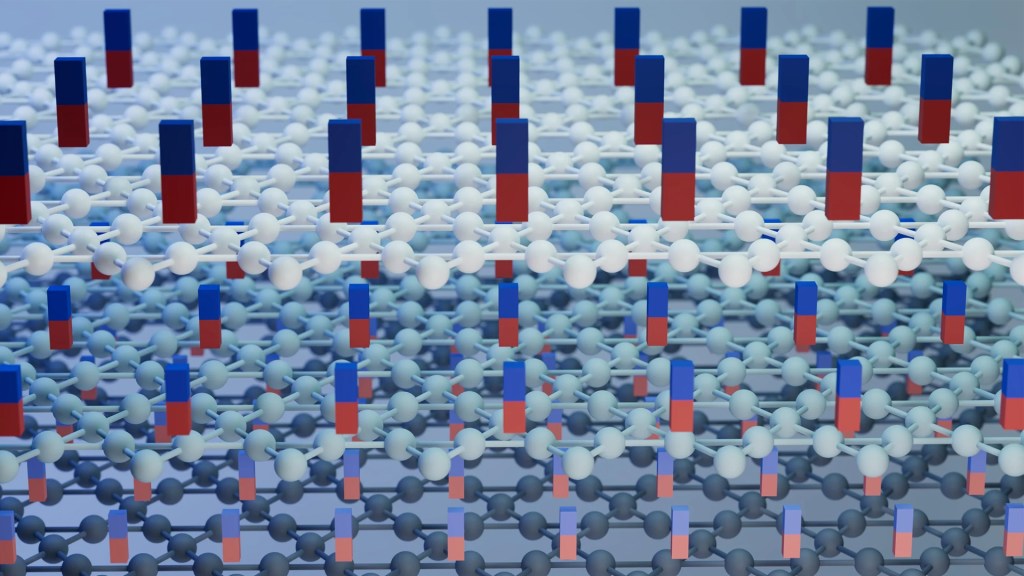
A research team at the Paul Scherrer Institute (PSI) in Switzerland has made a significant advancement in quantum materials by demonstrating time-reversal symmetry (TRS) breaking in the Kagome superconductor RbV3Sb5 at an unprecedented temperature of 175 Kelvin (-98°C or -144.67°F). This breakthrough is particularly noteworthy because quantum systems typically require extremely low temperatures to function properly, as thermal energy can interfere with their delicate states. The ability to induce TRS breaking at such a relatively high temperature opens up exciting possibilities for the future of quantum technology, potentially reducing energy costs and making these systems more practical for real-world applications.

In quantum physics, time-reversal symmetry refers to the idea that the fundamental laws of physics remain the same even when time flows backward. However, in certain materials, such as RbV3Sb5, this symmetry is deliberately broken, leading to the formation of unique quantum states. These states have properties that vary depending on the direction of time, creating opportunities for precise manipulation in quantum devices. The ability to control such states is crucial for the development of advanced quantum technologies, including quantum computing and communication systems, where stability and precision are paramount.

The groundbreaking aspect of this research lies in the ability of RbV3Sb5 to sustain superconductivity down to about two Kelvin, while still maintaining TRS-breaking states at much higher temperatures. This combination of superconductivity and TRS-breaking behavior makes the Kagome superconductor a promising candidate for use in future quantum technologies. As the researchers, including Mahir Dzambegovic from PSI, note, the material’s unique charge order state allows electrons to form an organized pattern that induces a magnetic effect strong enough to break TRS at -144.67°F. This offers a new avenue for controlling quantum systems with less energy input and greater efficiency.

The implications of this discovery are far-reaching. By demonstrating that time-reversal symmetry can be broken in a superconductor at a higher temperature, the researchers have opened a new chapter in the study of quantum materials. If this phenomenon can be replicated in other materials or scaled for practical use, it could significantly lower the barriers to quantum technology adoption, making these powerful systems more accessible and cost-effective. This research not only advances our understanding of quantum mechanics but also paves the way for the next generation of technological innovations in the quantum world.
Google’s 67-Qubit Sycamore Quantum Computer Shows Potential to Surpass Leading Supercomputers, Study Finds

Google’s 67-Qubit Sycamore Chip Pushes Quantum Computing to New Heights

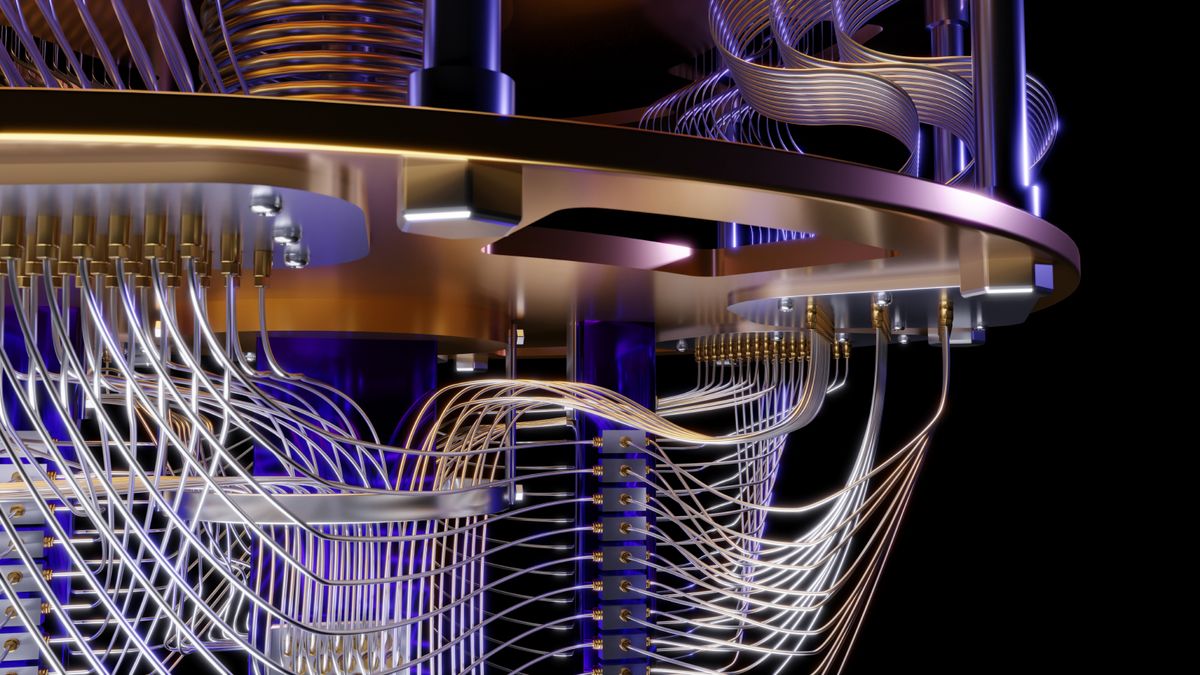
In a major leap for quantum computing, Google’s Sycamore processor, equipped with 67 qubits, has demonstrated performance that outstrips the most advanced classical supercomputers. According to a study published in Nature on October 9, 2024, this achievement marks the Sycamore processor’s entry into what researchers call the “weak noise phase.” This state allows quantum computers to perform calculations with stability, expanding the potential for quantum computing to tackle problems previously unsolvable by traditional methods.

Exploring the Weak Noise Phase

Under the guidance of Alexis Morvan from Google Quantum AI, the research team has shown how Sycamore can harness the weak noise phase to enhance computational capabilities. In this phase, the quantum processor can execute calculations with remarkable complexity, outpacing the fastest supercomputers available today. Google representatives emphasize that this breakthrough demonstrates the potential of quantum technology to solve complex real-world problems that cannot be addressed by classical computing alone. This phase of stability and efficiency brings the field closer to practical applications, marking a critical step toward making quantum computing feasible for broader use.

How Qubits Enable Quantum Superiority

Quantum computing relies on qubits, the quantum equivalent of classical bits, to perform operations. While bits process information sequentially in classical computers, qubits operate based on quantum mechanics, enabling them to execute multiple calculations simultaneously. The power of qubits grows exponentially as more are added to a quantum processor, allowing them to solve certain problems exponentially faster than classical systems. However, qubits are highly susceptible to interference, causing a high failure rate compared to classical bits. For instance, while traditional systems have failure rates as low as one in a billion billion bits, around one in every hundred qubits may fail, posing an ongoing challenge for quantum engineers.

Future Implications of Google’s Quantum Breakthrough

Google’s Sycamore processor exemplifies how quantum computers might one day outstrip classical systems for specific tasks, such as optimization problems, large-scale simulations, and cryptography. This latest breakthrough is an encouraging signal that we are approaching a new era in computational science, where quantum computers could unlock solutions to complex scientific, financial, and technological challenges. As research in error correction and qubit stability progresses, the potential of quantum computers to revolutionize various industries draws closer to reality.