Yazılar

Early Supernovas May Have Created Water in the Universe, Supporting Life Formation 100 Million Years After the Big Bang

Supernovas in Early Universe May Have Created Water, Setting the Stage for Life 100 Million Years After the Big Bang

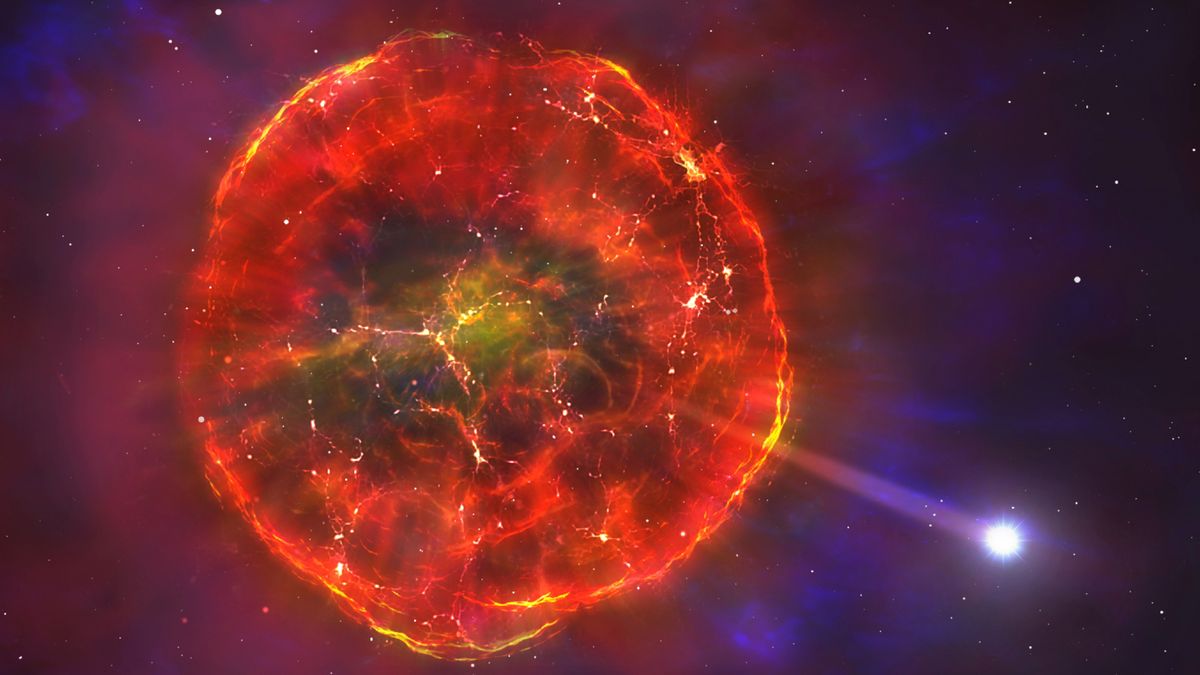
New research suggests that the explosive deaths of the first stars in the universe, known as supernovas, could have been responsible for the creation of water, potentially enabling life to emerge as early as 100 million years after the Big Bang. These findings challenge current theories about the origins of water in the cosmos and highlight the significant role supernovae played in the early universe. The study, based on simulations of short-lived, massive stars, proposes that supernovae triggered the formation of water in dense clouds of hydrogen and oxygen left behind by these stellar explosions.

Water Formation in Early Stellar Explosions

The study, which was uploaded to arXiv on January 9, focused on the first generation of stars, known as population III stars. These stars were much more massive than those seen in the present universe, with masses estimated to be around 200 times that of the Sun. The researchers found that the dense material expelled during these supernovas could have created conditions ripe for water molecules to form. The process likely occurred in the aftermath of the explosion, where hydrogen and oxygen, elements essential for water, were abundant.

High Concentrations of Water in Early Universe

According to the simulations, the concentrations of water formed in the aftermath of early supernovas could have been up to 30 times higher than those observed in the interstellar gas clouds of our own Milky Way galaxy. This significant presence of water in the early universe could have provided essential conditions for the formation of galaxies, stars, and potentially even life. The research opens up new possibilities regarding the timeline and conditions under which life-supporting water could have existed, significantly altering our understanding of the universe’s early history.

Implications for the Origins of Life and Galaxy Formation

The discovery has profound implications for our understanding of both the origins of water and the formation of life in the universe. If water existed so early in the universe’s history, it could have acted as a crucial ingredient for the formation of complex molecules, setting the stage for the emergence of life. Additionally, the presence of water in the dense regions created by early supernovas could have played a role in the formation of early galaxies, providing further insight into how the universe evolved in its infancy. This new research suggests that the universe’s first stars didn’t just shape the cosmos with their explosive ends—they may have created the very building blocks for life.

Scientists Finally Decode the Mystery Behind White Dwarf’s Unexplained Rapid Spin

A fascinating discovery has been made regarding a white dwarf star, situated about 1,700 light-years from Earth. This white dwarf, known as RX J0648.0–4418, is part of a unique binary system where it is continuously drawing stellar material from its companion star, HD 49798, a helium-burning hot subdwarf. Despite its shrinking size, the white dwarf maintains a surprisingly rapid spin, completing a full rotation approximately every 13 seconds. This rapid rotation has raised new questions about the dynamics of binary star systems and the potential fate of this star in the future.

The white dwarf’s behavior is especially intriguing as it appears to be approaching a critical mass known as the Chandrasekhar limit. Once a white dwarf reaches this mass, it can no longer support itself against gravity and may explode in a supernova. In the case of RX J0648.0–4418, this could occur within the next 100,000 years, providing a rare opportunity to study the final stages of a star’s life. The discovery, published in a study by Dr. Sandro Mereghetti of the National Institute of Astrophysics (INAF), shines a light on this star’s exceptional rotational speed and its interaction with its companion.

What makes this system particularly remarkable is the nature of the interaction between the two stars. In most X-ray binary systems, a neutron star or black hole typically pulls material from its companion, but in this case, it’s the white dwarf that is accreting material from a hot subdwarf star. This evolutionary phase is quite rare and typically short-lived, which makes the RX J0648.0–4418 system even more exceptional. The relationship between the two stars offers a unique glimpse into the diverse ways binary systems can evolve.

One of the greatest mysteries surrounding this white dwarf is its incredibly rapid spin, which cannot be fully explained by the material it is accumulating from its companion. The accretion rate has been measured, and it turns out to be too low to account for the extraordinary spin observed. This suggests that there may be other factors at play, possibly related to the star’s internal structure or its history of material accumulation. Further study of RX J0648.0–4418 could offer valuable insights into the complex behavior of white dwarfs and their eventual fate in the cosmos.

Unusual Plasma Density May Explain Zebra Patterns in Crab Nebula’s Pulsars

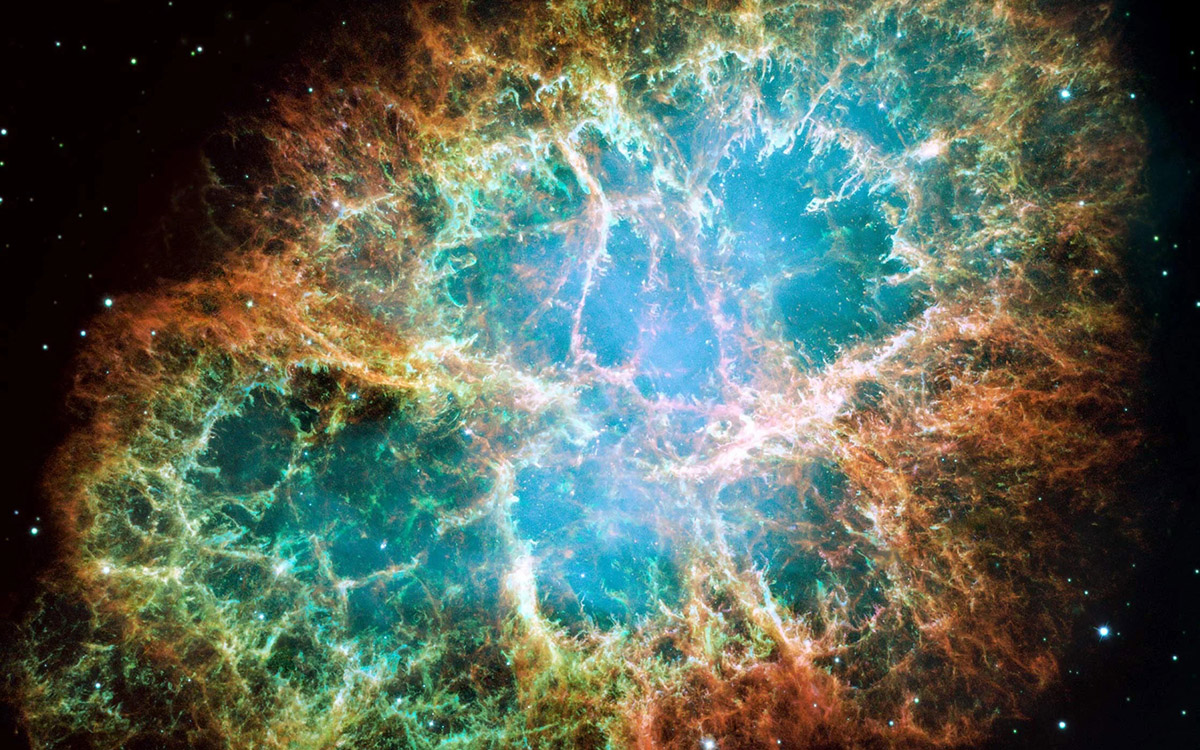
Researchers have proposed a groundbreaking explanation for the enigmatic zebra-like radiation pattern emitted by the Crab Pulsar, a neutron star nestled 6,000 light-years away at the heart of the Crab Nebula. This pulsar, born from the remnants of a supernova explosion recorded in 1054, has long fascinated scientists due to its high-frequency emissions, which stand out among the broader population of pulsars.

A recent study, published in Physical Review Letters on November 15, sheds light on this phenomenon. The zebra-like radiation, characterized by distinctive spectral stripes, was analyzed by physicist Mikhail Medvedev from the University of Kansas. Medvedev’s research offers a new perspective on the unique patterns observed in the pulsar’s emission, paving the way for deeper insights into the behavior of neutron stars.

According to the study, the zebra-like effect arises from the diffraction of electromagnetic waves within the pulsar’s magnetosphere, a region dominated by intense magnetic fields and plasma. As the pulsar spins, its radiation beams sweep across space like a cosmic lighthouse, with the diffraction caused by the plasma introducing the characteristic striped patterns. These findings highlight the critical role of plasma density and magnetospheric dynamics in shaping the observed emissions.

The discovery not only enhances our understanding of the Crab Pulsar but also provides a framework for studying similar phenomena in other extreme astrophysical environments. By revealing how plasma interacts with electromagnetic waves in such conditions, the research contributes to broader efforts to decode the mysteries of pulsars and the fundamental physics governing their behavior.