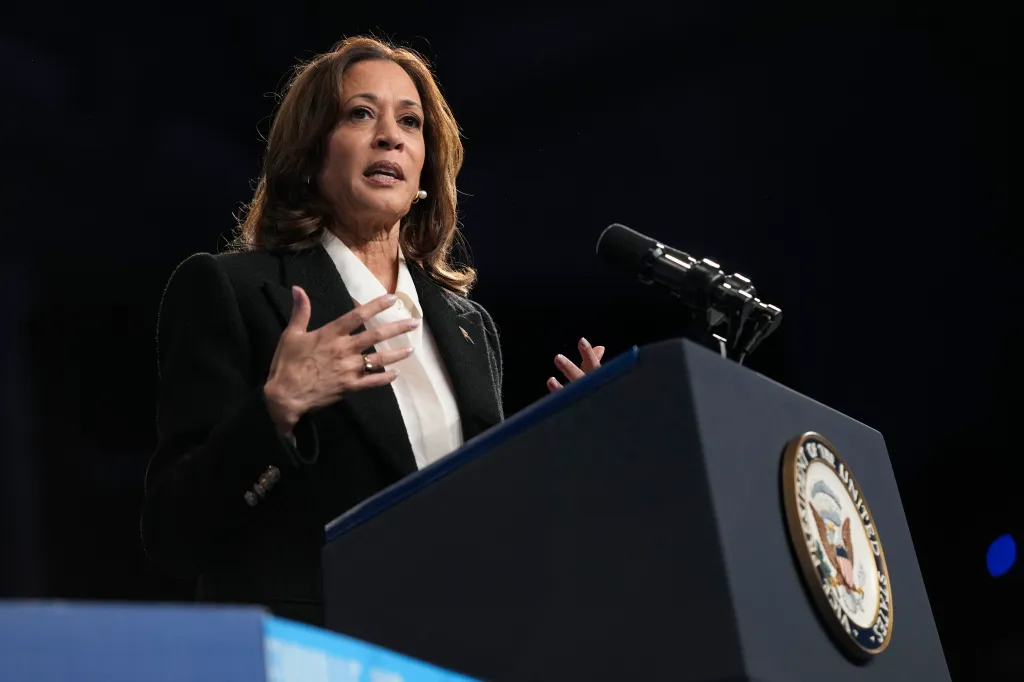
Harris Courts Black and Latino Voters Amid Trump’s Gains

As the U.S. presidential election approaches, Vice President Kamala Harris is intensifying her outreach to Black and Latino voters, recognizing the critical role these demographics play in determining the election’s outcome. Recent polling indicates a shift, with Donald Trump making inroads among these voters, despite Harris’s initial strong support.

A New York Times/Siena poll reveals that Harris commands about 78% support from Black voters, a notable decrease from the near 90% historically achieved by Democrats. This decline is particularly pronounced among Black men, raising alarms about voter turnout as the election date nears.

Key States and Economic Concerns

In battleground states like Arizona, where nearly 25% of voters are expected to be Latino, and Georgia, where Black voters make up about 30% of the electorate, the stakes are high. Economic issues, especially inflation and living costs, dominate the concerns of Black and Latino voters. Many express dissatisfaction with the current economic climate, which has pushed some to consider supporting Trump.

Quenton Jordan, a Virginia resident who previously voted for Barack Obama, now backs Trump, citing the tangible struggles posed by inflation. “It’s making it harder for me,” he noted, highlighting how economic pressures can influence voter sentiment.

Trump’s Appeal: Economic and Social Issues

In Nevada, a state with a significant Latino population, residents like Lydia Dominguez report that many Latinos now view Trump more favorably, recalling the economy’s performance during his presidency. She emphasized that concerns about affordability have diminished the stigma around supporting Trump among her community.

Even some voters leaning toward Harris acknowledge that economic issues are compelling many to shift their support. Diego Arancivia, a former Republican in Nevada, stated that economic concerns alone could lead community members to vote for Trump, despite their personal feelings about him.

Immigration and Border Security

Concerns surrounding immigration and the U.S.-Mexico border further complicate the electoral landscape. Many Black and Latino voters feel the Biden administration’s handling of border security has been inadequate, making Trump’s hardline stance appealing. Rolando Rodriguez, a former Democrat and Trump supporter from Texas, described the situation at the border as unprecedented, emphasizing the challenges it poses to local communities.

Jordan echoed these sentiments, asserting that resources should prioritize longstanding needs in the Black community rather than being diverted to assist migrants. This perspective aligns with Trump’s rhetoric, as he has framed immigration as an “invasion” negatively affecting both Black and Latino communities.

Shifts in Social Views

Political science professor Quardricos Driskell highlights a perceived disconnect between the Democratic Party’s social agendas and the values of some Black male voters. Many feel that their views on masculinity and social issues are being overlooked by Democrats. Clarence Pauling, a barbershop owner in South Carolina, noted that he finds the Republican Party’s stance more aligned with his religious beliefs regarding gender and sexuality.

Harris’s Response and Strategies

In response to these challenges, Harris is ramping up her campaign efforts, unveiling an “opportunity agenda for Black men” and engaging with Black entrepreneurs in key swing states. She is also set to speak with influential figures in the Black community, such as radio host Charlamagne Tha God.

As Trump actively courts Black and Latino voters during town hall events, he boasts of improving polling numbers within these demographics, suggesting a shift in the political landscape that Harris must urgently address to galvanize voter turnout in November.

China’s Newest Panda Diplomats Arrive in Washington

Two adorable pandas, Bao Li and Qing Bao, have embarked on a journey to Washington, D.C., signaling a new era of “panda diplomacy” between the U.S. and China. The three-year-old pandas left China from their research base in Dujiangyan, Sichuan, on Monday night, boarding a specially chartered FedEx Panda Express flight. These pandas are the first pair sent to the U.S. capital in 24 years, following the return of the previous pandas to China last November.

The Smithsonian’s National Zoo is eagerly anticipating their arrival, with millions of visitors awaiting the reopening of the revamped panda exhibit. Over the past year, the absence of pandas has left a void at the zoo, which had long been one of its star attractions.

Panda Diplomacy Amid Global Tensions

While the pandas’ arrival symbolizes the long-standing friendship between China and the U.S., their journey comes at a time of tense political relations between the two superpowers. In recent years, disagreements over trade, technology, and geopolitics have soured diplomatic exchanges. However, the return of pandas to Washington offers a rare bright spot, reflecting a shared commitment to conservation.

Panda diplomacy traces its origins to 1972, when China sent its first pair of pandas to Washington following President Richard Nixon’s groundbreaking visit to Communist China. This soft power strategy continues today, with pandas acting as cultural ambassadors.

Preparation for the Long Flight

Much care has been taken to ensure the pandas’ well-being during their flight. Staff members from the National Zoo accompanied Bao Li and Qing Bao, working alongside their Chinese counterparts to guarantee a smooth transfer. Both pandas were taken off public display in early September and placed in quarantine, allowing them time to adjust to the upcoming journey.

Their personalized in-flight meals include corn buns, bamboo shoots, and carrots. Panda keeper Mariel Lally assured that the pandas would have a “comfortable ride,” noting that their crates are large enough for them to stretch and move around during the long trans-Pacific flight.

Bao Li and Qing Bao’s Unique Personalities

Despite being only three years old, Bao Li and Qing Bao have already developed distinct personalities. According to their Chinese caretaker Ren Zhijun, Bao Li is the more energetic and voracious eater, while Qing Bao enjoys sleeping and favors carrots and apples. Bao Li’s mother, Bao Bao, was born at the National Zoo in 2013, giving him deep roots in Washington. Zoo staff have likened him to his grandfather, Tian Tian, a former panda resident at the zoo.

A New Chapter for the National Zoo

Bao Li and Qing Bao will be on loan to the National Zoo for 10 years, with an annual fee of $1 million paid to support panda conservation efforts in China. Their arrival signifies the continuation of a partnership that has spanned decades, emphasizing the importance of global cooperation in animal conservation.

National Zoo Director Brandie Smith expressed excitement about the pandas’ arrival, hailing it as a “historic moment.” The panda exhibit, which draws millions of visitors annually, also features the Giant Panda Cam, a live streaming service that has garnered over 100 million views since its inception in 2000. Fans from all over the world are expected to tune in as Bao Li and Qing Bao settle into their new home.

Controversy and Concerns

Not everyone is pleased with China’s decision to loan pandas abroad. Some Chinese netizens have voiced concerns about the pandas’ treatment in U.S. zoos, fueled by nationalistic sentiment and misinformation spread on social media. However, the China Conservation and Research Center for Giant Pandas has repeatedly denied these rumors, emphasizing the significance of international cooperation in panda conservation. The center urged the public not to believe baseless claims about mistreatment.

For now, Washington’s residents and visitors can look forward to the return of their beloved pandas, as the city prepares to welcome Bao Li and Qing Bao with open arms.

The Sahara Desert Floods After Rare Torrential Rains

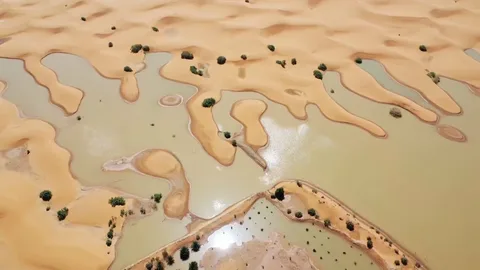
For the first time in decades, the Sahara Desert experienced intense rainfall, transforming its iconic sand dunes into a watery landscape. The deluge occurred in late September, particularly affecting southeast Morocco, where towns like Merzouga and Errachidia were hit by heavy rain that carved lakes into the usually arid terrain.

Typically, the Sahara receives only a few inches of rain annually, but satellite data from NASA indicated that nearly 8 inches of rain fell in some areas over two days. In Errachidia, almost 3 inches of rain were recorded, over four times the average rainfall for the entire month of September. This was the highest level of rain in the region in 30 to 50 years, according to Houssine Youabeb from Morocco’s meteorology agency.

Striking Visuals of a Transformed Landscape

Stunning images from Merzouga reveal new lakes forming between steep sand dunes. Reflections of palm trees shimmer in the newly formed lagoons, offering a surreal contrast to the typical barren desert landscape. Lakes in Iriqui National Park, Morocco’s largest national park, which are usually dry, also filled with water due to the rain.

Satellite images using false-color technology further highlight the extent of the flooding, revealing vast lakes and green patches where storms brought rain. These visuals offer a rare glimpse of how the Sahara’s dry, golden sands have temporarily transformed into lush and watery oases.

Climate Change and Future Rainfall in the Sahara

While the flooding primarily affected sparsely populated regions, towns and villages in Morocco also experienced deadly floods, which claimed more than a dozen lives. The Sahara’s size and arid conditions make such weather events rare, but they are becoming more frequent as climate change disrupts weather patterns.

Some research suggests that the unusual storms and increased rainfall could be linked to human-caused climate change. The warming planet is altering water cycles, making extreme rainfall events more common even in deserts like the Sahara. As fossil fuel emissions continue to heat up the Earth, the Sahara may see more dramatic changes in its weather, with the potential for more flooding events in the future.