NASA’s Hubble and New Horizons Team Up to Enhance Understanding of Uranus and Exoplanets

NASA’s Hubble Space Telescope and the New Horizons spacecraft have recently collaborated to explore Uranus, a planet renowned for its enigmatic atmosphere and striking features. Positioned in low-Earth orbit, Hubble was able to capture intricate images of Uranus, revealing details about its clouds and storm patterns. In contrast, New Horizons, situated approximately 6.5 billion miles away, provided a more distant perspective, showing Uranus as a mere dot against the vast backdrop of space. This joint effort not only enhances our understanding of Uranus but also serves as a vital reference point for astronomers studying exoplanets orbiting other stars.

The collaboration between Hubble and New Horizons is particularly significant for exoplanet imaging. According to lead author Samantha Hasler from the Massachusetts Institute of Technology, this partnership acts as a practical test case for observing exoplanets at considerable distances. By comparing Hubble’s detailed observations with New Horizons’ broad view, researchers can better understand how gas giants like Uranus would appear from light-years away. This understanding is crucial as astronomers strive to detect and characterize exoplanets that share similar traits to those found within our own solar system.

One of the noteworthy discoveries from this mission was that Uranus appeared dimmer than anticipated based on New Horizons’ observations. This finding has important implications for our understanding of light reflection on planetary atmospheres at various angles. By clarifying how light interacts with Uranus, scientists gain insights that are directly applicable to future missions, such as NASA’s Nancy Grace Roman Space Telescope and the Habitable Worlds Observatory. Both of these upcoming projects are designed to focus on exoplanets and their atmospheric characteristics, making this research especially timely and relevant.

As astronomers continue to analyze the data collected from this collaboration, they are paving the way for future exploration of not only Uranus but also other distant worlds beyond our solar system. Alan Stern, Principal Investigator for New Horizons at the Southwest Research Institute, emphasized the significance of these findings in understanding planetary atmospheres and preparing for missions aimed at identifying potentially habitable worlds. This collaboration between Hubble and New Horizons exemplifies how teamwork and technology in space exploration can yield valuable knowledge, enhancing our understanding of the universe and its myriad celestial bodies

NASA Astronaut Captures Stunning Timelapse of Auroras from the International Space Station

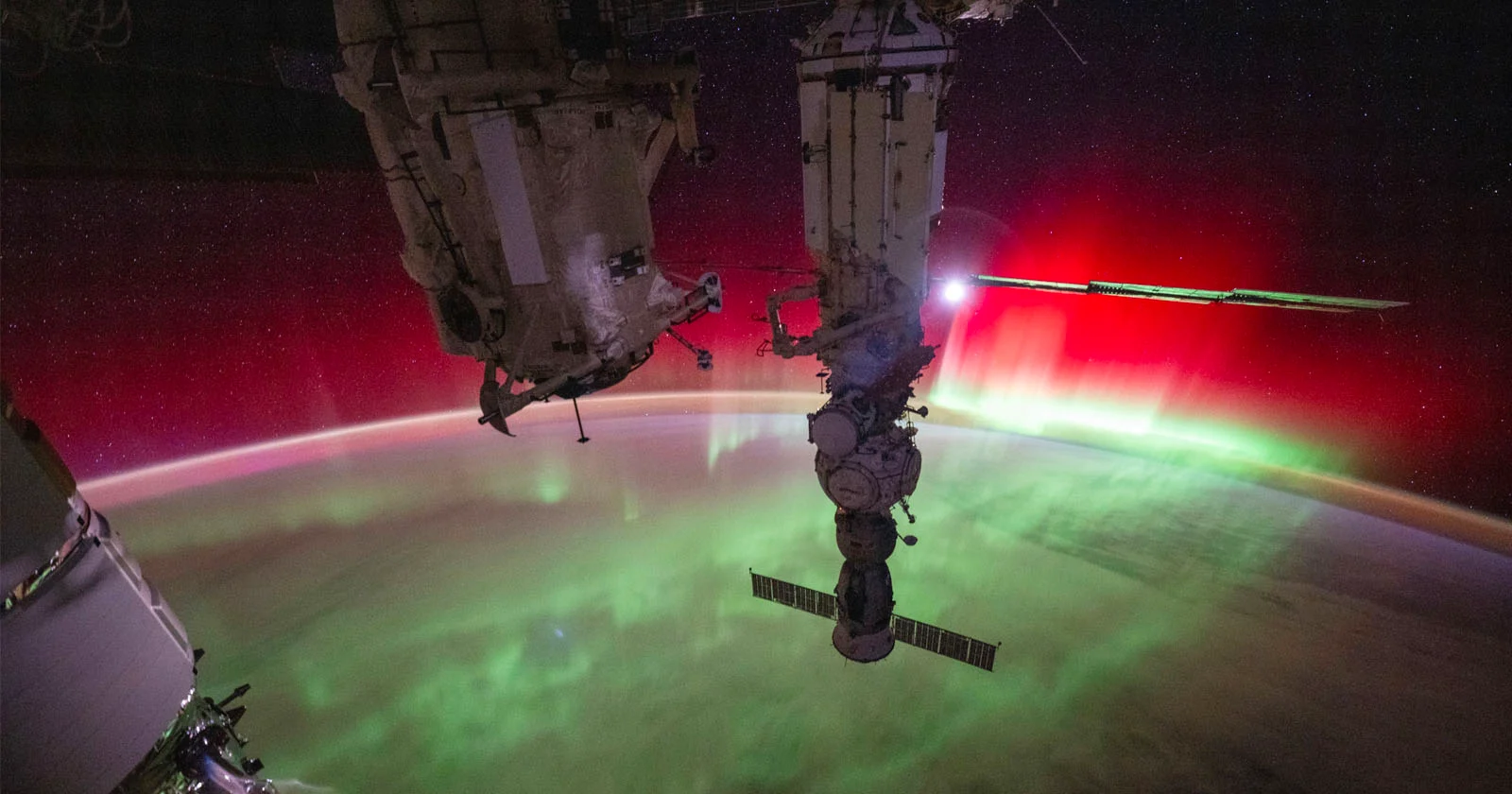
NASA astronaut Matthew Dominick recently unveiled a stunning timelapse video showcasing the vibrant red and green auroras captured from the Dragon Endeavor spacecraft. The footage, recorded on October 8 while orbiting Earth, highlights the breathtaking natural light displays, known as auroras, that result from the interaction between solar activity and the Earth’s atmosphere. These phenomena create mesmerizing visuals visible both from the ground and space, and Dominick’s video offers a unique perspective from high above.

The auroras were filmed through the window of Dragon Endeavor, which was docked near the International Space Station (ISS) at the time. In his post, Dominick noted that the captivating display was further enhanced by the presence of the Dragon Freedom spacecraft in view. The interplay of colors seemed to dance across the sky as he observed from his unique vantage point. “Red and green auroras appear to dance as we fly by Dragon Endeavour’s window with Dragon Freedom in view,” he remarked, emphasizing the surreal quality of the experience. The recent uptick in solar activity contributed to the intensity of the auroras, making the sight even more spectacular.

In addition to sharing the breathtaking auroras, Dominick provided insights into his life aboard the Dragon Endeavor. Since the arrival of Crew-9, he transitioned from his quarters on the ISS to the Dragon Endeavor, which has become his temporary home. He described the living conditions and daily routines aboard the spacecraft, emphasizing the significance of witnessing the auroras during this time. Dominick reflected that the extraordinary visuals made it easy to decide to stay docked longer; undocking earlier would have meant missing out on the once-in-a-lifetime opportunity to witness such an awe-inspiring display.

The timelapse has generated excitement and admiration among space enthusiasts and the general public alike, sparking interest in the science behind auroras and space exploration. As astronauts continue to share their experiences from orbit, viewers are given a rare glimpse into the beauty of our planet from above, fostering a greater appreciation for Earth’s atmosphere and the wonders of the cosmos. Dominick’s footage not only showcases the beauty of auroras but also serves as a reminder of the incredible advancements in space travel and the ongoing exploration of our universe.

Bosch and Tenstorrent Forge Partnership to Standardize Automotive Chip Development

German industrial powerhouse Bosch is joining forces with U.S. chip startup Tenstorrent to spearhead an initiative aimed at standardizing the building blocks of automotive chips. This partnership is set to revolutionize the way modern vehicles are powered and controlled, addressing the growing complexities of automotive electronics. According to Tenstorrent executives, the collaboration will focus on creating a standardized methodology for utilizing “chiplets,” a modular approach that allows for flexibility and efficiency in chip design.

Chiplets, which are small, self-contained units of silicon that can be combined in various configurations, represent a significant advancement in semiconductor technology. By developing a standardized platform for these chiplets, Bosch and Tenstorrent aim to create systems capable of meeting the diverse and evolving needs of modern vehicles. David Bennett, Tenstorrent’s chief customer officer, emphasized that the goal is to enable the automotive industry to rapidly adapt to new technologies, such as electric vehicles and autonomous driving features, without incurring excessive costs.

The partnership is expected to significantly streamline the development process for automotive chips. By enabling manufacturers to mix and match different quantities and types of chiplets, Bosch and Tenstorrent will facilitate the creation of custom processors tailored to specific vehicle requirements. This not only reduces the costs associated with chip production but also accelerates the time-to-market for new silicon products, allowing automakers to respond swiftly to changing consumer demands and technological advancements.

As the automotive sector continues to embrace smart technology, the collaboration between Bosch and Tenstorrent could set new standards for the industry. The two companies plan to leverage their respective expertise to innovate in chip design and manufacturing, ensuring that the resulting products are not only efficient but also capable of supporting the latest features in vehicle connectivity and performance. This partnership could pave the way for more versatile and powerful automotive systems, marking a new era in the integration of technology and transportation.