
Redmi Note 14 5G Surfaces on Indonesian Certification Site, Suggesting Imminent Global Release

The Redmi Note 14 5G, initially launched in China last month, appears to be gearing up for its international debut. According to recent reports, the device has surfaced on Indonesia’s official certification portal, indicating that it could soon be released in the region. Furthermore, sightings of the device on certification platforms in both the US and Europe suggest that a broader global launch may be on the horizon. Importantly, the global variant is expected to retain the specifications of its Chinese counterpart.

Redmi Note 14 5G’s Potential Global Release Confirmed Through Certifications
Reports by The Tech Outlook state that the Redmi Note 14 5G has received certification from Indonesia’s regulatory body, the SDPPI, with the registration number ‘104201/SDPPI/2024’ and a PLG ID of ‘10047’. These certifications are typically a strong indicator of an impending launch, as regulatory approval is a necessary step before market release. Additionally, the Redmi Note 14 5G’s global model number, identified as ‘24094RAD4G,’ aligns with similar registrations spotted in the databases of both the US FCC and Europe’s EEC.

International Rollout on the Way?
The model number on these certification platforms aligns with Redmi’s naming convention for global variants, with the ‘G’ suffix signifying a broader release. If accurate, these reports suggest that Redmi is laying the groundwork for an extensive global release, making the device accessible to a wide user base outside of China. However, Xiaomi, Redmi’s parent company, has yet to announce an official release date for the Redmi Note 14 5G in any region beyond China, leaving eager fans to await further news.

What to Expect from the Redmi Note 14 5G
If the specifications mirror the Chinese version, international users can expect a device powered by the latest 5G-capable chipset, paired with advanced imaging capabilities and a vibrant display, all packed within an efficient, mid-range device. With Redmi’s history of delivering feature-rich, cost-effective devices, the Redmi Note 14 5G is anticipated to offer robust performance with a strong price-to-value ratio on the global stage.

JioFinance Launches New App in India Featuring UPI, Bill Payments, and Loan Services

JioFinance has officially launched its new app in India, providing a comprehensive suite of financial services to users across the country. Developed by Jio Financial Services Limited (JFSL), a former Reliance Industries Limited subsidiary, the JioFinance app caters to a variety of financial needs, including UPI transactions, bill payments, and investment management in mutual funds. Initially introduced in beta in May, the app has already amassed over six million users who have explored its services, according to JFSL. This robust adoption underscores the app’s growing popularity as a convenient, all-in-one platform for managing daily financial activities.

Available for both Android and iOS devices, the JioFinance app can be downloaded via the Google Play Store and Apple’s App Store, as well as accessed through the MyJio platform for Jio users. JFSL has emphasized the app’s user-friendly interface, designed to simplify financial tasks and offer intuitive navigation. The launch is expected to strengthen Jio’s reach in the digital finance sector by providing an accessible tool for individuals to seamlessly perform transactions, manage investments, and pay bills.

One of the core features of the JioFinance app is its UPI payment capability, which allows users to link their bank accounts, scan QR codes for in-person transactions, and transfer money online. In addition to enabling domestic transactions, the app includes UPI International, a feature that supports cross-border payments. This inclusion is expected to enhance convenience for users with international payment needs, providing a unified platform for both local and overseas financial activities.

Furthermore, the app offers a rewards program where users can earn benefits with each UPI transaction. JFSL has integrated several customization options, including the ability to remove UPI IDs, switch between linked bank accounts, and set mandates for scheduled payments. By combining a wide range of features, from investment tracking to seamless UPI functionality, JioFinance is positioning itself as a key player in India’s growing fintech landscape, appealing to users seeking an efficient, versatile financial management tool.

Ancient Silk Road Cities Unearthed in Uzbekistan’s Mountains

Recent archaeological findings in the eastern mountains of Uzbekistan have revealed the remains of two medieval cities, challenging existing narratives about the Silk Road trade routes. This discovery not only uncovers hidden settlements but also enriches our understanding of historical trade dynamics between East and West.

REWRITTEN TEXT

Archaeologists have made a groundbreaking discovery of two ancient cities in the high mountains of eastern Uzbekistan, a finding that could significantly alter our understanding of the legendary Silk Road. Traditionally, the Silk Road has been associated with lowland cities; however, the use of advanced remote sensing technology has led researchers to uncover at least two high-altitude settlements that played a crucial role along the trade routes.

The larger of the two cities, named Tugunbulak, covers over 120 hectares and is situated at an altitude of more than 2,000 meters (6,600 feet). This elevation, once considered inhospitable, has surprised researchers, marking Tugunbulak as a significant urban center from the 8th to the 11th centuries, during a period dominated by a powerful Turkic dynasty. Archaeologist Farhod Maksudov, part of the research team, stated, “The history of Central Asia is now changing with this finding.”

The discovery was made possible through a collaboration between Uzbekistan’s National Center of Archaeology and Washington University in St. Louis, led by Maksudov and Michael Frachetti. Their innovative approach employed drones and a remote-sensing tool called lidar, which utilizes reflected light to generate detailed three-dimensional mappings of the terrain. The research was recently published in the scientific journal Nature and has been hailed for its potential to illuminate the lives of nomadic communities in the region.

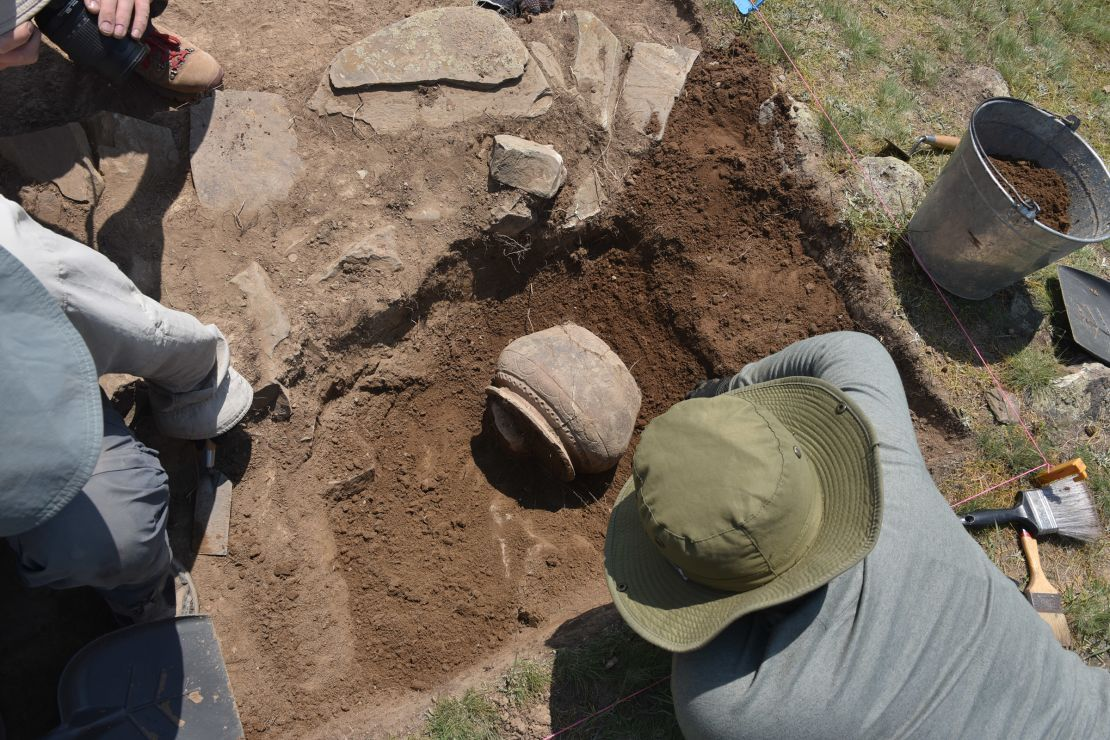
The team initially discovered the smaller city, Tashbulak, in 2011 during a trekking expedition. They unearthed burial sites and numerous pottery shards, indicating past habitation. While historical records hinted at cities in the area, the researchers were astonished to find a 12-hectare medieval settlement located at an elevation of about 2,200 meters. “We were kind of blown away,” Frachetti remarked, noting the rough conditions faced during their expeditions, including severe winds and logistical hurdles.

A pivotal moment came in 2015 when a local forestry administrator encouraged the team to explore another site near Tashbulak, revealing that his home was built atop a medieval citadel. “He was living on a huge city,” Frachetti recalled, highlighting the unexpected nature of their findings.

One of the significant challenges the team faced was convincing the academic community of the existence and extent of these highland cities. Frachetti described skepticism from peers, who were doubtful about the scale of their findings, often dismissing them as mere mounds or ruins of lesser significance.

In 2022, the team returned with a drone outfitted with a lidar sensor, allowing them to penetrate the surface and reveal structures such as walls, guard towers, and intricate architectural features in Tugunbulak. The researchers theorize that the communities may have settled in these cities to harness strong winds for iron smelting, as the region is rich in iron ore. Preliminary excavations have also uncovered production kilns, underscoring the area’s historical significance in metal production. “Whoever had iron in their hands in medieval times was very powerful,” Maksudov explained, although he cautioned that this resource exploitation may have contributed to environmental degradation, destabilizing the region.

Traditionally, scholars anticipated settlements to be found in lower valleys, making these high-altitude discoveries particularly remarkable. Professor Peter Frankopan from Oxford University described the findings as a “treasure trove,” revealing deep interconnections across Asia and the historical exploitation of natural resources.

High-altitude urban sites are extremely rare in archaeology due to the unique challenges communities face in such environments. Zachary Silvia, an archaeologist at Brown University, noted that the team’s work represents a significant advancement in our understanding of medieval urbanism in Central Asia, contributing valuable insights into the region’s complex history.