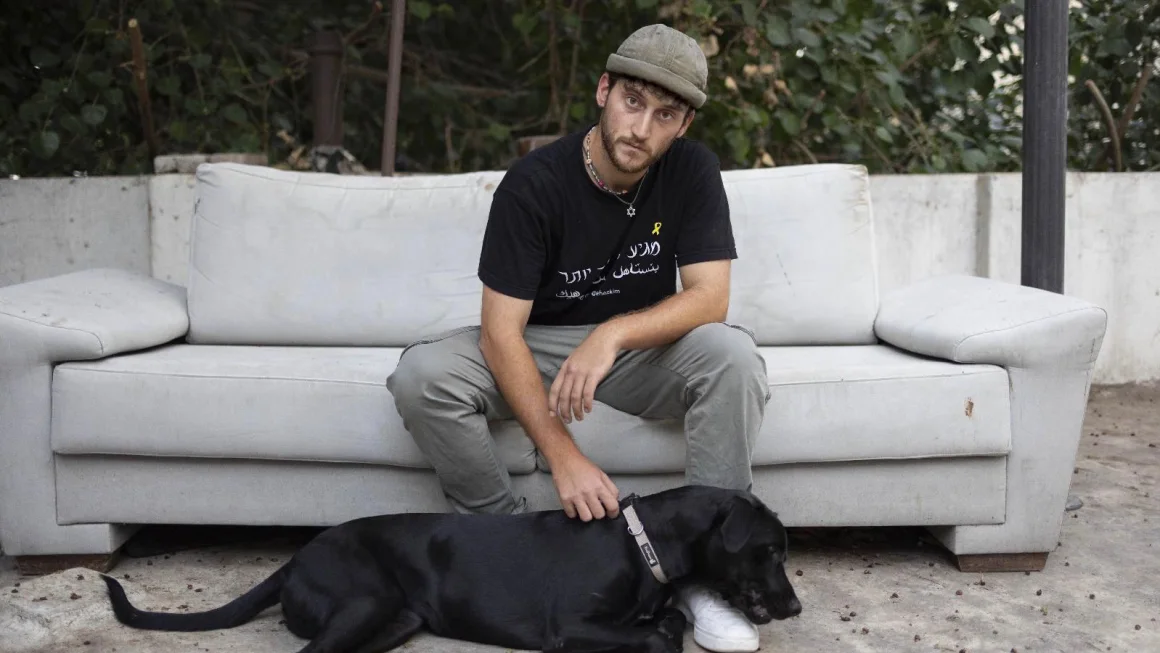
Over 130 Israeli Reservists Refuse to Serve in Gaza and Lebanon

In a significant act of dissent, more than 130 Israeli reservists, including Yotam Vilk, have signed an open letter expressing their refusal to serve in military operations in Gaza and Lebanon unless a peace deal is reached to end the ongoing conflict and secure the return of hostages held by Hamas.

Personal Accounts of Dissent

Yotam Vilk, who voluntarily joined the military effort after the October 7 attack by Hamas, has spent over 230 days serving in Gaza. Despite his earlier commitment, he has now reached a point of moral conflict regarding his continued service. “On October 7, I didn’t hesitate… because my people were murdered… but now I see the Israeli government’s lack of urgency to resolve the situation,” Vilk told CNN. After completing two rounds of reserve duty in Gaza, he resolved not to return, believing military action should only serve as a means to achieve diplomatic solutions.

Vilk’s letter, addressed to Prime Minister Benjamin Netanyahu and Defense Minister Yoav Gallant, articulates a shared sentiment among the reservists: “For some of us, the red line has already been crossed… we will stop reporting for service.” This highlights a deep disillusionment with the Israeli government’s approach to the conflict, particularly its perceived failure to seek peaceful resolutions and the ongoing hardships faced by both Palestinians and Israeli hostages.

The Broader Context of Resistance

Max Kresch, another reservist who served on Israel’s border with Lebanon, echoed similar sentiments. He described the militaristic atmosphere during his service as deeply uncomfortable, particularly with comrades who held extreme views about the conflict. “It was very difficult for me… to hear soldiers express a religious duty to kill Palestinians,” he recounted.

The term “forever war” has emerged among critics of Netanyahu, symbolizing their fears that the conflict may be perpetuated for political gain. Kresch pointed out that, despite initial support for military action, he now views the continuation of hostilities as politically motivated rather than strategically necessary.

Call for Accountability

The reservists’ letter comes in the wake of rising tensions and ongoing military actions in both Gaza and Lebanon. The Israeli government has faced calls to address the dissenting voices within its ranks. Transportation Minister Miri Regev stated that there is “no place for refusals in the army,” emphasizing the government’s stance against dissent.

In the days following the letter’s publication, Kresch and Vilk received phone calls from military officials urging them to retract their statements, highlighting the pressure faced by those who dare to dissent. Despite this, both men remain steadfast in their convictions, prioritizing their moral choices and the need for a meaningful resolution to the conflict.

Conclusion: A Defining Moment in Military Service

The refusal of over 130 reservists to serve in ongoing military operations marks a critical moment in the Israeli military landscape. As they grapple with the implications of their decisions, the reservists are pushing for a reevaluation of military actions and advocating for a shift towards diplomacy and peace. Their actions reflect a growing movement within Israeli society questioning the direction of the conflict and the government’s strategies.


SpaceX Crew-8 Astronauts Evaluated at Medical Facility After Splashdown

In an unexpected turn of events, the astronauts from SpaceX’s Crew-8 mission were taken to a medical facility in Florida following their splashdown on Friday morning, instead of returning directly to their base in Houston, Texas. This decision, made by NASA, was described as a precautionary measure.

Splashdown and Immediate Aftermath

The Crew-8 team, consisting of three NASA astronauts—Matthew Dominick, Michael Barratt, and Jeanette Epps—along with Russian cosmonaut Alexander Grebenkin, successfully landed in the Gulf of Mexico at 3:29 a.m. ET after spending nearly eight months aboard the International Space Station (ISS). NASA reported that the crew had a “safe splashdown and recovery.”

Cheryl Warner, NASA’s news chief, confirmed in a statement at 8 a.m. ET that the crew was evaluated at a local medical facility. “The crew exited the Dragon spacecraft onto a recovery ship for standard post-flight medical evaluations,” she explained. “Out of an abundance of caution, all crew members were flown to the facility together.”

Details on Medical Evaluations

The astronauts were taken to Ascension Sacred Heart Pensacola, a hospital located near their splashdown site. While they remained at the facility, NASA officials did not specify the nature of the medical checks. Warner noted that the crew was still undergoing evaluations by 9 a.m. ET but assured that there were no initial reports of medical issues during a pre-dawn news briefing.

At a 5 a.m. ET briefing, Richard Jones, NASA’s deputy manager for the Commercial Crew Program, stated that the crew was doing well and undergoing routine medical assessments. “They’ll soon be on their way back to Houston after all of those are done,” he added.

Extended Mission and Return Challenges

Crew-8’s mission was notable for its length, marking the longest duration in space for a U.S. crewed vehicle at 235 days. The crew launched into space on March 4, and their extended stay on the ISS was due to a series of delays related to the Boeing Starliner spacecraft, which was grounded due to safety concerns. As a result, NASA opted to return the Starliner crew on a different mission, which subsequently postponed Crew-8’s homecoming.

Weather conditions also played a role in the delays, pushing Crew-8’s return into late October. As astronauts are usually in space for approximately five to seven months, this extended duration necessitated comprehensive post-mission medical evaluations.

Conclusion: A Cautious Return to Earth

The precautionary measures taken following Crew-8’s splashdown highlight the rigorous safety protocols in place for astronauts returning from extended missions. While the crew’s journey back to Houston has been delayed for medical evaluations, they are expected to return home soon, marking the conclusion of their historic mission.

Georgia’s Upcoming Election: Fears of Authoritarianism and Russian Influence

As Georgia approaches its parliamentary elections on October 26, concerns are mounting about the potential return to authoritarian rule under the ruling Georgian Dream party. This anxiety is amplified by the party’s past actions and current rhetoric, drawing unsettling parallels to the Soviet era.

Historical Context and Contemporary Concerns

In Gori, the birthplace of Joseph Stalin, locals can recount tales of the dictator’s youth while glossing over the atrocities of his regime. Many older Georgians may hold nostalgic views of the Soviet past, but younger generations, who have only known democracy, reject this notion. They are alarmed by the creeping authoritarianism as Georgian Dream, led by oligarch Bidzina Ivanishvili, seems increasingly aligned with Kremlin-style governance.

The party has abandoned its pro-European stance over the last decade and appears willing to take extreme measures to maintain power. Ivanishvili, who has resurfaced as the party’s honorary chairman, has openly threatened political opponents and has supported legislation that mimics repressive Russian laws, including a controversial “foreign agent” law that critics argue stifles dissent.

Ivanishvili’s Rhetoric and the Political Landscape

Ivanishvili’s recent speeches have adopted a tone reminiscent of Stalinist propaganda, labeling opposition members as traitors. “It’s incredible how much of this old Bolshevik, Stalinist language is back,” noted Natalie Sabanadze, a former Georgian ambassador to the EU. His assertion that Georgia should apologize to Russia for the 2008 war has sparked outrage among many, particularly younger voters who remember the Russian invasion.

With 20% of Georgia’s territory occupied by Russia, the prospect of aligning closer to the Kremlin is a significant concern for those seeking a pro-European future. Observers warn that if Georgian Dream remains in power, the country could regress towards a one-party state reminiscent of Belarus.

The Role of the European Union

In response to Russia’s aggression in Ukraine, the EU granted Georgia candidate status, reflecting a desire to curb Russian influence in the region. However, many believe this was a move to bolster public support for EU integration rather than an endorsement of Georgian Dream. Ivanishvili’s intentions regarding EU membership remain questionable, as joining would require significant reforms and relinquishing some of his party’s power.

The fragmented opposition, particularly the pro-Western United National Movement (UNM), is hopeful of forming a coalition should the election outcome favor change. However, there are fears that Ivanishvili will attempt to cling to power in the face of electoral defeat, potentially leading to widespread protests and unrest.

A Crucial Election Ahead

With the election just days away, the stakes are high. President Salome Zourabichvili has called for a pro-European victory, asserting that polls show a majority of the populace opposes Georgian Dream. Yet, with Ivanishvili’s history of manipulating political narratives, many remain skeptical about the election’s integrity.

Georgians have expressed their willingness to resist any authoritarian backslide, but the atmosphere of fear and intimidation is palpable. With Ivanishvili hinting at a “Nuremberg trial” for opposition members and police brutality against protestors, the potential for violence looms large.

Conclusion: A Fork in the Road

As the nation prepares to vote, the choices made by the electorate and the subsequent response from the government will shape Georgia’s trajectory. The looming question is whether the country can maintain its democratic aspirations or if it will succumb to the shadows of its past. Observers like Sabanadze caution that while Georgians are determined to resist authoritarianism, the fight for their future may not be easy.