
“My Old Ass” Starring Aubrey Plaza Set for Prime Video Release This November

Aubrey Plaza’s New Film My Old Ass Premieres on Prime Video in November

Aubrey Plaza’s latest film, My Old Ass, is already creating a buzz for its unique twist on the coming-of-age genre. The film offers an innovative storyline that blends comedy with moments of deep self-reflection. The plot follows an 18-year-old on a birthday adventure that unexpectedly leads her to a confrontation with her older self. Directed by Megan Park, the film explores themes of personal growth, family dynamics, and the unexpected lessons that life throws our way—all while delivering plenty of humor. Plaza’s performance adds a distinct layer of charm, making My Old Ass a standout in the realm of contemporary indie cinema.

Release Details and Where to Watch

My Old Ass had its world premiere at the prestigious Sundance Film Festival on January 20, 2024, and garnered immediate attention for its fresh take on familiar themes. The film then saw a limited theatrical release in the United States on September 13, 2024, courtesy of Amazon MGM Studios. However, for those who missed its theatrical run, the good news is that the movie will be available for streaming on Prime Video starting November 7, 2024. The film’s arrival on the streaming platform makes it easily accessible for a wider audience to enjoy from the comfort of their homes.

A Unique Exploration of Time and Identity

At the heart of My Old Ass lies the intriguing concept of time and identity. The film delves into what it means to confront one’s future self and how different ages perceive the same experiences. The 18-year-old protagonist embarks on a journey of self-discovery when she meets her older self, a moment that challenges her understanding of who she is and who she might become. The film cleverly mixes humor and poignant moments, offering viewers both laughter and introspection as it explores the complexities of growing up.

Why My Old Ass is a Must-See

With its relatable themes, heartfelt performances, and witty script, My Old Ass promises to be a standout film this year. Aubrey Plaza, known for her deadpan humor and versatile acting skills, brings a unique energy to the film, balancing comedy with deeper emotional moments. Directed by Megan Park, who is celebrated for her nuanced storytelling, the film promises to resonate with anyone who has ever wondered about the passage of time, self-identity, and the lessons that life unexpectedly teaches. Whether you’re a fan of coming-of-age stories or just looking for something fresh, My Old Ass is sure to be a memorable watch when it debuts on Prime Video in November.
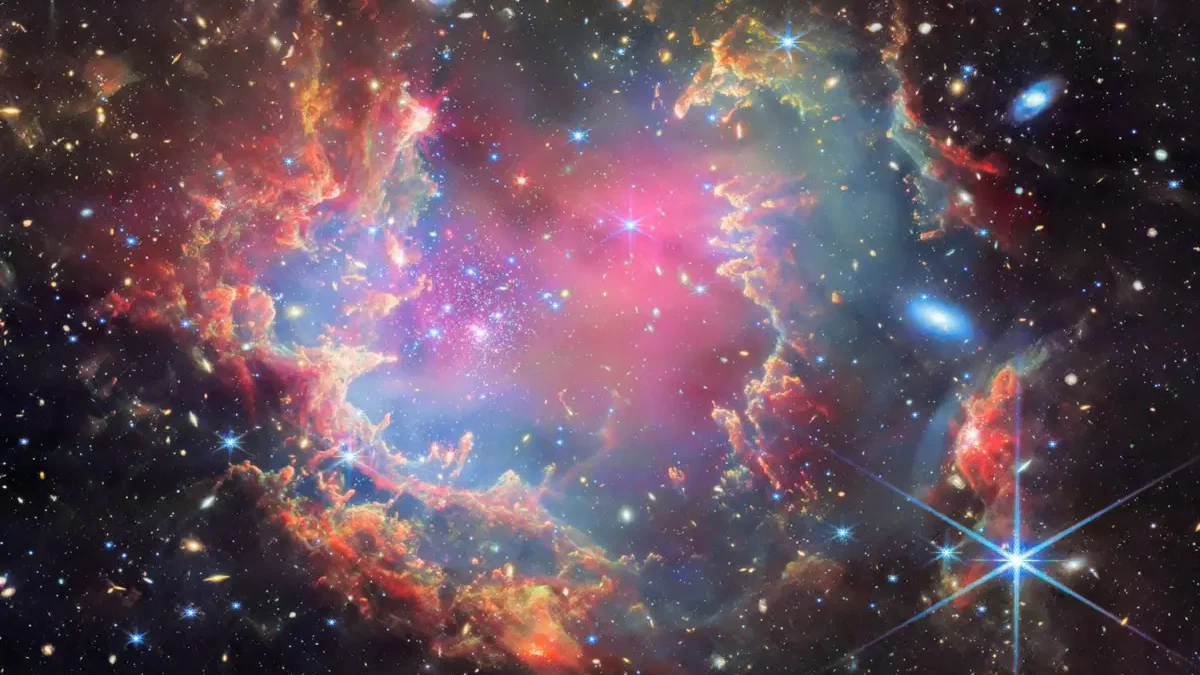

Rare “Zombie Star” Discovered in Pa 30 Nebula Linked to Ancient Supernova SN 1181

Discovery of “Zombie Star” in Pa 30 Nebula Linked to Ancient Supernova SN 1181

Astronomers have recently identified a rare “zombie star” within the Pa 30 nebula, a remnant of the ancient supernova SN 1181, which was observed over 800 years ago. This unique discovery sheds new light on the evolution of supernova remnants and raises intriguing questions about the life cycles of stars. The supernova SN 1181, recorded by Chinese and Japanese astronomers in 1181, appeared near the Cassiopeia constellation and shone brightly for roughly six months before fading from view. Its historical significance lies in being one of the few supernovae documented before the invention of telescopes, making this discovery a valuable insight into early star life documentation.

For centuries, SN 1181 was considered an “orphan” supernova, meaning it had no identifiable stellar remnants linked to its original explosion. This changed in 2021 when scientists connected SN 1181 to the Pa 30 nebula, discovered in 2013 by citizen scientists. Pa 30 has since captivated astronomers due to its unusual features and distinct structure. Observations from the W.M. Keck Observatory recently revealed complex filaments expanding outward from the nebula’s core, adding another layer of mystery and further confirming its connection to the SN 1181 event.

At the heart of the Pa 30 nebula lies the so-called “zombie star”—a stellar remnant that survived a thermonuclear explosion, something exceedingly rare in the study of supernovae. Unlike typical supernova explosions, which completely destroy their parent stars, this explosion was classified as a Type Iax supernova, a partial explosion of a white dwarf. These types of supernovae are known for leaving behind remnants rather than annihilating the star entirely. Led by researchers Tim Cunningham and Ilaria Caiazzo, the study showed detailed images of the “zombie star” and its surrounding filaments, which resemble delicate dandelion petals, expanding out from the nebula’s core.

This discovery has deep implications for our understanding of stellar evolution and supernova remnants. A “zombie star” surviving such a powerful event offers clues to the resilience of certain types of white dwarfs, potentially reshaping theories about the end stages of star life cycles. As astronomers continue to analyze this rare remnant, they hope to uncover more about the processes behind Type Iax supernovae and why certain stars withstand what should be a fatal explosion.

OpenAI’s Transcription Tool Allegedly Inserting Inaccurate Content in Medical Consultation Transcripts

Concerns Raised Over OpenAI’s Whisper Transcription Tool Inserting Hallucinated Content in Medical Records

OpenAI’s transcription tool, Whisper, released in 2022, has been praised for its ability to transcribe speech to text. However, recent reports have raised alarm over the tool’s propensity for generating hallucinated content—false or imaginary text that was never actually spoken. This issue is particularly concerning when it comes to high-risk industries like healthcare, where accuracy is critical. The potential for Whisper to inject hallucinated or misleading information into medical consultation records could pose serious risks to patient safety, especially in sensitive contexts like doctor-patient discussions.

According to a report by the Associated Press, Whisper’s automatic speech recognition (ASR) system has been found to generate hallucinated text, sometimes inserting fabricated details about medical treatments, medications, or even racial descriptions and violent incidents. This type of content, while it may seem minor in other settings, could have dangerous consequences in medical records. Errors in such critical documents may lead to misdiagnoses, incorrect treatments, or even potential harm to patients if healthcare professionals rely on these flawed transcripts.

Hallucination, a term used in the AI community to describe instances when an AI system generates false or misleading information, has become a major challenge for AI tools like Whisper. In the case of this transcription software, the hallucinated text does not stem from any verbal input, but is instead fabricated by the AI, raising questions about the reliability of its transcriptions, particularly when used in professional settings like healthcare. The risk is amplified when these tools are integrated into real-world applications where precision is not just desired but required for safety.

The growing use of Whisper in medical contexts, where transcription accuracy is paramount, underscores the need for more rigorous quality control and transparency in AI tools. Healthcare providers who adopt such technologies must remain vigilant, ensuring that they have safeguards in place to detect and correct any errors introduced by the AI. As OpenAI works to refine and improve Whisper, stakeholders in healthcare and other high-stakes sectors will need to carefully evaluate the potential risks and limitations of incorporating AI-driven transcription tools into their daily operations.