Political Turmoil in Germany Deepens Woes for Major Industries Amid Trump’s Trade Pressures

Germany’s political crisis, unfolding alongside Donald Trump’s recent re-election, is adding strain to an already struggling economy, especially in key industries like automotive, banking, and energy. The collapse of Germany’s ruling three-party coalition has left the country in a precarious position with major reforms stalled and companies bracing for global shifts and trade tensions intensified by Trump’s administration and U.S.-China confrontations.

Following recent disagreements over how to revive the German economy, Europe’s largest, Chancellor Olaf Scholz’s government is now a caretaker administration, with new elections set for spring. Major firms such as Commerzbank, which hoped for government support to fend off a potential takeover bid from Italy’s UniCredit, and Volkswagen, Germany’s automotive giant, are now left without much-needed political backing. “In the face of global crises and uncertainty, we need clarity,” said Evonik Industries CEO Christian Kullmann, pressing for expedited elections.

Trump’s recent victory has amplified concerns about U.S.-Europe trade relations, with possible 20% tariffs on European exports threatening to reduce Germany’s GDP by up to 1.5% by 2027-2028, according to German economic institute IW. Chancellor Scholz’s recent dismissal of Finance Minister Christian Lindner ended the fragile coalition, heightening the crisis just as companies were seeking government-led industry support.

Scholz, facing pressure to respond swiftly, announced plans for a comprehensive economic growth package, targeting issues like pensions and immigration. However, with no parliamentary majority, opposition calls for new elections have cast doubt on the viability of his proposals. The turmoil also affects Commerzbank, which may see UniCredit move forward with a takeover bid as political focus shifts to elections. Commerzbank labor union leader Jan Duscheck urged the government to oppose any takeover by UniCredit.

Germany’s car manufacturers are also hit hard. Volkswagen, grappling with the electric vehicle market’s rapid growth, has hinted at plant closures and wage cuts in Germany for the first time in its history. Without state support, such companies face greater risks. The current disarray in Berlin leaves limited room for the government to assist struggling sectors, despite Scholz’s reassurances following meetings with executives like Volkswagen’s Oliver Blume.

Meanwhile, energy company Uniper’s planned stock market re-listing may be delayed due to the unstable political environment, even as Berlin’s finance ministry holds a 99% stake in the company valued at over €19 billion. Scheduled for spring, this re-listing could now be pushed back by snap elections.

Although Germany’s industrial earnings are projected to drop by 2.8% in the third quarter—trailing other European economies—some leaders remain cautiously optimistic. Allianz economist Ludovic Subran noted the historic moment for Germany to potentially transform its “shrinking to greatness” into renewed growth. The outcome, however, hinges on stabilizing Germany’s political landscape before global pressures worsen.
 

Putin Open to Talks with Trump, But Ukraine Demands Remain Firm, Says Kremlin

Russian President Vladimir Putin is reportedly open to discussing the Ukraine conflict with U.S. President-elect Donald Trump, though he remains resolute in his demands regarding Ukraine, the Kremlin confirmed on Friday. Dmitry Peskov, Putin’s spokesperson, emphasized that Moscow’s objectives in Ukraine have not shifted and that Putin has no intention of revising these terms.

When questioned about whether Putin’s willingness to communicate with Trump indicates any flexibility in Russia’s stance, Peskov clarified that Russia’s goals remain unchanged. “The president has never suggested a shift in the objectives of the special military operation. He has repeatedly emphasized that they are consistent,” said Peskov. He underscored that Russia’s goals pertain to securing the nation’s interests and protecting Russian citizens in the contested areas.

As of mid-2023, Putin’s terms for ending the war require Ukraine to abandon NATO aspirations and withdraw its military from the four regions—Donetsk, Luhansk, Kherson, and Zaporizhzhia—that Russia claims as its own. Ukraine has dismissed these conditions, with President Volodymyr Zelenskiy asserting that accepting such terms would amount to surrender. Instead, Zelenskiy has presented a “victory plan” calling for increased Western military assistance to achieve a decisive Ukrainian win.

Trump, who has previously criticized extensive U.S. support for Ukraine, has suggested he could end the conflict within 24 hours if given the opportunity, though he has not specified his approach. Zelenskiy expressed skepticism over Trump’s promise, warning that a quick resolution could entail significant losses for Ukraine. “If it’s just fast, it means losses for Ukraine. I just don’t yet understand how this could be in any other way,” Zelenskiy remarked.

In recent statements, Putin extended congratulations to Trump following his election win, commending his composure during an attempted assassination in July. He also expressed an openness to dialogue, describing Trump’s comments on resolving the Ukraine conflict as noteworthy. Trump himself has mentioned to NBC that he has not yet spoken with Putin but anticipates a conversation in the near future.

Peskov, however, noted that while there are no confirmed plans for a call between Trump and Putin, the Russian president remains open to dialogue. According to the Kremlin, current U.S.-Russia relations are at an all-time low due to Washington’s ongoing support for Ukraine and extensive sanctions on Russia.

Putin’s last direct communication with U.S. President Joe Biden occurred in February 2022, shortly before Russia’s military intervention in Ukraine. During that call, Biden warned Putin of a swift Western response should he proceed with the invasion.

The Kremlin has also dispelled rumors that Trump had spoken to Putin since leaving office, despite claims in journalist Bob Woodward’s book “War” suggesting otherwise. According to the book, an unnamed Trump aide claimed that Trump and Putin may have had as many as seven conversations since Trump exited the White House in 2021. The Kremlin, however, has denied such claims.


Trump’s Return Could Boost Asian Markets, Particularly in China and Japan

As President Donald Trump returns to office, Asian markets, including China, appear poised for resilience, with investors optimistic that the region’s economy can withstand potential tariffs and trade tensions better than Europe. While European sectors like automotive and renewables experienced declines, Asia’s financial markets displayed steadiness, underscoring confidence in the region’s ability to adapt to Trump’s trade policies.

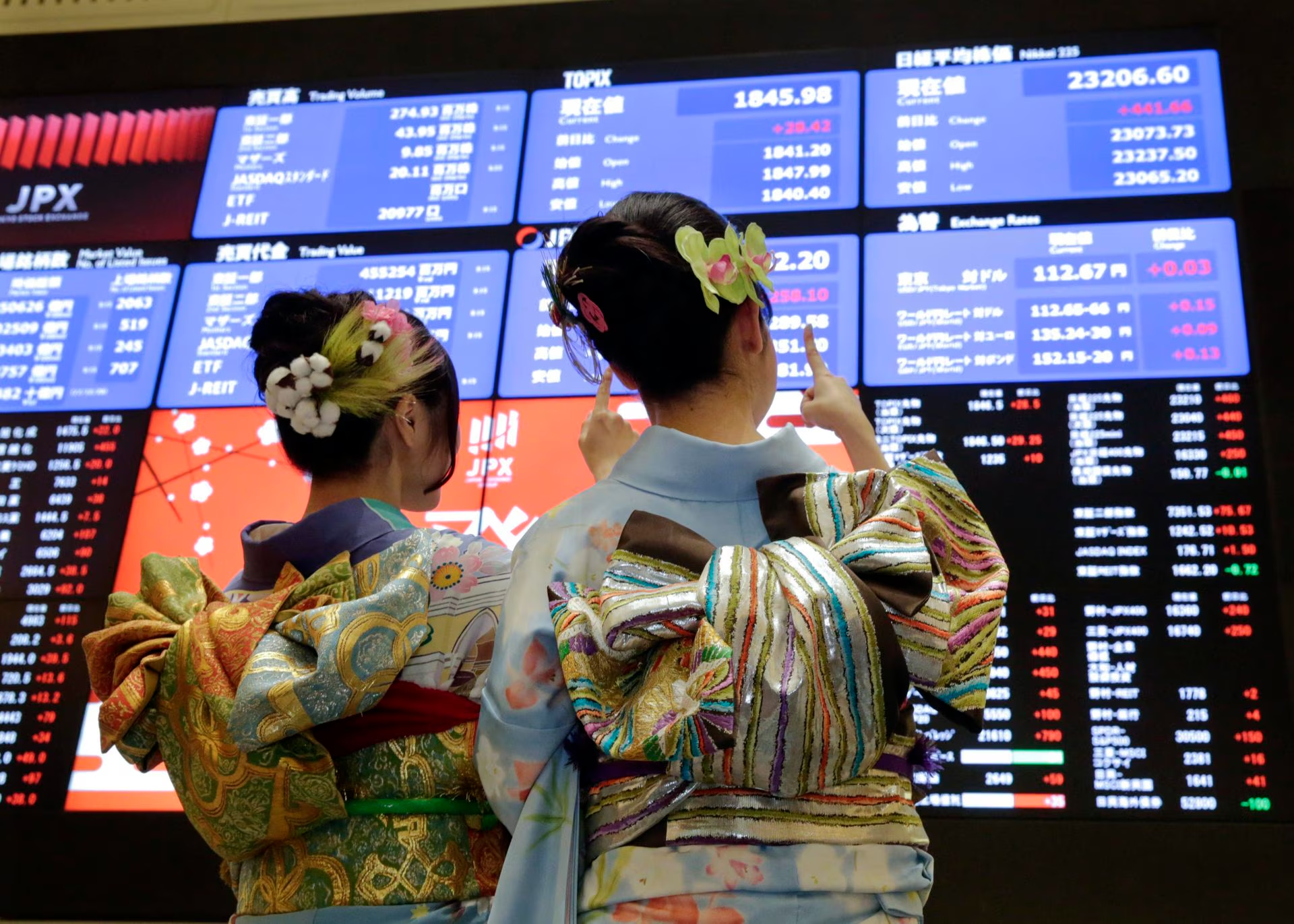
Analysts note that Asia’s supply chains and export markets are structurally better equipped to navigate protectionist policies. China, in particular, is expected to counterbalance any potential external pressures by bolstering domestic demand, while India’s robust growth continues to attract investment. Japan’s financial markets also showed steady activity, with significant buying in industrial and financial sectors. Shinji Ogawa, co-head of Japan cash equities sales at J.P. Morgan in Tokyo, highlighted this investor confidence, attributing it to Japan’s anticipated interest rate hikes and economic measures expected from an upcoming policy meeting in China.

Historically, Trump’s trade policies led investors to favor U.S. equities, drawing funds from Asian markets, especially Hong Kong. However, those with diversified portfolios are now retaining their Asia investments. Ken Peng, head of Asia investment strategy at Citi Wealth in Hong Kong, believes that current economic conditions will likely sustain growth-focused investments in Asia, particularly in India, where economic momentum remains strong.

In Japan, stocks for automakers, banks, and capital expenditure-sensitive heavy machinery companies surged, indicating investor preference for industries set to benefit from renewed investment. In Vietnam, anticipation of expanded manufacturing boosted shares in companies such as Becamex, a key industrial park operator, while Kinh Bac City, which has a business relationship with Trump’s private conglomerate, also saw gains.

China’s Better Preparedness for Trade Tensions

During Trump’s first term, China faced significant economic strain from trade tensions, which impacted both growth and the yuan. This time, however, investors believe China is more prepared for Trump’s policies. Charles Wang, chairman of Shenzhen Dragon Pacific Capital Management, pointed out that China is now better equipped both economically and technologically to handle trade challenges.

Wang has taken a cautious approach, divesting from Chinese auto parts companies due to anticipated tariff impacts, but he remains invested in China’s property sector, expecting that the government will support it regardless of trade conditions. Further, China’s strategic pivot toward domestic demand has reduced the U.S.’s share in China’s export market, minimizing direct trade risks and potentially encouraging more supportive domestic policies. According to Dong Baozhen, chairman of Beijing-based asset manager Lingtong Shengtai, heightened tariffs may reinforce China’s focus on internal demand, fostering policies that encourage local economic growth.

Capital Flows and Potential Opportunities

Despite recent fluctuations in the yuan, foreign long-only funds purchased $11.1 billion in Chinese equities through October, according to Morgan Stanley, with outflows remaining limited. Investors anticipate that Beijing will soon unveil a stimulus package, providing further stability.

Trump’s proposed domestic tax cuts may also benefit Asian markets indirectly, potentially boosting demand for Chinese goods. Some analysts see Trump’s isolationist policies as an opportunity for China to strengthen relations with other global markets, including Europe. Robert St Clair, head of investment strategy at Fullerton Fund Management, noted that Trump’s pragmatic approach as a businessman might lead him to manage tariff levels carefully, recognizing China’s significant role in high-value industries.

Ultimately, while challenges from U.S.-China trade dynamics remain, many investors are confident that China and broader Asian markets are better equipped to manage them, with Trump’s policies potentially opening new avenues for growth across the region.