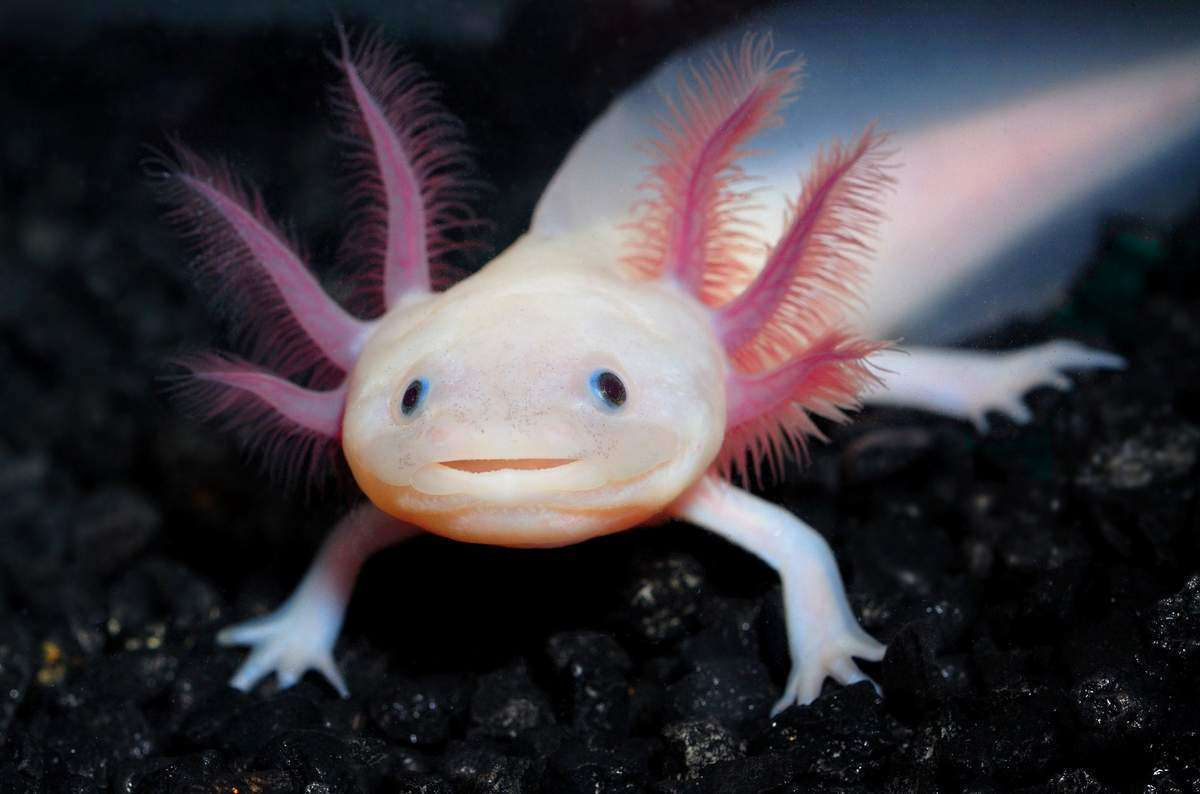
Axolotls’ Global Fame Contrasts with Their Struggle for Survival in the Wild

Axolotls, the aquatic salamanders famous for their cute appearance and remarkable regenerative abilities, have become a cultural phenomenon in recent years. With their wide eyes, smiling mouths, and pastel pink coloring, they are frequently seen in media, including video games like Minecraft and merchandise like stuffed animals. However, despite their widespread popularity and the countless axolotls bred for research and the pet trade, these creatures are facing a severe survival crisis in the wild, specifically in their native habitat of Lake Xochimilco in Mexico City.

Scientist Dr. Randal Voss, a professor of neuroscience at the University of Kentucky, is no stranger to the axolotl’s celebrity status. During public outreach events, he often meets people who are fascinated by these salamanders, expressing how much they adore them, either from online content or toys. “They’re so adorable, we love them,” is a common refrain. However, behind their public charm, axolotls face critical threats that have led them to the brink of extinction in their natural environment.

A Scientific Mystery

The name “axolotl” comes from the Nahuatl language, spoken by the Aztecs, and refers to the god Xolotl, who was said to transform into a salamander. Unlike most amphibians that undergo a complete metamorphosis from aquatic larvae to land-dwelling adults, axolotls retain their juvenile features throughout their entire lives. This phenomenon, known as neoteny, is one of the key areas of scientific interest in axolotls. Their gills, which are visible and external, allow them to breathe underwater, and they remain fully aquatic in the unique environment of Lake Xochimilco.

The reasons behind this inability to undergo metamorphosis are still debated. One hypothesis suggests that the lake’s resources were so abundant that axolotls did not need to expend energy transforming into land-dwelling adults. This adaptation allowed them to thrive in the aquatic environment, which is now increasingly threatened.

The Decline of Lake Xochimilco and Its Inhabitants

Lake Xochimilco, a 10-square-mile water body with slightly salty water, has undergone significant changes over the past century. Originally home to an extensive network of chinampas, or floating agricultural islands, the lake provided a rich habitat for axolotls. However, the rise of industrialization, pollution, and invasive species such as carp and tilapia has severely degraded the ecosystem. These fish prey on axolotl eggs, further reducing their numbers. A 1985 earthquake that displaced many people around the lake also contributed to habitat destruction.

As a result, axolotls are now critically endangered, with fewer than 100 adults remaining in the wild. While the wild populations are dwindling, axolotls thrive in scientific laboratories and the exotic pet trade, where they are bred for research and as pets. The axolotls seen in pet shops are often genetically distinct from their wild counterparts, and many are selectively bred for unusual colors like pink, white, and black—traits that are rare in nature.

The Role of Axolotls in Science and the Pet Trade

Axolotls have played a crucial role in scientific research for over 150 years. Their ability to regenerate limbs, spinal cord tissue, and other body parts has made them a valuable subject for studies on tissue regeneration and stem cell biology. In 1864, axolotls were first brought to Europe, and since then, their unique biology has captured the interest of researchers worldwide.

In the pet trade, axolotls are often bred for their striking appearance. However, the animals sold in pet stores tend to have limited genetic diversity due to inbreeding, which poses a risk to their overall health and long-term survival.

The Challenges of Conservation

While axolotls have achieved widespread recognition, this fame has not translated into significant conservation success. The public’s familiarity with the species can sometimes lead to a false sense of security, with people assuming that the salamanders are thriving everywhere. In reality, the axolotls of Lake Xochimilco are critically endangered and require immediate attention.

Dr. Luis Zambrano, a professor of zoology at the National Autonomous University of Mexico, has been working on axolotl conservation for over two decades. He emphasizes the need for innovative strategies to protect the species, particularly through efforts that combine local knowledge with scientific research. One promising approach involves restoring the chinampa system, which could help improve the quality of the lake’s water and provide better habitat for the axolotls.

The Road to Restoration

Efforts to save the axolotl will require policy changes and support from both local communities and global conservation efforts. Zambrano suggests that the rising popularity of axolotls could help raise awareness and fund conservation initiatives. Symbolic adoption programs, where people can support axolotl conservation efforts, may provide a vital source of funding for restoration projects.
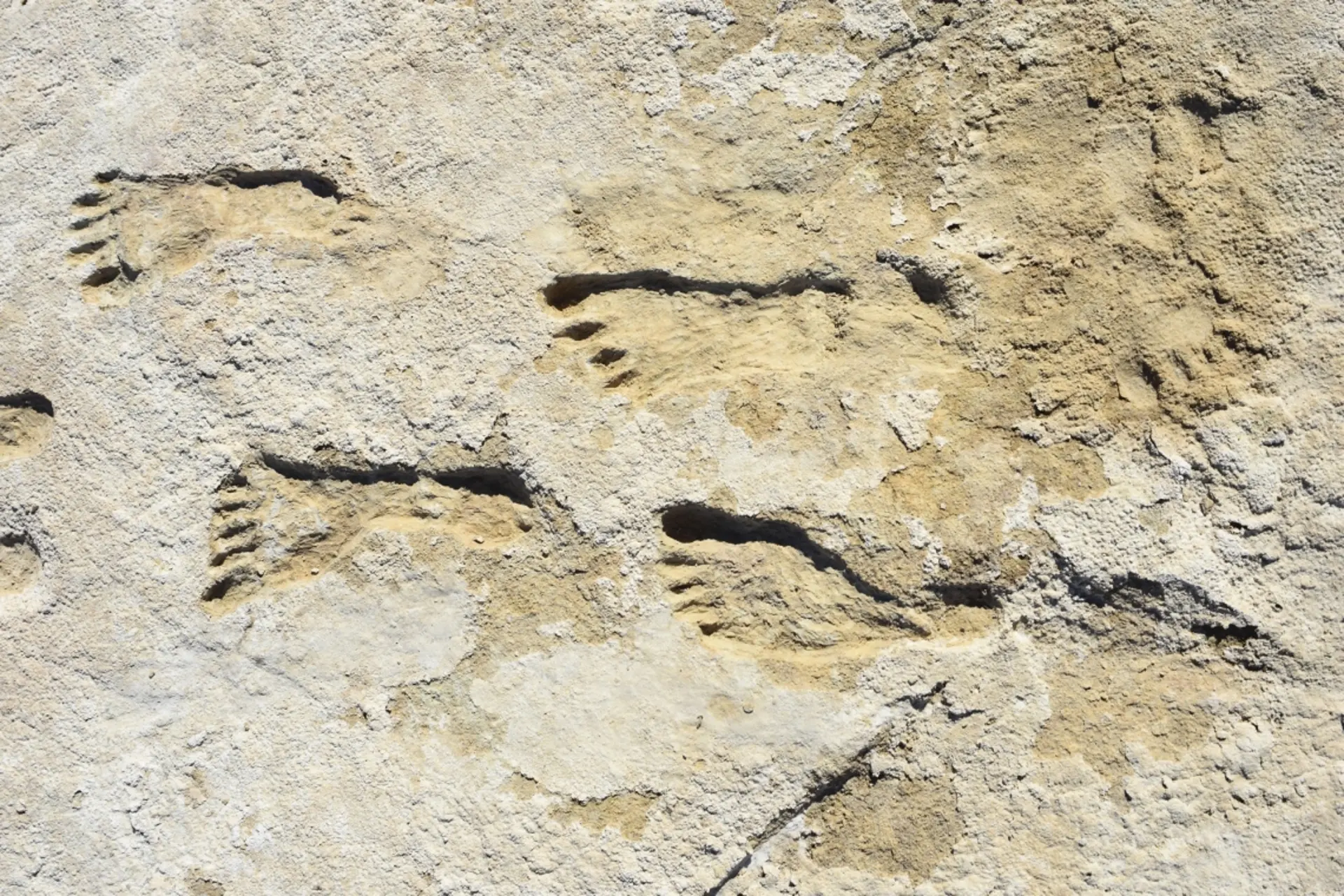

Fossilized Footprints Reveal Ancient Encounter Between Two Human Species

A remarkable discovery in Kenya has provided rare evidence of two distinct species of ancient humans crossing paths more than 1.5 million years ago. The fossilized footprints, preserved in the mud of a lakeshore, offer a snapshot of a moment in history when Homo erectus and Paranthropus boisei may have shared the same landscape, possibly interacting with each other.

This extraordinary find, published in the journal Science, was made at Koobi Fora, located on the eastern shore of Lake Turkana. The discovery was made during excavations in 2021 and 2022, where researchers unearthed 23 square meters (248 square feet) of sediment containing 11 hominin tracks, alongside tracks of large birds and other animals. Among these footprints, one trackway of 12 footprints stood out, suggesting it was made by a single individual walking at a steady pace through the mud.

Kevin Hatala, an associate professor of biology at Chatham University and lead author of the study, remarked on the surprising nature of the find. “It’s remarkable that two similarly sized, large-bodied hominin species coexisted in the same environment,” Hatala said. “They were likely aware of each other and could have interacted.”

The Discovery and Preservation of Footprints

The first footprint was discovered in July 2021, and after initial excavation, the site was carefully reburied to preserve its integrity. Further excavation the following year uncovered additional tracks, providing clear evidence of hominin activity at the site. The footprints were found to be unusually well-preserved, likely due to the soft, fine mud and sediment that covered them shortly after they were made. The lack of cracking or erosion suggests that the tracks were imprinted within hours or a few days of one another.

Despite not being able to directly date the footprints, the researchers were able to date the layers of volcanic ash found nearby, which were determined to be approximately 1.52 million years old. This places the footprints in a similar time frame.

Hominin Species Identified

Through detailed analysis of the footprints, the researchers identified that the tracks were made by two different species of hominins: the larger-bodied Homo erectus and the smaller-brained Paranthropus boisei. The long trackway with 12 footprints is believed to have been made by a member of P. boisei, while three scattered footprints were attributed to Homo erectus.

Hatala, who is an expert in foot anatomy, conducted a detailed comparison of the prints with those of modern humans and other ancient hominin species. The results revealed distinct patterns in gait, stance, and motion, allowing him to differentiate between the two species. While the Homo erectus footprints closely resembled those of modern humans, the P. boisei tracks displayed a different pattern, likely due to the species’ distinct anatomy and diet.

A Rare Glimpse into Ancient Interactions

The footprints provide a rare glimpse into a period when Homo erectus and Paranthropus boisei may have shared a habitat. Hatala suggested that the two species coexisted in the same area for an extended period—possibly over 100,000 years—with little evidence of direct competition. Instead of driving each other away, the species may have adapted to share the same resources, navigating a landscape populated by dangerous animals such as crocodiles and hippos.

This discovery adds to the growing body of evidence that early human species were capable of living in close proximity without necessarily competing for the same resources. “This find offers the first physical proof that different hominin species overlapped in the same time and space, possibly avoiding each other or coexisting peacefully,” Hatala explained.

Orcas Develop Strategy to Hunt Whale Sharks, New Research Reveals

A groundbreaking study has revealed that orca pods in the Pacific Ocean off Mexico’s coast have developed an ingenious hunting strategy to target whale sharks, the world’s largest fish. While it was previously speculated that orcas could prey on these massive sharks, the behavior had never been documented in detail—until now. Researchers captured four separate hunting events from 2018 to 2024, providing clear evidence of how orcas are able to subdue and kill these giant creatures.

The hunts typically involve young whale sharks, ranging from 3 to 7 meters (10 to 23 feet) in length, making them more vulnerable to the orcas’ predation. Although whale sharks can grow up to 18 meters (60 feet) in length, their size doesn’t necessarily confer an advantage when confronted by a pod of skilled orcas.

“The whale shark has the smallest brain relative to body mass, and its brain is only about the size of an egg,” said Francesca Pancaldi, the study’s lead author and a researcher at Centro Interdisciplinario de Ciencias Marinas in Mexico. “It’s a slow-moving fish with tiny teeth that don’t serve as a defense mechanism.”

The study, published in Frontiers in Marine Science, detailed the orca pod’s methodical approach to hunting the whale sharks. By using their bodies to strike the sharks at high speed, the orcas are able to flip them upside down, a maneuver known as tonic immobility, where the shark becomes temporarily paralyzed in fear. Once the whale shark is immobilized, the orcas target its abdomen, allowing blood to drain from the shark before consuming its internal organs.

A Unique and Powerful Hunting Technique

The study showed that orcas work together as a coordinated group during these hunts. One orca will strike the whale shark on its belly, while others may target the shark’s head, systematically flipping it over. This cooperative approach makes it easier for the orcas to overpower their prey, despite the shark’s massive size.

The researchers speculate that the orcas are particularly interested in the whale shark’s liver, which is rich in nutrients and constitutes a large portion of the shark’s body weight, although they did not directly observe the orcas consuming this organ.

Sarah Teman, a doctoral student at the University of Washington, commented on the importance of the finding: “This is the first time we’ve clearly documented orcas hunting whale sharks, and it’s exciting because it showcases the adaptability of orcas in targeting the world’s largest sharks.”

Orca Behavior and Ecological Impact

Orcas are known as apex predators of the ocean, preying on a wide range of marine creatures, including fish, seals, dolphins, and even other sharks. While there is only one species of orca, different ecotypes or groups exhibit distinct behaviors based on their prey preferences. The Gulf of California orcas might represent a new ecotype that specializes in hunting elasmobranchs—sharks and rays.

Moctezuma, an 8-meter (26-foot) male orca, is one of the key hunters in this pod and has been observed targeting other elasmobranch species, such as Munk’s pygmy devil rays, bull sharks, and stingrays. The study authors suggest that further research is needed to confirm whether these Gulf of California orcas could be classified as a new ecotype.

Interestingly, in other parts of the world, orcas have also been observed developing unique techniques to hunt great white sharks. In South Africa, this behavior has had an ecological impact, as the presence of orcas has driven great white sharks away from some coastal areas. However, the researchers in Mexico do not believe that orcas’ predation on whale sharks has caused any significant harm to their population or the wider ecosystem in the Gulf of California.