2,600-Year-Old Inscription in Turkey Decoded: What It Reveals

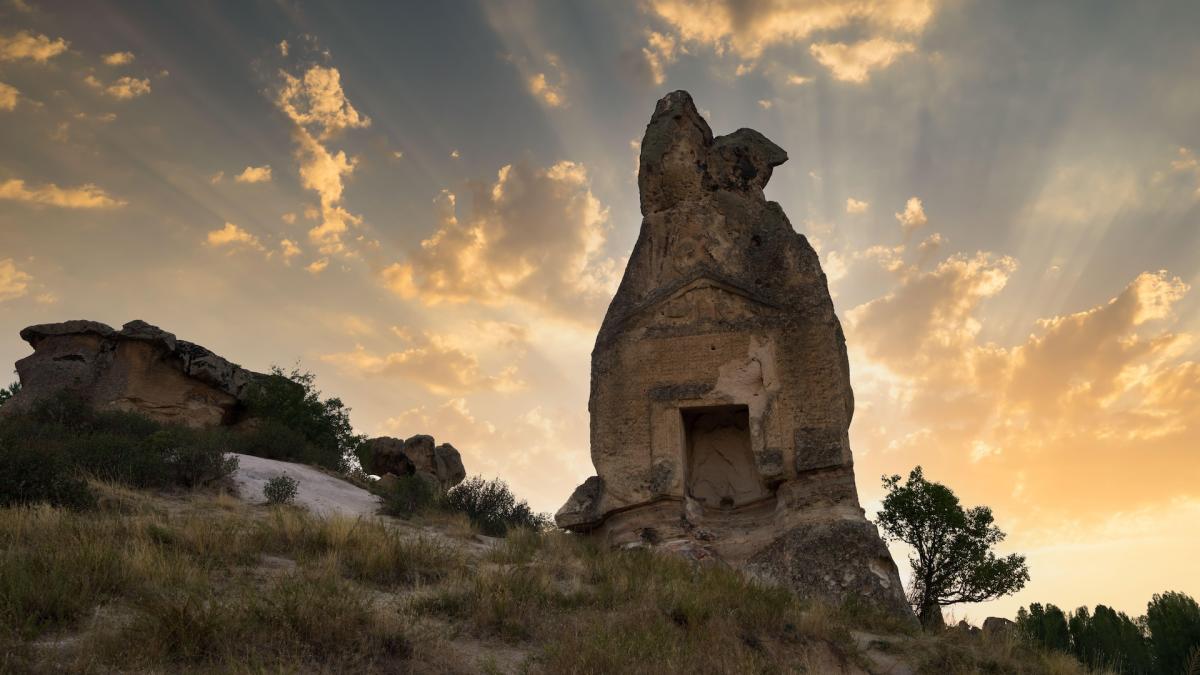
A 2,600-year-old inscription carved into the Arslan Kaya monument in Turkey has finally been deciphered, revealing significant insights into ancient religious practices. The research, led by Professor Mark Munn of Pennsylvania State University, confirms that the inscription contains references to Materan, a goddess revered by the Phrygians, who flourished in the region from 1200 to 600 B.C. Despite enduring centuries of weathering and damage from looting, the inscription sheds new light on the spiritual beliefs of this ancient civilization. Materan, often referred to simply as “the Mother,” was central to Phrygian religious life.

The Arslan Kaya monument, which stands as a testament to Phrygian art and culture, is adorned with depictions of lions and sphinxes, symbols of strength and protection. These symbols are commonly associated with the gods and goddesses worshipped by the Phrygians. The deciphered inscription, which appears alongside an image of Materan, confirms her prominence within the society. Materan’s significance extended beyond the Phrygians; she was later venerated by the Greeks as the “Mother of the Gods” and by the Romans as “Magna Mater” or “Great Mother.”

During the time the inscription was created, the region was heavily influenced by the Lydian kingdom, which also held Materan in high regard. The inscription may have been part of a larger text that outlined not only the goddess’s importance but also the identity of the commissioning party responsible for the monument. This discovery provides valuable context for understanding the religious and political landscape of the period, revealing the cultural exchanges that took place in the ancient world.

The decipherment of the Arslan Kaya inscription is a remarkable achievement that offers a glimpse into the spiritual life of the Phrygians and their enduring influence on later civilizations. As scholars continue to study this and other ancient texts, new layers of understanding will emerge about the shared religious and cultural traditions that connected the ancient peoples of the Near East.

New Study Unravels Zebra Pattern in Crab Nebula’s Radio Waves

A perplexing “zebra” pattern seen in the high-frequency radio waves emitted by the Crab Nebula’s pulsar may now have a plausible explanation, according to recent research by Mikhail Medvedev, a Professor of Physics and Astronomy at the University of Kansas. First identified in 2007, this distinctive pattern, marked by irregular spacing between frequency bands, has intrigued astrophysicists for years. Medvedev’s new study, published in Physical Review Letters, offers a theory involving wave diffraction and interference, phenomena caused by the pulsar’s plasma-rich environment, which could account for the unusual radio wave structure.

The Crab Nebula, a remnant of a supernova explosion observed in 1054 AD, houses a neutron star known as the Crab Pulsar at its core. This pulsar, which is only about 12 miles in diameter, emits sweeping pulses of electromagnetic radiation, resembling the beam of a lighthouse. While pulsars are known for their regular emissions, the Crab Pulsar is particularly unique due to its zebra pattern—an anomaly seen exclusively within a specific pulse component and spanning frequencies between 5 and 30 gigahertz.

Medvedev’s research suggests that this zebra pattern is caused by the pulsar’s dense plasma environment. The plasma, composed of charged particles like electrons and positrons, interacts with the pulsar’s magnetic field in ways that influence the radio waves. This interaction can create diffraction effects, similar to how light waves bend around obstacles. As these radio waves travel through regions of varying plasma density, they generate a series of alternating bright and dark bands, which, from Earth, appear as the zebra-like pattern.

The new model proposed by Medvedev could help clarify one of the most intriguing phenomena observed in astrophysics. By linking the zebra pattern to well-understood physical principles such as diffraction and interference, the research offers a more comprehensive understanding of how the unique conditions around the Crab Pulsar shape the radio waves we detect on Earth. As astronomers continue to study the Crab Nebula and similar pulsars, this new explanation may unlock further insights into the complex interplay between magnetic fields, plasma, and electromagnetic radiation in extreme environments.

Blue Origin Sets for NS-28 Space Tourism Launch

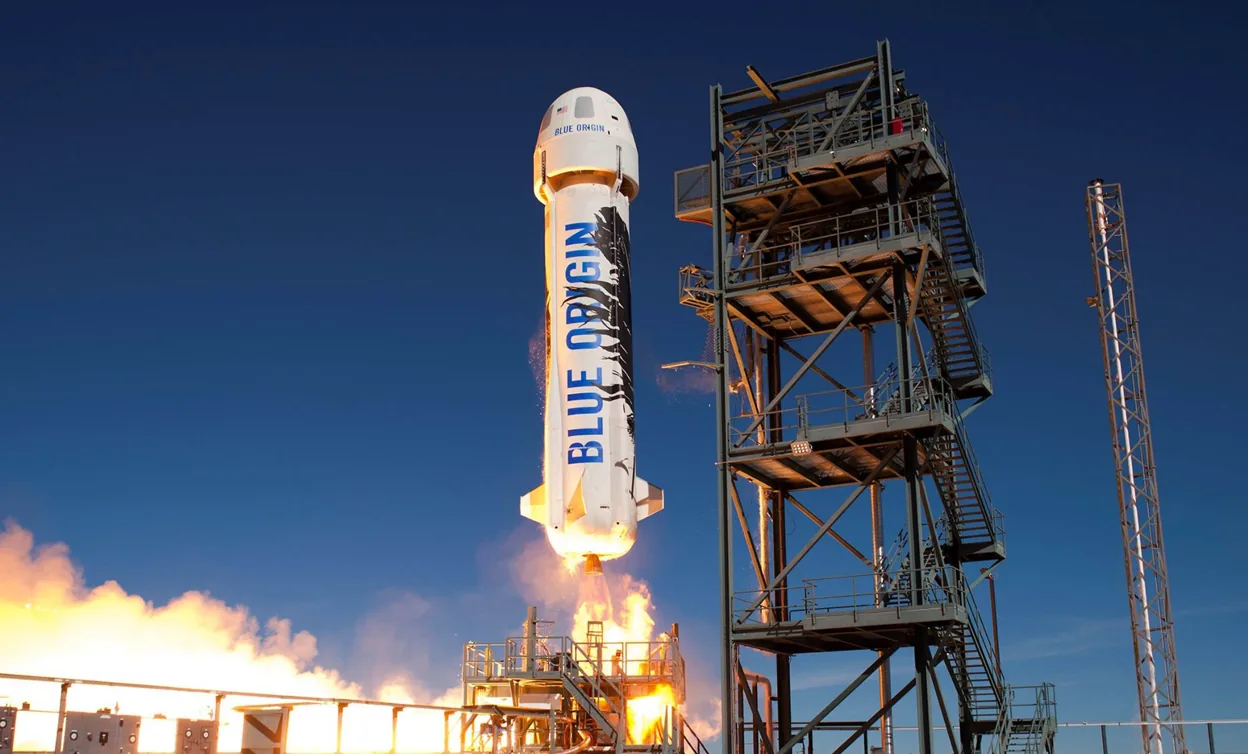
Blue Origin, the aerospace company founded by Jeff Bezos, is set to launch its ninth crewed mission, NS-28, on Friday, November 22, 2024. The suborbital flight will lift off from the company’s West Texas launch site during a window that opens at 10:30 a.m. EST. The launch will be streamed live, with coverage beginning 30 minutes before takeoff, available through Blue Origin’s official channels and on Space.com, offering audiences worldwide a chance to watch the historic flight in real-time.

The NS-28 mission will carry six passengers on its journey into space, including a mix of experienced space tourists and newcomers. Among the crew is Emily Calandrelli, an MIT-trained engineer, science communicator, and author known for her work in popularizing STEM. Joining her are Marc and Sharon Hagle, a married couple with spaceflight experience from Blue Origin’s NS-20 mission in 2022. The rest of the crew includes Austin Litteral, a winner of a spaceflight giveaway by the platform Whatnot, entrepreneur James (J.D.) Russell, and businessman Henry (Hank) Wolfond.

Sharon Hagle, alongside her nonprofit organization SpaceKids Global, has also developed an educational initiative surrounding the mission. The “SpaceKids Global Press Squad” will consist of eight children aged 8 to 12 who will cover the NS-28 flight from Cape Canaveral, Florida. These young reporters will have the opportunity to tour Blue Origin’s facilities and learn more about space exploration, providing them with a hands-on educational experience.

As Blue Origin continues to advance its space tourism efforts, the NS-28 mission marks another milestone in the company’s pursuit of making space accessible to a broader range of people. With a diverse crew and a focus on education and outreach, the upcoming flight promises to be a significant step in the evolution of commercial space travel.