Microsoft Expands AI Model Options for 365 Copilot, Aims to Reduce Costs

Microsoft is reportedly working to incorporate both internal and third-party artificial intelligence (AI) models into its flagship product, Microsoft 365 Copilot, in a strategic move to diversify beyond its current dependency on OpenAI technology. Sources familiar with the project revealed that this effort is aimed at improving cost efficiency, speed, and overall performance for enterprise users.

Since the launch of 365 Copilot in March 2023, Microsoft has relied heavily on OpenAI’s GPT-4 model, touting its advanced capabilities as a key feature. However, concerns over cost and scalability have driven the tech giant to explore alternatives. These include developing its own smaller AI models, such as Phi-4, and customizing open-weight models to enhance the efficiency and affordability of 365 Copilot.

A Microsoft spokesperson emphasized the company’s continued collaboration with OpenAI for frontier models, but noted that the company integrates “various models from OpenAI and Microsoft depending on the product and experience.” OpenAI declined to comment on these developments.

One of the primary goals of this diversification is to lower operational costs, which could translate into savings for end users, according to insiders. The efforts are being closely monitored by Microsoft leadership, including CEO Satya Nadella, highlighting the strategic importance of this initiative.

Microsoft’s approach mirrors recent trends in its other business units. GitHub, acquired by Microsoft in 2018, introduced models from Anthropic and Google in October 2023 as alternatives to OpenAI’s GPT-4 for its coding assistant. Similarly, Microsoft’s consumer chatbot Copilot now integrates both in-house models and OpenAI technology.

Despite Microsoft’s push for 365 Copilot, adoption has faced challenges. Gartner reported in August that most companies had not moved beyond the pilot phase of their 365 Copilot implementations. Pricing and utility remain key concerns for enterprises. However, there are positive signals, with BNP Paribas Exane analysts forecasting that Microsoft could reach over 10 million paid users of 365 Copilot this year. Furthermore, Microsoft noted in November that 70% of Fortune 500 companies are already using the product.

As Microsoft continues to refine 365 Copilot’s capabilities and explore more cost-effective AI solutions, its efforts reflect a broader industry trend of reducing reliance on any single AI provider while maximizing efficiency and scalability.
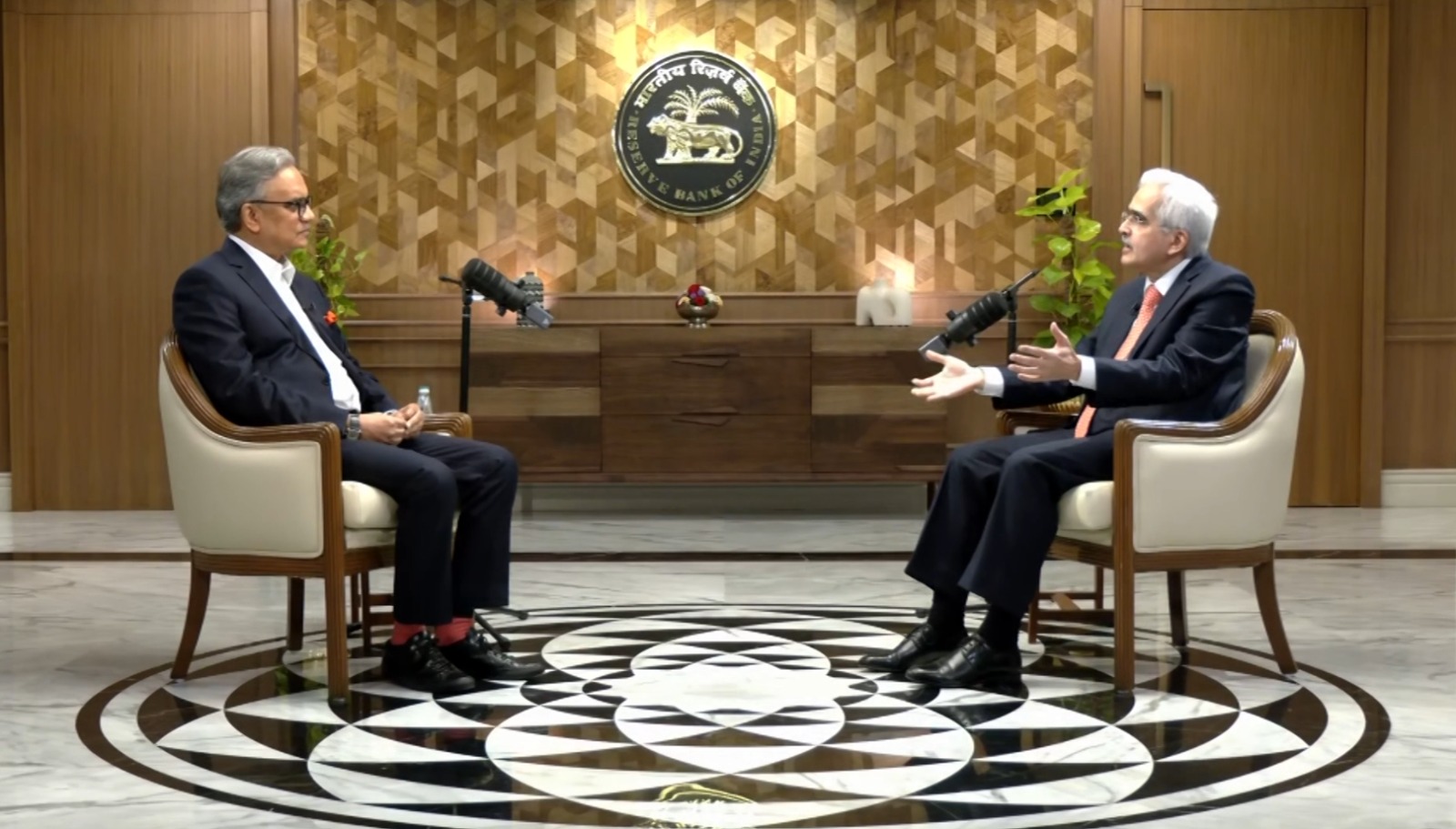

 

RBI Governor Shaktikanta Das Discusses India’s CBDC Advancements in Farewell Speech

Shaktikanta Das, who has served as the 25th Governor of the Reserve Bank of India (RBI) since December 2018, bid farewell to his role this week after completing a six-year tenure. In his parting address, Das took the opportunity to reflect on the significant strides India has made in modernizing its financial infrastructure. Among the highlights, he pointed to the introduction of the UPI (Unified Payments Interface) payment system and the ongoing trials of the eRupee Central Bank Digital Currency (CBDC) as two groundbreaking accomplishments that have positioned India at the forefront of the global financial technology landscape.

India has quickly become one of the few countries making substantial progress in the research and development of CBDCs, with the RBI leading the charge. Das expressed pride in the nation’s role as a pioneer in this space, emphasizing that while many central banks are exploring CBDCs, very few have actually launched pilot projects. “Almost every central bank is talking about CBDCs, but the actual launching of a pilot project has been done by very few,” Das noted, pointing out the RBI’s leadership in this field. The introduction of a regulatory sandbox around CBDCs has been another area where the RBI has set a benchmark for other central banks to follow.

Central Bank Digital Currencies, or CBDCs, are digital versions of a country’s fiat currency, in this case, the Indian Rupee (INR). By utilizing blockchain technology, CBDC transactions provide a secure and immutable record, ensuring greater transparency and accountability in financial operations. These digital currencies hold the promise of reducing global dependency on physical cash, offering a more efficient and accessible alternative for transactions, especially in a world increasingly focused on digital solutions.

Das emphasized the potential of CBDCs, particularly the eRupee, in shaping the future of currency. “In fact, it is the future of currency – a true game changer,” he said. Das expressed confidence that the full benefits of CBDCs would soon be realized, with a nationwide rollout expected in the near future. As India continues to lead in this innovative area, the impact of CBDCs on the nation’s economy and financial system could be transformative, marking a significant milestone in the global evolution of money.

Mathematician Resolves Longstanding Sofa Problem with Breakthrough Discoveries

The “sofa problem,” a perplexing mathematical challenge that has stumped experts for decades, may have finally found its resolution. First posed in 1966 by Austrian-Canadian mathematician Leo Moser, the problem asks for the largest possible area of a shape that can navigate a right-angled corner in a hallway of unit width. Despite its seemingly straightforward nature, the puzzle has remained unsolved for more than 50 years, with mathematicians struggling to determine the optimal shape and size.

Jineon Baek, a postdoctoral researcher at Yonsei University in South Korea, has reportedly made a significant breakthrough in solving the problem. In a study shared on the preprint site ArXiv on December 2, Baek demonstrated that the maximum area of the hypothetical “sofa” is 2.2195 square units. This finding refines the earlier established range for the sofa’s area, which had been between 2.2195 and 2.37 square units. While the solution is still awaiting peer review, mathematicians are optimistic that Baek’s work will withstand scrutiny and become the definitive answer to the long-standing question.

The origins of the sofa problem date back to Moser’s original conceptualization in 1966, but it was not until 1992 that notable progress was made. Joseph Gerver, an emeritus professor at Rutgers University, proposed a U-shaped solution that comprised 18 curves. His calculations suggested a lower bound of 2.2195 units for the area, sparking further debate about the possibility of a larger shape. In 2018, a computer-assisted analysis suggested an upper bound of 2.37 units, but the question of whether a larger sofa could exist remained unresolved.

Baek’s recent contribution has brought the sofa problem closer to a resolution, as his findings narrow the possible range and refine our understanding of the mathematical limits of the shape. As experts continue to examine and verify the proof, it is expected that Baek’s work will become a significant milestone in the field of geometry and mathematical problem-solving, finally providing clarity on a question that has baffled mathematicians for over five decades.