Japan’s Antitrust Watchdog Expected to Rule Against Google in Search Monopoly Case

Japan’s Fair Trade Commission (JFTC) is reportedly set to conclude that Google violated antitrust laws through monopolistic practices in web search services, according to a report by Nikkei Asia. The JFTC is expected to issue a cease and desist order requiring Google to halt such practices.

The investigation, launched in October 2023, aligns with similar actions taken by competition regulators in Europe and other major markets. The JFTC’s focus has been on Google’s dominance in web search services, which is integral to the company’s broader business model.

Google, which has yet to comment on the matter, relies heavily on its Chrome browser to gather user data that enhances its ad-targeting capabilities. This dominance has faced increasing scrutiny globally, with Japan now joining a growing list of jurisdictions taking steps to curb Google’s alleged anticompetitive behavior.

In related developments, the U.S. Department of Justice recently called for Alphabet, Google’s parent company, to divest its Chrome browser. U.S. authorities are pushing for strict measures to dismantle Google’s search monopoly, including a five-year ban on re-entering the browser market.

The JFTC’s anticipated ruling underscores a broader global crackdown on tech giants accused of exploiting market dominance at the expense of fair competition.
 

Albania Implements One-Year TikTok Ban After Teen’s Tragic Death

The Albanian government has announced a one-year nationwide ban on TikTok following the killing of a 14-year-old boy in November, an incident that has sparked concerns about the role of social media in youth violence. The ban, aimed at promoting safer environments for children, will come into effect early next year, Prime Minister Edi Rama said during a meeting with parents and educators.

“For one year, we’ll be completely shutting it down for everyone. There will be no TikTok in Albania,” Rama declared.

Broader Social Media Crackdown

This decision aligns with actions taken by several European countries, including France, Germany, and Belgium, which have introduced restrictions on children’s social media use. In November, Australia imposed one of the strictest regulations globally by banning social media for children under 16.

Tragedy Fuels Government Action

The ban follows the fatal stabbing of a 14-year-old schoolboy by a peer in November. Reports indicate the violence stemmed from disputes on social media, with videos circulating on TikTok allegedly glorifying the act. Rama blamed platforms like TikTok for exacerbating youth violence, both in and out of school.

“The problem today is not our children, but society, and platforms like TikTok that are taking our children hostage,” Rama stated.

TikTok’s Response

TikTok has denied its platform’s involvement in the incident. A spokesperson claimed the company found “no evidence” that either the victim or the perpetrator had TikTok accounts. The spokesperson also noted that videos linked to the tragedy were reportedly posted on a different platform. TikTok is now seeking “urgent clarity” from Albanian authorities regarding the decision.

The ban is part of Albania’s broader strategy to improve school safety and curb the influence of potentially harmful online content on young users.


Starbucks Workers Expand Strike to More U.S. Cities Amid Union Standoff

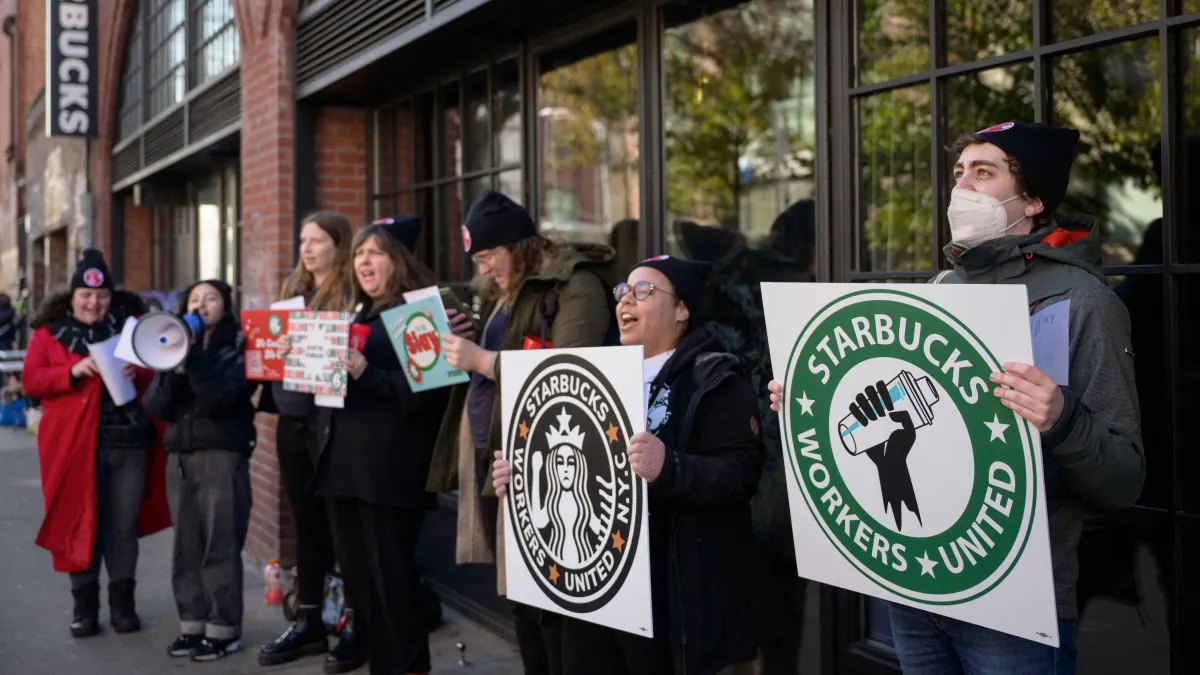
Starbucks workers have broadened their strike to additional U.S. cities, including New York, Philadelphia, New Jersey, and St. Louis, the Workers United union announced late Saturday. This escalation comes after the five-day strike initially shuttered cafes in Los Angeles, Chicago, and Seattle. Specific details about the strike locations in New Jersey were not disclosed.

The walkouts, prompted by unresolved disputes over wages, staffing levels, and scheduling, now span ten cities, including Columbus, Denver, and Pittsburgh. The strike coincides with Starbucks’ busy holiday season, potentially impacting its Christmas sales. Workers United has warned that the strike could grow to “hundreds of stores” by Christmas Eve, intensifying the pressure on the coffee chain.

Starbucks has yet to comment on the latest developments outside regular business hours.

Negotiations and Union Stalemate

Negotiations between Starbucks and Workers United began in April, but progress has been slow. The company has conducted over eight bargaining sessions, reportedly reaching 30 agreements. However, key issues remain unresolved, leading to the current impasse.

Broader Impact

The strike affects a small fraction of Starbucks’ operations—out of its 11,000 U.S. stores employing approximately 200,000 workers—but the targeted disruption during a critical retail period underscores the workers’ demands.

Workers United, which represents over 10,000 baristas, continues to push for better terms and conditions, signaling a potentially prolonged standoff during the high-demand holiday period.