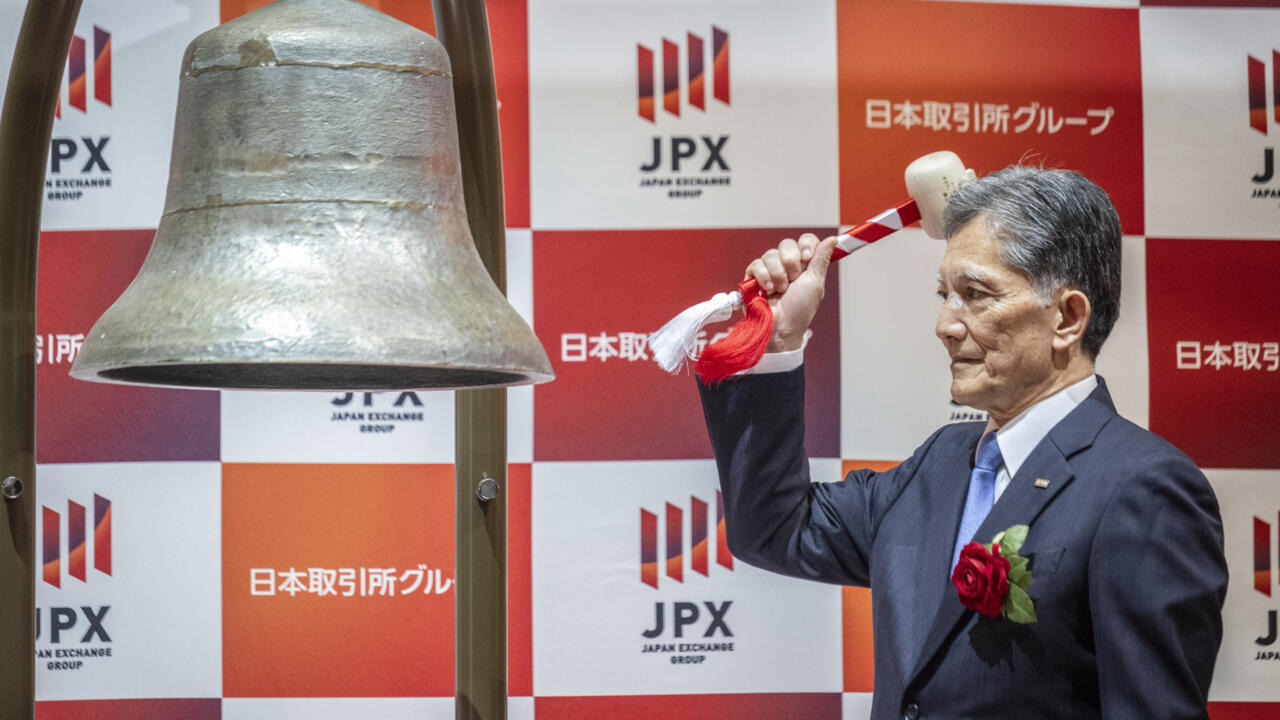
Kioxia’s IPO Debut Surges, Valuing Japanese Chipmaker at $5.8 Billion

Shares of Kioxia (285A.T) surged 14% on their debut, giving the Bain Capital-backed memory chip manufacturer a valuation of over 890 billion yen ($5.80 billion). This marks one of Japan’s most significant IPOs in 2024, reflecting robust investor demand despite initial uncertainties.

IPO Highlights

Kioxia raised 120 billion yen, pricing its shares at 1,455 yen each, mid-range of the indicative price. The stock opened slightly lower at 1,440 yen but rallied to an intraday high of 1,689 yen before closing its first trading day at 1,601 yen.

CEO Nobuo Hayasaka expressed relief over the successful listing, emphasizing the company’s journey from its Toshiba origins to becoming an independent, publicly traded entity.

Background

Kioxia, formerly Toshiba Memory, was acquired by a Bain-led consortium for 2 trillion yen in 2018 after Toshiba was forced to sell its prized memory chip business due to financial distress. The acquisition marked a landmark private equity intervention in Japan’s corporate sector.

The IPO comes amid a recovery in Japan’s IPO market, with over $6 billion raised in 2024, its best performance since 2021 despite fewer overall listings.

Challenges and Market Reaction

  • Global Chip Market Uncertainty: Kioxia’s IPO was delayed multiple times, partly due to market volatility driven by U.S.-China trade tensions.
  • Valuation Adjustments: Bain Capital initially sought a 1.5 trillion yen valuation for Kioxia, but investor concerns led to a downward revision before the eventual IPO.
  • Investor Confidence: The IPO’s reception reflects strong demand for valuation discounts, with analysts noting a positive outlook for future private equity exits in Japan.

Current Ownership and Future Outlook

Post-IPO, Bain Capital’s stake in Kioxia has decreased to 50.7% from 56.2%. Despite public listing, Kioxia’s decision-making will remain aligned with Bain’s guidance.

The IPO has not advanced discussions with Western Digital, Kioxia’s long-term partner and potential merger candidate. However, Hayasaka reassured that the listing would not harm their relationship.

Financial Performance and Industry Competition

In the quarter ending September 30, Kioxia reported net income of 106 billion yen, up from 69.8 billion yen in the prior quarter, supported by an improving supply-demand balance in the memory chip market.

Analysts remain cautious about Kioxia’s long-term prospects due to fierce competition in the global memory chip market. Some worry that its valuation, at 4–5 times price-to-sales, may be difficult to sustain in a highly competitive industry.

Investor Sentiment

While some portfolio managers, such as Richard Kaye from Comgest, are skeptical about Kioxia’s valuation and growth potential, others see the IPO as a sign of Japan’s evolving market dynamics, particularly in the semiconductor sector.

Key Figures

  • IPO Price: 1,455 yen per share
  • Closing Price: 1,601 yen
  • Funds Raised: 120 billion yen
  • Valuation: 890 billion yen ($5.80 billion)

Outlook

Kioxia’s public listing offers new fundraising avenues in the capital-intensive semiconductor industry but also brings heightened scrutiny on its financials. The company aims to navigate its challenges while leveraging its strong market position in memory chips.

 

Instagram to Dominate Meta’s U.S. Ad Revenue by 2025, Report Predicts

Instagram is poised to generate over 50% of Meta Platforms’ U.S. advertising revenue in 2025, driven by its improved monetization strategies, according to research firm Emarketer.

Why It Matters

Instagram’s short-form video feature, Reels, has emerged as a key competitor to ByteDance’s TikTok and YouTube Shorts. As users increasingly engage with short videos, advertisers are shifting their focus to this format, providing Meta with an opportunity to boost revenue through more targeted ad placements.

The potential implementation of a TikTok ban in the U.S. could further accelerate Instagram’s growth. If enacted, platforms like Reels and YouTube Shorts are expected to attract advertising budgets previously allocated to TikTok, opening new revenue streams for Meta.

Key Insights

  • Video-First Platform: Jasmine Enberg, principal analyst at Emarketer, highlights that Instagram has transformed into a video-first platform. Users now dedicate nearly two-thirds of their time on Instagram to watching videos.
  • Reallocated Ad Budgets: Enberg also predicts that Instagram could capture over 20% of TikTok’s U.S. advertising dollars if the ban takes effect in 2025.

By the Numbers

  • In 2024, Instagram’s ad revenue was primarily driven by its Feed and Stories features, which accounted for 53.7% and 24.6% of its revenue, respectively.
  • By 2025, revenue generated by Reels, Explore, and Threads is expected to rise, collectively contributing 9.6% of Instagram’s total ad revenue.

Context

The shift toward video content aligns with broader trends in digital media, where short-form videos have proven highly effective in capturing audience attention. Reels’ growing popularity offers Instagram a competitive edge, particularly as regulatory uncertainties loom over TikTok.


Congo Lawyers Demand Verification of Apple’s Supply Chain Statement

International lawyers representing the Democratic Republic of Congo (DRC) have cautiously welcomed Apple’s announcement to stop sourcing minerals from the region due to escalating conflict. However, they emphasized that their legal proceedings against the tech giant in Europe would continue.

Earlier this week, criminal complaints were filed against Apple subsidiaries in France and Belgium on behalf of Congo. These lawsuits accuse the company of using conflict minerals—specifically tin, tantalum, and tungsten (known as the 3T minerals)—in its supply chain. Such minerals are crucial for manufacturing computers and mobile phones but are often sourced from artisanal mines controlled by armed groups accused of massacres, sexual violence, and other severe human rights violations.

On Tuesday, Apple denied the allegations, stating that it instructed suppliers to cease sourcing the 3T minerals from Congo and neighboring Rwanda earlier this year. The company noted that it had taken the step because escalating conflict had made independent audits and due diligence impossible. Apple also highlighted its commitment to recycling minerals for use in its devices and funding organizations to improve mineral traceability.

Lawyer’s Response and Demands for Proof

The lawyers representing Congo acknowledged Apple’s statement with a mix of satisfaction and skepticism. “Apple’s claims about changes to its supply chain must be verified with evidence—facts, figures, and on-the-ground inspections,” they said in a statement to Reuters on Wednesday.

They further noted that Apple’s announcement does not absolve it of responsibility for alleged past crimes. “It is now up to French and Belgian judges to assess the case,” the lawyers added. Authorities in both nations have yet to comment on the legal proceedings.

Allegations of Complicity

The lawyers argue that Apple’s use of minerals from Congo, allegedly laundered through international supply chains, implicates the company in the crimes committed by armed groups operating in the region. These groups fund their operations and purchase weapons using profits from smuggled minerals, often trafficked through Rwanda, according to reports by U.N. experts and rights organizations.

Apple maintains that it does not directly source minerals from primary mining operations and routinely audits its suppliers. The company’s Tuesday statement confirmed that most of the 3T minerals used in its products are recycled.

The Human Cost of Conflict Minerals

Since the 1990s, Congo’s eastern mining regions have been ravaged by armed conflict, with millions of civilians killed or displaced. The ongoing competition for control over lucrative mineral resources has been identified as a primary driver of these conflicts. Armed groups and some elements of the Congolese military use proceeds from illegal mineral exports to sustain operations and acquire weapons.

Neighboring Rwanda has been accused by rights groups and U.N. experts of benefiting from Congo’s mineral trade, allegations which Kigali denies.

Next Steps

While Apple’s announcement is seen as a step in the right direction, lawyers and advocacy groups argue that its supply chain practices must be closely scrutinized. The European courts will now decide whether the tech giant is accountable for its alleged role in sustaining conflict in Congo’s mineral-rich regions.