Remarkably Well-Preserved Baby Mammoth Remains Unveiled by Scientists

Scientists have uncovered the preserved remains of a juvenile mammoth, believed to be over 50,000 years old, after it was thawed from permafrost in Russia. The discovery, made in the Batagaika crater in the Sakha Republic (Yakutia), marks another extraordinary find as climate change causes the region’s permafrost to melt.

The mammoth’s carcass, weighing over 110kg (240lbs), was carefully brought to the surface on an improvised stretcher, according to Maxim Cherpasov, head of the Lazarev Mammoth Museum Laboratory in Yakutsk. Cherpasov estimates that the mammoth was likely just over a year old at the time of its death, though further testing will provide more precise information.

One of the most remarkable aspects of the find is the preservation of the mammoth’s head and trunk. Typically, the thawing process causes these parts, especially the trunk, to be consumed by predators or scavenging birds. However, this specimen’s head is unusually well-preserved, even though the forelimbs have been eaten by animals.

This discovery adds to a series of remarkable paleontological finds in Russia’s permafrost. In the same region, scientists recently uncovered the remains of a 32,000-year-old sabre-toothed cat cub and a 44,000-year-old wolf carcass earlier this year, offering unprecedented insights into ancient species.


NASA’s Parker Solar Probe Makes Closest-Ever Approach to the Sun

NASA’s Parker Solar Probe is embarking on a historic mission, attempting the closest-ever approach to the Sun. The spacecraft is plunging into the Sun’s outer atmosphere, known as the corona, enduring extreme temperatures and radiation in a bid to unlock the mysteries of our star.

This daring fly-by will leave the probe out of communication for several days. Scientists will anxiously await a signal, expected at 05:00 GMT on 28 December, to confirm whether the probe has survived the intense conditions. The goal is to deepen our understanding of the Sun’s behavior and how it affects the solar system.

Dr. Nicola Fox, NASA’s head of science, emphasized the importance of firsthand exploration: “For centuries, people have studied the Sun, but you don’t experience the atmosphere of a place until you actually go visit it. And so we can’t really experience the atmosphere of our star unless we fly through it.”

Launched in 2018, the Parker Solar Probe has already completed 21 orbits around the Sun, gradually getting closer with each pass. The Christmas Eve mission is a groundbreaking moment, bringing the probe within 3.8 million miles (6.2 million km) of the Sun’s surface. Though this distance may seem vast, Fox puts it into perspective: “We are 93 million miles away from the Sun, so if I put the Sun and the Earth one metre apart, Parker Solar Probe is just four centimetres from the Sun.”

During its approach, the spacecraft will endure temperatures of 1,400°C (2,552°F) and radiation strong enough to damage its electronics. To protect it, the probe is shielded by a 11.5cm-thick (4.5 inches) carbon-composite heat shield. The spacecraft’s strategy is to fly in and out quickly, racing at an astonishing speed of 430,000 mph (700,000 km/h) — faster than any man-made object in history.

The Parker Solar Probe’s primary mission is to investigate the Sun’s corona, which remains an enigma for scientists. Dr. Jenifer Millard, an astronomer, explains, “The surface of the Sun is about 6,000°C, but the corona reaches millions of degrees — and it’s farther from the Sun. How is the outer atmosphere getting hotter?”

The probe’s journey will also help scientists study solar wind, the constant flow of charged particles from the corona. This space weather can lead to phenomena like auroras, but it can also disrupt power grids, communication systems, and electronics on Earth. “Understanding the Sun and its activity is so important to our everyday lives on Earth,” says Dr. Millard.

As the spacecraft is out of contact with Earth, NASA scientists are anxiously awaiting the return of a signal. Fox admitted to feeling nervous about the probe’s audacious attempt but remains confident in its design. “We really have designed it to withstand all of these brutal conditions. It’s a tough, tough little spacecraft,” she says.

If successful, the Parker Solar Probe will continue its groundbreaking mission, providing valuable insights into the Sun’s behavior and its impact on space weather for years to come.


 

Robbie Williams Biopic Better Man Explores Fame Through a CGI Chimp

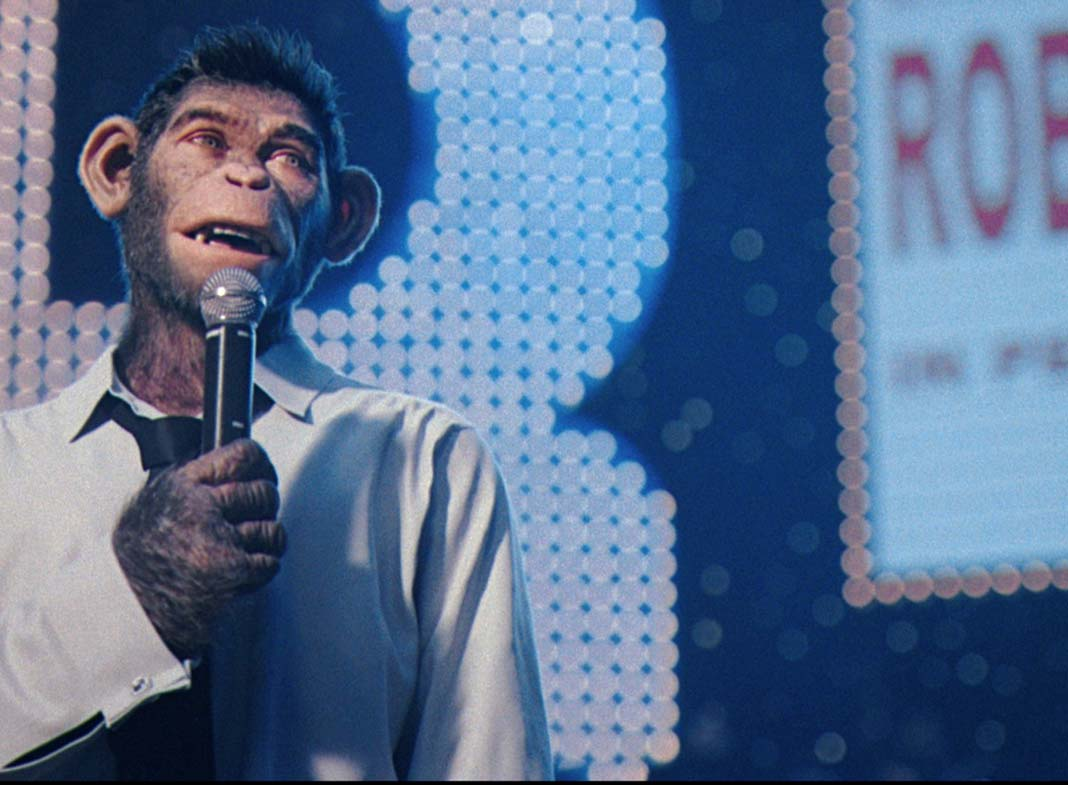
The new biopic Better Man takes an unconventional approach to telling the tumultuous story of UK pop star Robbie Williams, depicting the singer as a CGI chimpanzee. Directed by Michael Gracey, known for The Greatest Showman, the film offers an intense exploration of fame’s psychological toll, blending surrealism with raw emotion.

Fame, with its intoxicating allure and destructive pressures, has long been a subject in music and film, but Better Man offers a unique perspective. The film’s choice to animate Williams as an ape (voiced by Jonno Davies through motion capture) symbolizes the dehumanizing nature of celebrity. Williams himself explained that being in the industry often feels like becoming a robot or a monkey, which is why he chose this form for his filmic counterpart.

The movie begins with Williams’s childhood, portrayed with a mix of innocence and aspiration. We see the young “Robert” dreaming of stardom, sharing intimate moments with his family. As he rises to fame, first with the boy band Take That, the film showcases the highs of pop stardom, including energetic performances and chart-topping hits. However, it quickly shifts to the darker side of fame, as Williams grapples with self-doubt, addiction, and depression, culminating in his departure from the band.

Better Man is more than just a musical retelling of Williams’s life. It reinterprets his songs in a fresh context. Songs like “Feel” and “Come Undone” are woven into the narrative, reflecting his internal struggles rather than merely acting as nostalgic crowd-pleasers. The film doesn’t take the easy route of a typical jukebox musical, instead, it offers a deep dive into the emotional cost of fame.

One of the most intriguing elements is how the film’s surreal aesthetic – especially the CGI chimp – amplifies the bizarre nature of the music industry. Williams’s battles with self-criticism and his public persona are depicted through a grotesque yet sympathetic filter, making his flaws feel both universal and uniquely his. As a result, the film balances the absurdity of stardom with the painful truths of mental health and self-doubt.

As a piece of pop culture history, Better Man also acts as a snapshot of the ‘90s music industry, a time when fame was at its peak and artists like Williams were subjected to immense pressure. Through interviews and behind-the-scenes insights, the film explores the manipulation and commercialization of pop stars, painting a picture of a system that exploits young performers.

The film doesn’t just focus on Williams’s story. It serves as a reflection on the broader experience of pop stars, particularly those who were part of the boy band phenomenon. The pressure to maintain a public image, the emotional toll of being in the spotlight, and the struggles with identity and addiction are all examined in depth.

Ultimately, Better Man is a narrative of redemption. Despite the film’s dark moments, it ends on a hopeful note, acknowledging Williams’s personal growth while hinting at the ongoing journey of his career. By the end, viewers are left with a sense of the complexity of celebrity: the excruciating vulnerability and the exhilarating highs that come with it.