WazirX Hack: Zettai Seeks Court Approval to Submit Restructuring Plan for Creditor Vote

Zettai, the Singapore-based company managing the WazirX cryptocurrency exchange in India, is actively working to address the fallout from the massive hack in July, which resulted in losses exceeding $230 million (approximately Rs. 1,900 crore). In the wake of the attack, Zettai has been developing a financial restructuring plan to recover from the crisis, with oversight from the Singapore High Court. The company has now sought court approval to convene a meeting with its creditors, where it will present the proposed restructuring plan for their approval. The scheme aims to prioritize creditors by offering a structured approach for recovery, and if granted permission by the court, it will be put to a vote by the creditors.

Should the court approve the plan, Zettai intends to initiate the first fund distributions within 10 business days. This timeline promises to offer creditors a swift path toward compensation, which could be a crucial step in restoring confidence in the exchange. According to the restructuring plan, the net available liquid funds, which currently cover over 100% of the USD value of liabilities as of July 18, 2024, will be distributed to creditors in proportion to their token holdings. This distribution is designed to ensure that creditors benefit from the recent surge in cryptocurrency market values.

As of July 18, 2024, the total claims against WazirX amounted to $546.47 million (around Rs. 4,637 crore), reflecting the extent of the losses suffered due to the hack. However, Zettai’s liquid assets as of December 5, 2024, had grown to $566,385,206 million (roughly Rs. 4,806 crore), signaling that the exchange has managed to stabilize its financial position in the aftermath of the incident. This growth in liquid assets provides a solid foundation for the restructuring plan, offering hope for creditors to recover their losses.

Zettai’s efforts to resolve the situation through a formal restructuring process demonstrate its commitment to addressing the impact of the hack and ensuring that its creditors are compensated. The outcome of the court’s decision and the subsequent vote by creditors will be pivotal in determining the future of WazirX and its ability to regain stability and trust in the market.
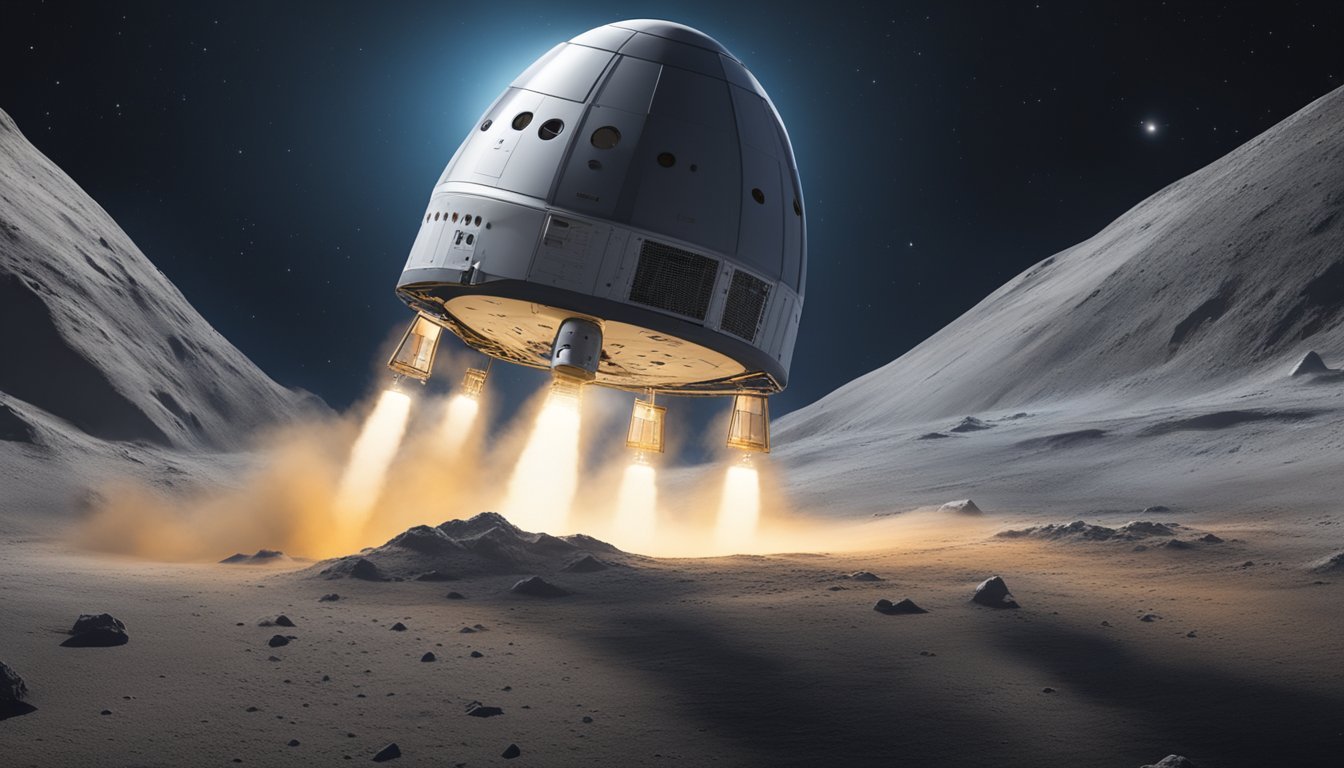

Space Exploration Milestones of 2024: Lunar Ventures, Mars Breakthroughs, and Beyond

The year 2024 saw incredible progress in space exploration, with significant missions targeting the moon, Mars, Mercury, and beyond. A variety of government agencies, private companies, and research teams achieved remarkable milestones, deepening humanity’s understanding of the solar system and advancing the frontiers of space exploration.

Among the most notable developments were several lunar missions that expanded our knowledge of Earth’s closest neighbor. Japan’s SLIM (Smart Lander for Investigating the Moon), which landed on the rim of a lunar crater in January, surpassed expectations by operating for three months rather than the planned two weeks. This extended mission provided invaluable data about the moon’s surface and topography. In February, the Odysseus spacecraft from Intuitive Machines, based in Houston, also made a noteworthy lunar achievement. Despite landing off-balance near the lunar south pole, the spacecraft completed its six-day mission successfully, providing important insights into the region.

China’s Chang’e 6 mission, launched by the China National Space Administration (CNSA), made headlines in June when it returned with soil samples from the moon’s far side. This was the first successful collection of samples from this previously unexplored region. Initial analysis of the samples suggested that the far side of the moon may have experienced volcanic activity as recently as 2.8 billion years ago, offering exciting new clues about the moon’s geological history.

Beyond lunar exploration, there were also significant strides made in the study of Mars and other celestial bodies. The year 2024 highlighted the increasing pace of discoveries, including new findings on Mars that could reshape our understanding of the planet’s potential to support life. As technology continues to advance, space agencies and private enterprises are rapidly pushing the boundaries of exploration, promising even more exciting developments in the years to come.

Pixel Studio 1.4 Update Introduces AI-Powered Sticker Creation and Gboard Integration

The Pixel Studio 1.4 update has begun rolling out to Google Pixel devices, bringing exciting new features to the app. One of the most notable updates is the integration of Pixel Studio with Gboard, Google’s popular keyboard app. This integration allows users to create and view AI-generated stickers directly within Gboard, making the process smoother and more convenient. Previously, stickers could only be created within Pixel Studio, and although they could be saved, they weren’t directly accessible in Gboard, limiting their practical use. The new functionality opens up greater usability for users by allowing them to both generate and share their custom AI stickers through the keyboard.

The Gboard integration was first teased in Google’s December 2024 Feature Drop, which introduced a series of enhancements for Pixel devices. While the announcement mentioned the integration of Pixel Studio with Gboard, it didn’t specify the ability to generate stickers directly within the keyboard app itself. The full details, including the sticker creation capabilities, were outlined in the Play Store changelog for the Pixel Studio app. Now, Pixel users can seamlessly create new stickers in Gboard’s “Stickers” tab or through the “My Projects” library, giving them more flexibility in how they create and store their content.

The My Projects library in Pixel Studio allows users to create and save stickers, though it is accessible only through the Pixel Studio app. Users can edit their stickers within this library, ensuring they have complete control over the final product. Once created, these custom stickers can easily be sent in any messaging app, thanks to their integration with Gboard. This feature makes it more convenient for users to personalize their messages with unique stickers without needing to switch between different apps or tools.

While this update adds significant functionality to Pixel Studio, it’s worth noting that the AI sticker creation feature currently supports English language prompts only. This limitation could change in future updates, but for now, users will need to ensure their prompts are in English to generate their desired stickers. Overall, the Pixel Studio 1.4 update represents a major step forward in enhancing the user experience on Pixel devices, offering more creative possibilities and improving the convenience of generating and sharing AI-driven content.