Congo Files Criminal Complaints Against Apple Over Use of Conflict Minerals

The Democratic Republic of Congo (DRC) has filed criminal complaints against Apple subsidiaries in France and Belgium, accusing the tech giant of using conflict minerals in its supply chain. The legal actions, initiated by Congo’s government, allege that Apple’s operations indirectly support armed groups involved in severe human rights abuses, including massacres and rapes, in the country’s mining regions. Congo, a major source of tin, tantalum, and tungsten—referred to as 3T minerals—has long struggled with violent conflicts fueled by the competition for its mineral resources.

Legal Allegations and Apple’s Response

The complaints, filed on Monday to the Paris prosecutor’s office and the Belgian investigating magistrate’s office, accuse Apple France, Apple Retail France, and Apple Retail Belgium of various offences. These include covering up war crimes, laundering tainted minerals, handling stolen goods, and deceptive commercial practices aimed at assuring consumers that its supply chains are free of conflict-tainted minerals.

Apple has denied the allegations, emphasizing that it does not directly source primary minerals. The company claims it audits its suppliers, publishes findings, and funds initiatives to improve mineral traceability. In its 2023 filing to the U.S. Securities and Exchange Commission, Apple stated that none of the smelters or refiners in its supply chain had financed armed groups. However, Congo’s lawyers argue that Apple’s reliance on minerals that have been illegally extracted and funneled through international supply chains makes the company complicit in the ongoing abuses.

The Role of Conflict Minerals in DRC

The Eastern DRC has been the epicenter of brutal conflicts since the 1990s, driven largely by competition for valuable minerals. Armed groups use the proceeds from mineral exports to fund their activities, which often involve violence and smuggling, particularly through neighboring Rwanda. Congo’s legal team highlights that despite Apple’s participation in industry efforts to ensure traceability, some of its suppliers still source from regions controlled by armed groups. Congo’s complaints also mention ITSCI, a certification scheme designed to monitor and certify mineral supply chains, which Congo believes has been discredited due to its failure to properly track minerals from conflict zones.

Judicial Pursuit and International Attention

The complaints against Apple are the first criminal legal actions filed by the Congolese state against a major tech company over the issue of conflict minerals. The filings have drawn significant attention, especially given Belgium’s historical connection to Congo during the colonial era, which adds a moral dimension to the case. Christophe Marchand, a Belgian lawyer representing Congo, emphasized Belgium’s responsibility in helping address the ongoing pillaging of Congo’s resources, a practice dating back to King Leopold II’s colonial rule.

Apple’s use of the ITSCI certification scheme has also come under scrutiny. The Responsible Minerals Initiative (RMI) suspended ITSCI in 2022, citing concerns over its inability to provide accurate reports on high-risk mining sites amid escalating violence in Congo’s North Kivu province. While Apple has continued to reference ITSCI in its filings, it did not address the suspension or the criticisms surrounding it.

Broader Industry Context

The complaints also align with broader international concerns about the use of minerals from conflict zones in consumer electronics. In March, a U.S. federal court dismissed a lawsuit by private plaintiffs that sought to hold companies like Apple, Google, and Microsoft accountable for their reliance on child labor in cobalt mines in Congo. The ongoing legal challenges underscore the growing pressure on tech giants to ensure that their supply chains do not contribute to human rights violations or fuel conflict.

Future Developments

The outcome of these criminal complaints will depend on whether the French and Belgian judicial authorities decide to investigate the allegations and bring charges. The complaints represent an important step in Congo’s ongoing efforts to address the exploitation of its resources and the international companies that benefit from them.

 

BHP and Rio Tinto to Develop Low-Carbon Iron Pilot Plant in Western Australia

BHP and Rio Tinto have announced plans to jointly develop a pilot plant aimed at producing low-carbon iron from Pilbara ores in Western Australia, marking a significant step in decarbonizing the global steel industry. The announcement, made in a joint statement on Tuesday, highlights the companies’ commitment to advancing sustainable practices in steel production.

Project Details and Technology

The new facility, located in the Kwinana industrial hub of Western Australia, will incorporate renewable energy and use Direct Reduced Iron (DRI) technology in an Electric Smelting Furnace (ESF) to produce molten iron. The pilot plant is expected to have an annual output of 30,000 to 40,000 tonnes of iron. If successful, this approach could lead to near-zero greenhouse gas emissions in iron and steel production, positioning Australian iron ore as a key resource for decarbonizing global steelmaking.

This project is critical as the steel industry is responsible for approximately 8% of global carbon emissions, largely due to the conventional methods used in iron ore smelting.

Collaboration with BlueScope and Woodside

The pilot project, which was initially announced in February as part of a broader effort to reduce emissions in the steel sector, will now proceed with finalised details including the location and output forecasts. The facility will be developed in collaboration with BlueScope Steel, a leader in the steelmaking industry.

Woodside Energy, a major energy provider, will also join the project as an equal equity participant and energy supplier, subject to final commercial agreements. This partnership, named NeoSmelt, is designed to leverage advanced technologies and renewable energy to significantly reduce emissions from steel production.

Timeline and Future Plans

The pilot plant is set to enter its feasibility study phase in Q2 2025, with a final investment decision expected by 2026. If the project proceeds as planned, operations are anticipated to begin by 2028. The companies are optimistic that the success of this initiative could pave the way for a broader shift toward sustainable steel production globally.

This collaborative effort aims to meet the growing demand for steel while contributing to global decarbonization goals, especially in industries like infrastructure and the net-zero energy transition, where steel is a key material.


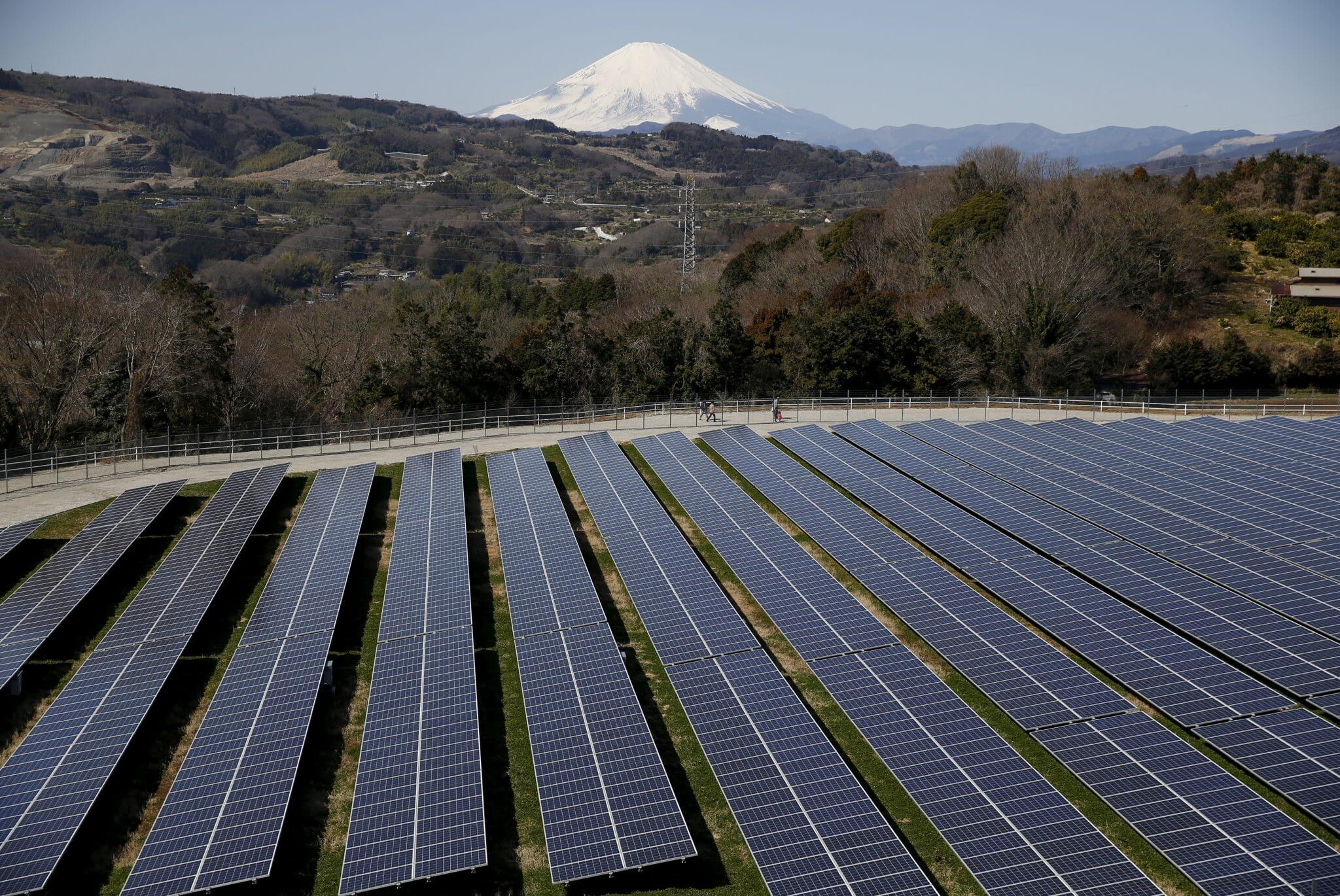
Japan Targets 40-50% Renewable Energy by 2040 Amid Energy Security Focus

Japan aims for renewable energy to supply 40-50% of its electricity by fiscal year 2040, alongside 20% from nuclear power, according to a draft revision of its basic energy policy unveiled on Tuesday. This marks a significant clean energy push while also addressing energy security concerns amid rising power demand and geopolitical instability.

Renewable Energy Targets and Current Context

The proposed targets aim to nearly double renewables’ share from 22.9% in 2023 and exceed the existing 2030 goal of 36-38%. Thermal power generation, particularly from inefficient coal-fired plants, will decline to 30-40% of the energy mix, down from 68.6% in 2023. However, the draft lacks specific breakdowns for coal, gas, and oil.

Critics have raised concerns about the plan’s shortcomings.

  • Mika Ohbayashi, Director of the Renewable Energy Institute, criticized the low target for wind power (only 4-8%) compared to the 20% target for nuclear power, arguing Japan risks falling behind global wind energy developments.
  • Advocates also highlighted the absence of a clear coal phase-out roadmap.

Focus on Energy Security and LNG

While the policy prioritizes decarbonization, it also emphasizes energy security in light of geopolitical tensions like the Russia-Ukraine war. The draft underscores liquefied natural gas (LNG) as a transitional energy source, recommending government and private sector collaboration to secure long-term LNG contracts to mitigate price volatility and supply risks.

Nuclear Power Resurgence

The plan reinforces nuclear power’s role, maintaining a 20-22% target for 2040, consistent with 2030 goals. This signals a strategic shift, removing the previous aim of “reducing reliance on nuclear power as much as possible.” Nuclear energy’s resurgence follows years of challenges post-2011 Fukushima disaster; it contributed only 8.5% of Japan’s power supply in 2023.

Japan’s strategy now includes constructing next-generation reactors at sites where aging reactors are set to be decommissioned. Analysts believe this change reflects the government’s push for affordable and stable energy to meet growing 24/7 power demands, particularly from semiconductor factories and data centers.

“The government has finally realized that nuclear power can provide stable energy for data centers, which require uninterrupted 24/7 electricity,” said Naomi Oshita, a power market expert at Wood Mackenzie.

Demand Growth and Greenhouse Gas Targets

The forecasts assume a 12-22% rise in electricity demand by 2040, driven by industrial sectors like semiconductor manufacturing. While hydrogen and ammonia were previously targeted for 1% of the energy mix by 2030, the new draft omits specific goals for these fuels.

Japan’s updated energy plan aligns with its broader climate targets. A joint strategy from the industry and environment ministries calls for a 60% cut in greenhouse gas emissions by 2035 and a 73% cut by 2040, aiming for net-zero emissions by 2050. The finalized strategy will be submitted to the United Nations in February.

Outlook

The draft policy reflects Japan’s realistic approach to balancing renewable energy growth, nuclear power revival, and energy security. While some critics argue the plan falls short in wind power and coal reduction, analysts view the policy as a step to attract investments in renewables, storage batteries, and LNG as a transition fuel.

The final energy plan is expected to be approved by the cabinet early next year.