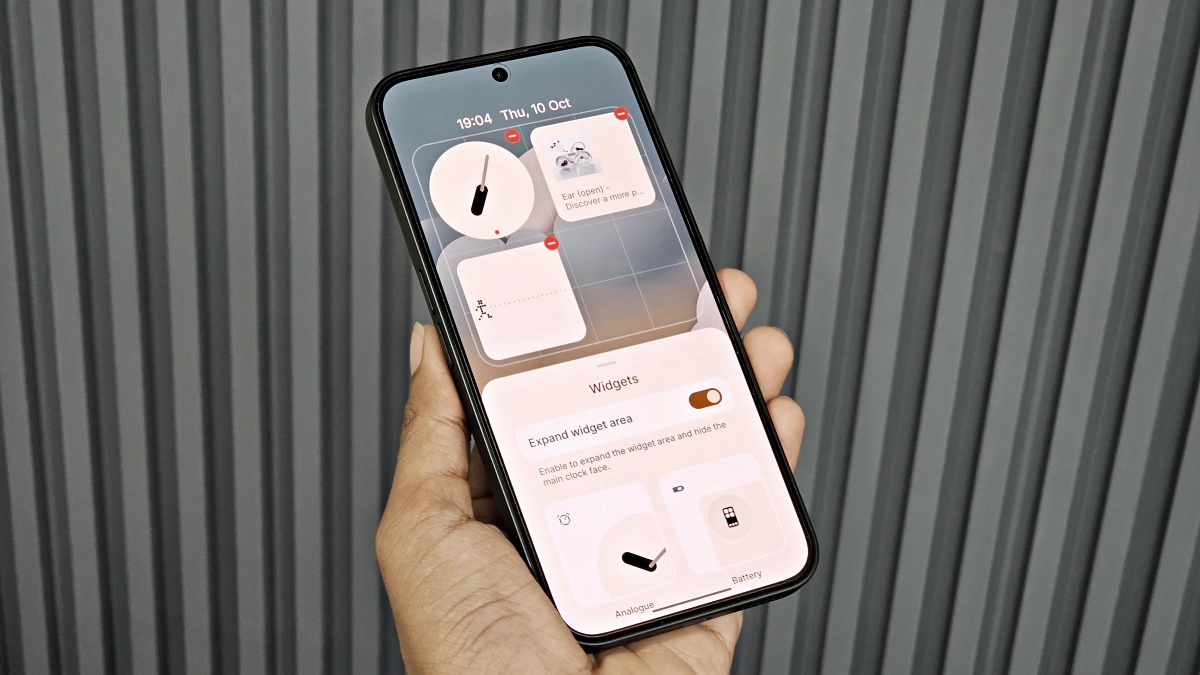
Nothing OS 3.0 Introduces AI-Powered Circle Search Feature for Nothing Phone 2a Plus and Other Devices

Nothing has unveiled its latest update, introducing the Circle to Search feature powered by artificial intelligence (AI), which is now available for several of its smartphones. The feature, developed in collaboration with Google, is part of the Nothing OS 3.0 update and can be accessed on the Nothing Phone 2a Plus, Nothing Phone 2a, and Phone 2. With this update, the devices will also be running Android 15, marking a significant upgrade. However, the full public rollout of Android 15 for some models in Nothing’s lineup is still pending.

The Circle to Search feature is a visual lookup tool that uses AI to enhance the smartphone’s search capabilities. It allows users to search for information by simply pointing their camera at an object. Once the camera identifies the object, the system provides relevant details and context, offering a new level of convenience for users. This feature has been well-received by users on the supported devices, as it offers a seamless and intuitive way to gather information.

Nothing’s decision to integrate Google’s Circle to Search is a step toward enhancing the utility of its smartphones, as it simplifies searching for objects, places, and other visual cues. The tool is designed to work flawlessly on the Nothing Phone 2a Plus, Nothing Phone 2a, and Phone 2, which have already undergone additional testing to ensure compatibility with the new feature.

Despite the anticipation around Android 15, users of other Nothing models will have to wait a bit longer for the update. The company has been gradually rolling out the new OS version, and while the feature is currently available on the selected models, a broader distribution plan is still underway. This update shows Nothing’s commitment to enhancing user experience through AI-powered innovations and expanding the functionality of its smartphones.
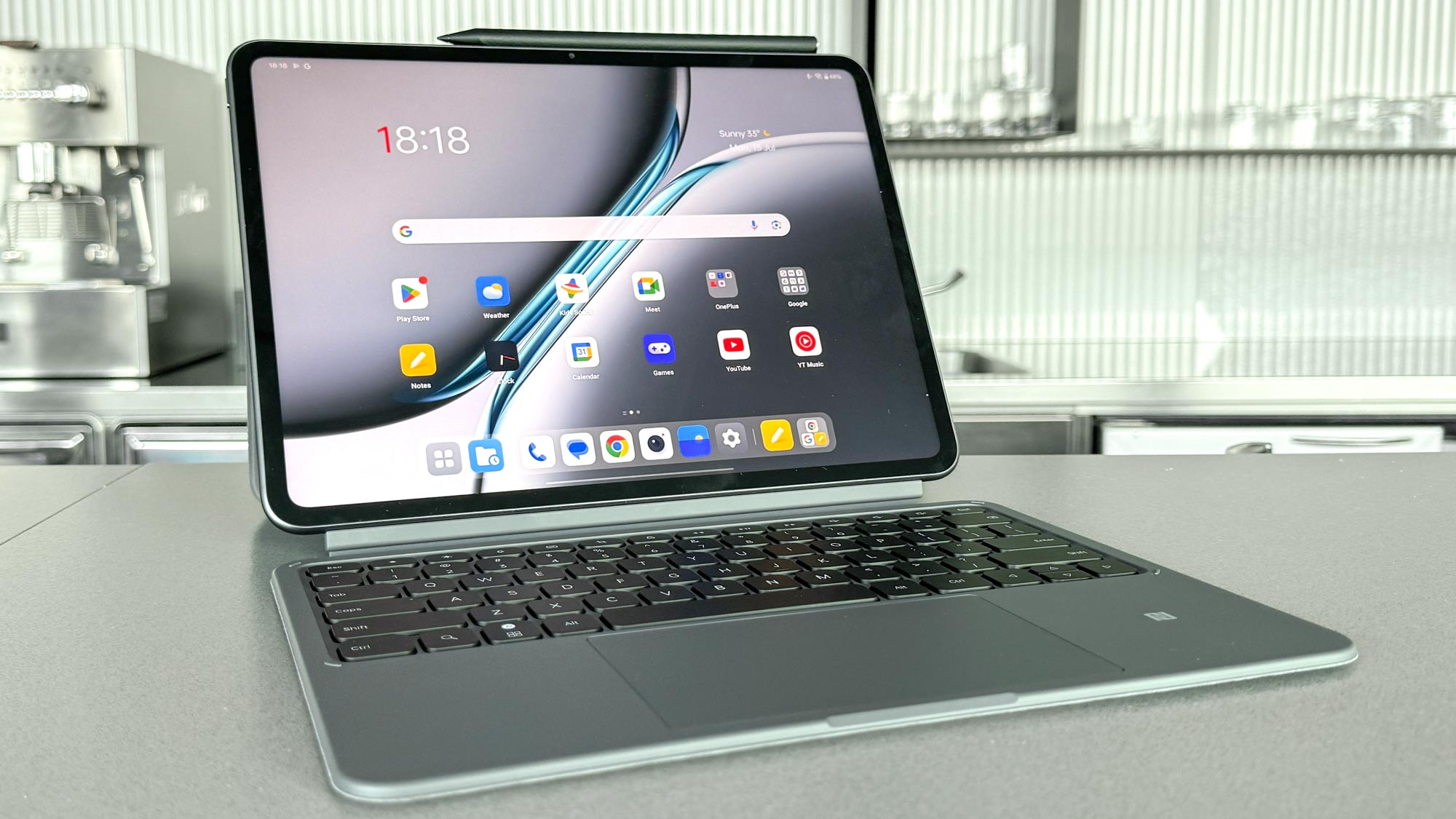

OnePlus Pad Unveiled With 144Hz Display and MediaTek Dimensity 8350 SoC: Price and Features

OnePlus Pad Launched With 144Hz Display and MediaTek Dimensity 8350 SoC: Price and Specifications

OnePlus has officially unveiled its new tablet, the OnePlus Pad, in China, marking its entry into the growing tablet market. This device, which was launched alongside the OnePlus Ace 5 series, is essentially a rebranded version of the Oppo Pad 3, which debuted just last month. Despite the name change, the OnePlus Pad retains the same core internals as its Oppo counterpart. It features a large 11.61-inch 2.8K IPS LCD screen with a stunning 144Hz refresh rate, making it ideal for smooth scrolling and high-quality visual experiences. Under the hood, the tablet is powered by the MediaTek Dimensity 8350 chipset, ensuring robust performance for both gaming and multitasking. Additionally, the OnePlus Pad runs on ColorOS 15, based on Android 15, and supports 67W wired fast charging, enabling quick recharging of its large battery.

OnePlus Pad Price and Configuration Options

The OnePlus Pad is available in several configurations in China, starting at an introductory price of CNY 1,999 (roughly Rs. 23,000) for the 8GB + 128GB variant, after a limited-time CNY 100 (roughly Rs. 1,100) discount. The tablet is also offered in two higher storage configurations: 8GB + 256GB for CNY 2,399 (roughly Rs. 28,000) and 12GB + 256GB for CNY 2,699 (roughly Rs. 31,000). For those who need more storage and memory, there’s a top-tier variant with 12GB of RAM and 512GB of internal storage, priced at CNY 3,099 (roughly Rs. 36,000).

Display and Performance Features

The OnePlus Pad’s 11.61-inch display stands out with its 2.8K resolution and a fluid 144Hz refresh rate. This makes it a great choice for users who want to enjoy crisp visuals and seamless interactions, whether for watching videos, gaming, or productivity tasks. The tablet’s MediaTek Dimensity 8350 chipset delivers strong performance, positioning the OnePlus Pad as a solid option for users who require both power and efficiency for various applications. Coupled with ColorOS 15, the software experience is optimized for both tablet usage and multitasking.

Battery Life and Charging Capabilities

Battery life is another highlight of the OnePlus Pad, with its large battery supporting 67W wired fast charging. This ensures that users spend less time waiting for their device to recharge and more time using it. The ability to charge the device quickly is especially beneficial for users who are on the go and need to top up the battery quickly. The combination of a high-performance chipset, fast charging, and a large display positions the OnePlus Pad as a competitive player in the tablet market.

Gold-Sulfur Complex Identified as Key Factor in Gold Deposit Formation

Gold-Sulfur Complex Found to Play Crucial Role in Gold Deposit Formation

An international team of scientists has made a groundbreaking discovery that could transform our understanding of gold deposit formation on Earth. Led by Adam Simon, Professor of Earth and Environmental Sciences at the University of Michigan, the study uncovers the crucial role of a gold-sulfur complex in transporting gold from deep within the Earth’s mantle to the surface. The findings, published in Proceedings of the National Academy of Sciences (2024), offer new insights into the conditions under which gold is mobilized and concentrated in Earth’s crust.

The Gold-Trisulfur Complex: A Key to Gold’s Journey

According to the study, gold is transported in the Earth’s mantle in a complex form known as the gold-trisulfur complex. This complex forms under specific temperature and pressure conditions, typically located 30 to 50 miles beneath active volcanic zones. For years, the existence of such a complex was debated, but this research has solidified its role in enriching magma with gold as it rises towards the surface. The discovery also helps explain why certain areas, particularly subduction zones, are particularly rich in gold deposits.

Subduction Zones and Volcanic Activity as Gold Sources

The researchers specifically highlight subduction zones, such as those around the Pacific Ring of Fire, as key regions for gold formation. These areas, known for their high volcanic activity, provide an ideal geological environment for gold to be carried from the mantle to surface deposits through volcanic eruptions. Locations such as New Zealand, Japan, Alaska, and Chile, which lie within these active volcanic regions, are some of the richest in gold, thanks to the unique geological processes at play in subduction zones. The study links volcanic eruptions to the mechanisms that concentrate gold in these zones, shedding light on how gold deposits form in these high-activity areas.

Implications for Gold Mining and Exploration

This new understanding of how gold is transported from deep within the Earth to surface deposits opens up new avenues for gold exploration and mining. By targeting subduction zones with the right conditions for the formation of gold-sulfur complexes, geologists and mining companies can potentially uncover new gold reserves in regions that were previously unexplored. This discovery not only improves our knowledge of the Earth’s processes but also enhances the accuracy and efficiency of gold prospecting in volcanic regions around the world.