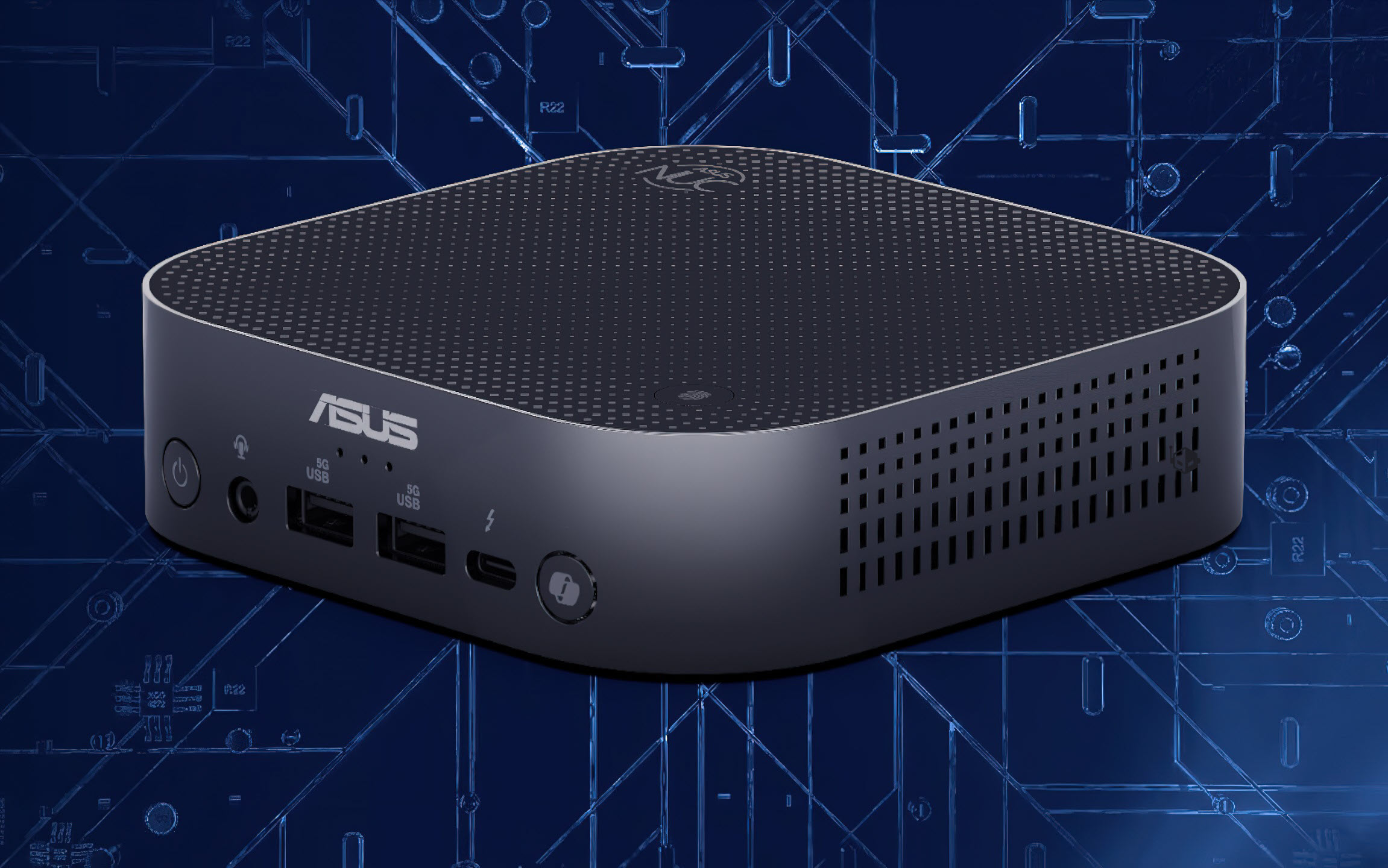
Asus Unveils NUC 14 Pro AI Copilot+ Mini PC with Intel Core Ultra 9 (Series 2) CPU

Asus has officially unveiled the NUC 14 Pro AI, marking a significant leap in the mini PC market. This new addition to the NUC lineup is touted as the world’s first mini PC to feature Intel Core Ultra (Series 2) processors and Microsoft Copilot+ integration. The NUC 14 Pro AI packs a powerful Intel Core Ultra 9 (Series 2) CPU and supports up to 32GB of LPDDR5x-8533 RAM, making it an excellent choice for those who require top-tier performance in a compact form factor. Additionally, the device is equipped with an Intel Arc GPU, capable of delivering up to 67 TOPS, along with a 48 NPU TOPS that offers a threefold increase in AI performance compared to earlier NUC models, all while consuming less power.

The availability of the Asus NUC 14 Pro AI will depend on the region, with the company confirming that the mini PC will soon be available in select global markets. A listing for the device has already appeared on the Asus India website, suggesting that the product will be available in India soon. However, specific pricing details will be revealed closer to the launch date, making it essential for potential buyers to stay updated on official announcements.

The Asus NUC 14 Pro AI comes in multiple configurations to cater to different user needs. The available Intel CPU variants include the Core Ultra 5 Processor 226V with 16GB memory, Core Ultra 5 Processor 228V with 32GB memory, Core Ultra 7 Processor 256V with 16GB memory, Core Ultra 7 Processor 258V with 32GB memory, and the powerful Core Ultra 9 Processor 288V with 32GB memory. Each configuration is designed to meet varying demands, whether for general computing or more specialized tasks like AI processing and heavy multitasking.

With its cutting-edge components and AI capabilities, the NUC 14 Pro AI aims to deliver exceptional performance while being more power-efficient than previous mini PCs. This device is ideal for professionals and enthusiasts who need a compact yet highly capable machine for demanding applications. Whether for gaming, AI workloads, or media creation, the NUC 14 Pro AI is set to make waves in the mini PC market.


Oppo A5 Pro Design and Colour Options Unveiled Ahead of Launch

The Oppo A5 Pro is gearing up for its official launch in China on December 24, with teasers already revealing key design elements and colour options of the upcoming smartphone. The Chinese tech giant has shared official renders showcasing the phone’s sleek design, which will be available in three distinct colour variants: Rock Black, Sandstone Purple, and Quartz White. The latest teasers emphasize the phone’s premium glossy back panel and a new, circular camera bump, offering a fresh look for the A-series.

In addition to the design, Oppo is also highlighting the durability of the A5 Pro in its promotional materials. It is expected to carry an impressive IP68 or IP69 rating for dust and water resistance, a significant upgrade from its predecessor, the Oppo A3 Pro, which only had an IP54 rating. This durability focus aligns with Oppo’s strategy to appeal to consumers looking for a phone that can withstand everyday challenges while maintaining a stylish appearance.

The Oppo A5 Pro is set to feature a large 6.7-inch AMOLED screen, offering a full-HD+ resolution of 1,080 x 2,412 pixels, which should provide a vivid and immersive display experience for users. Under the hood, the phone is expected to be powered by the MediaTek Dimensity 7300 chipset, ensuring strong performance for everyday tasks and multitasking. With configurations offering 8GB and 12GB of RAM, alongside 256GB and 512GB of internal storage, the A5 Pro is set to offer ample space and power for various applications.

Ahead of its launch, the Oppo A5 Pro is already available for pre-reservations in China, building anticipation for its official release. The phone is expected to run on the latest Android 15-based ColorOS 15, enhancing the overall user experience with a modern interface and new features. As Oppo continues to push the envelope in both design and performance, the A5 Pro seems poised to be a competitive option in the mid-range smartphone market.

ISRO Starts Assembling Human-Rated Launch Vehicle Mark-3 for Gaganyaan Mission

Indian Space Research Organisation (ISRO) reached a key milestone in its human spaceflight ambitions with the beginning of assembly for the Human-Rated Launch Vehicle Mark-3 (HLVM3). The assembly process started at the Satish Dhawan Space Centre (SDSC) with the stacking of the nozzle-end segment of the S200 solid rocket motor. This marks the official launch of the Gaganyaan-G1 campaign, ISRO’s first uncrewed mission as part of the Gaganyaan human spaceflight programme. Notably, this development coincides with the tenth anniversary of the LVM3-X/CARE mission, which was carried out on the same date in 2014.

The HLVM3 is an upgraded version of the LVM3 rocket, designed specifically to support human spaceflight. Standing at 53 meters tall and weighing in at 640 tonnes, the rocket is capable of carrying up to 10 tonnes to low Earth orbit. This new design features significant modifications to accommodate human spaceflight, including a crew escape system (CES) that will allow for the safe ejection of the Crew Module in case of an anomaly during ascent. These enhancements are crucial for ensuring the safety of astronauts and the success of future crewed missions.

Currently, the assembly process is underway, with the S200 motors being stacked and the L110 liquid stage and C32 cryogenic stage ready for integration at the launch complex. Meanwhile, the integration of the Crew Module is being handled at the Vikram Sarabhai Space Centre (VSSC), and preparations for the Service Module are taking place at the U.R. Rao Satellite Centre (URSC). This coordination across multiple ISRO centers highlights the collaborative effort required to successfully launch the Gaganyaan mission.

The Gaganyaan mission marks a significant leap for India’s space exploration capabilities, moving the nation closer to its goal of sending humans into space. With the successful assembly of the HLVM3 and the continued progress in the preparation of the Crew and Service Modules, ISRO is setting the stage for a historic human spaceflight. This project not only strengthens India’s presence in the global space community but also fosters technological advancements that will benefit various sectors on Earth.